1961 Mercedes-Benz 190 SL
After the commercial success of the 300 SL Gullwing, Mercedes-Benz developed the more affordable 190 SL as a companion model in 1955. The idea originated from Max Hoffman, the German manufacturer’s U.S. importer, who recognized demand for a similarly styled yet less expensive alternative to the iconic Gullwing coupe.
The 190 SL’s exterior design borrowed heavily from its more expensive sibling, featuring the distinctive Mercedes-Benz styling cues that made the 300 SL so desirable. The roadster displayed clean, flowing lines with a low-slung profile that conveyed sportiness while maintaining elegance.
Chrome accents adorned the grille, bumpers, and side trim, while the removable hardtop provided year-round versatility. The car rode on a 94.5-inch wheelbase and came standard with steel wheels, though optional wheel covers and other styles were available.
Inside, the 190 SL offered a well-appointed cabin with leather upholstery and comprehensive instrumentation. Despite its convertible configuration, the interior provided surprising practicality with adequate luggage space behind the seats. The dashboard featured a clean, functional layout typical of Mercedes-Benz design philosophy of the period.
Power came from a 1,897 cc overhead-camshaft inline four-cylinder engine equipped with twin Solex carburetors. This drivetrain produced 104 horsepower, sufficient to propel the roadster to a top speed of about 107 mph.
A four-speed manual transmission sent power to the rear wheels through a swing axle arrangement. The suspension system utilized independent front coil springs and swing axle rear coil springs, while hydraulic drum brakes provided stopping power.
Unlike the track-bred 300 SL, the 190 SL was designed primarily for comfortable touring rather than racing. This positioning placed it in competition with cars like the Triumph TR3, Austin-Healey 100, and Porsche 356 Speedster in the American market.
The 190 SL proved popular throughout its nine-year production run, which concluded in 1963. Mercedes-Benz built approximately 25,881 examples, making it considerably more common than the 300 SL while still maintaining exclusivity.
The model successfully filled the gap between mass-market sports cars and the ultra-expensive 300 SL, establishing a template for future Mercedes-Benz roadsters.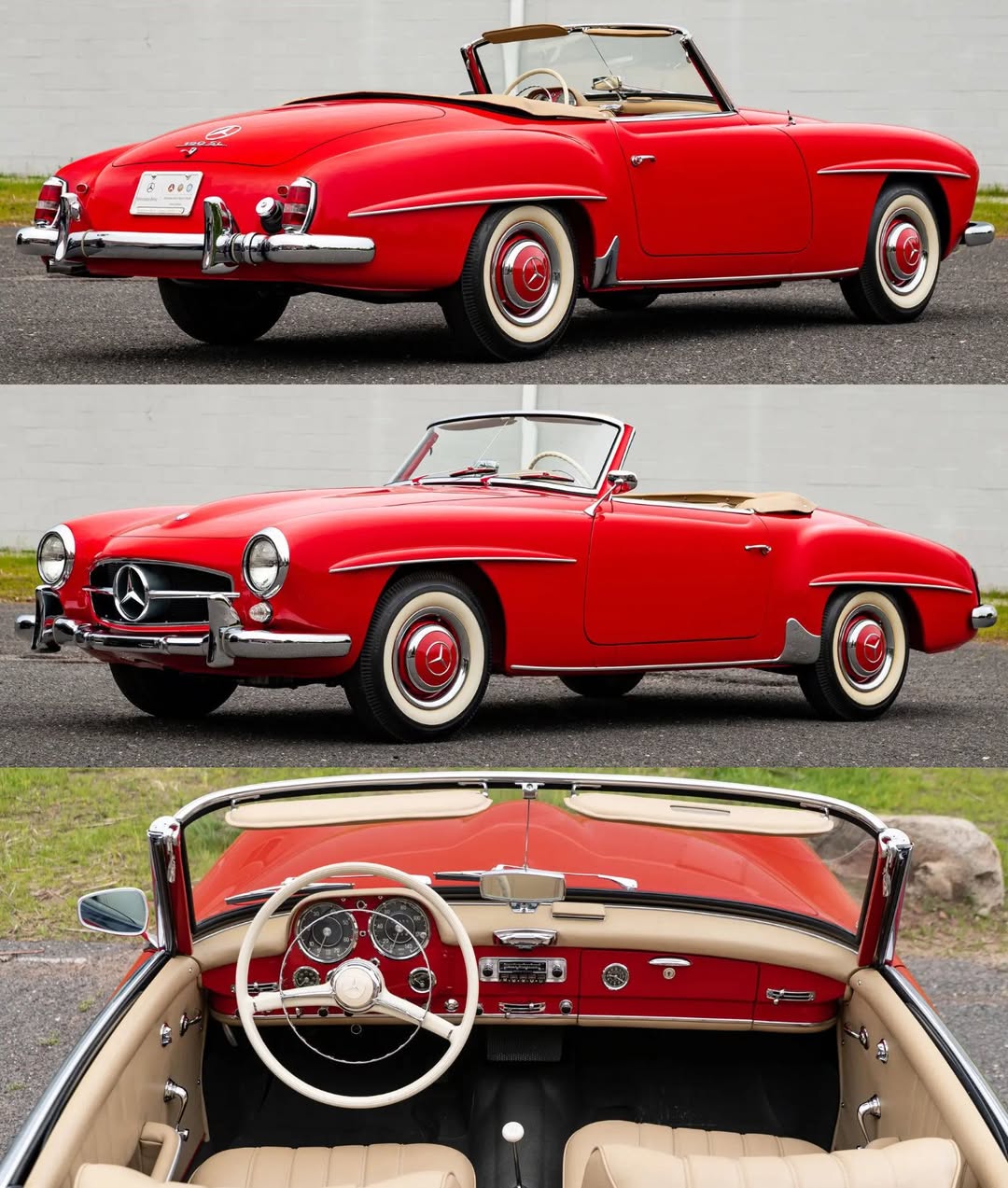
Source