1936 Stout Scarab (world’s first minivan?)
An Art Deco beetle on wheels, this aerodynamic vehicle turned heads with its bulbous aluminum body riveted to an aluminum space frame much like an airplane. Engineer William B. Stout placed the engine in the rear, creating unprecedented interior space within the 135-inch wheelbase and just-over-16-foot length.
Integrated fenders, rear-wheel skirts, hidden door hinges, and flush glass all contributed to its streamlined aerodynamics. All-wheel independent suspension provided a comfortable ride, while hydraulically operated cast-iron drum brakes handled stopping duties.
The revolutionary interior featured rotating seats that could turn 180 degrees to face each other, with a fold-down table for meals or games. Passengers entered through a central push-button door. Lacewood covered the ceiling from front to back.
A 90-horsepower Ford flathead V8 paired with a three-speed manual transmission provided performance adequate for the era, with a top speed of around 80 mph. At about $5,000 (nearly $100,000 today), the Scarab was priced far beyond most family cars. Fewer than a dozen were built before World War II, and only about five are known to survive today.
Compared to the upright sedans and coupes of the 1930s, the Scarab’s one-box profile, flat floor, and flexible seating arrangement were decades ahead of their time. While buses offered space, no passenger car of the era combined comfort, practicality, and interior versatility in this way. These qualities are why the Scarab is often credited as the world’s first minivan.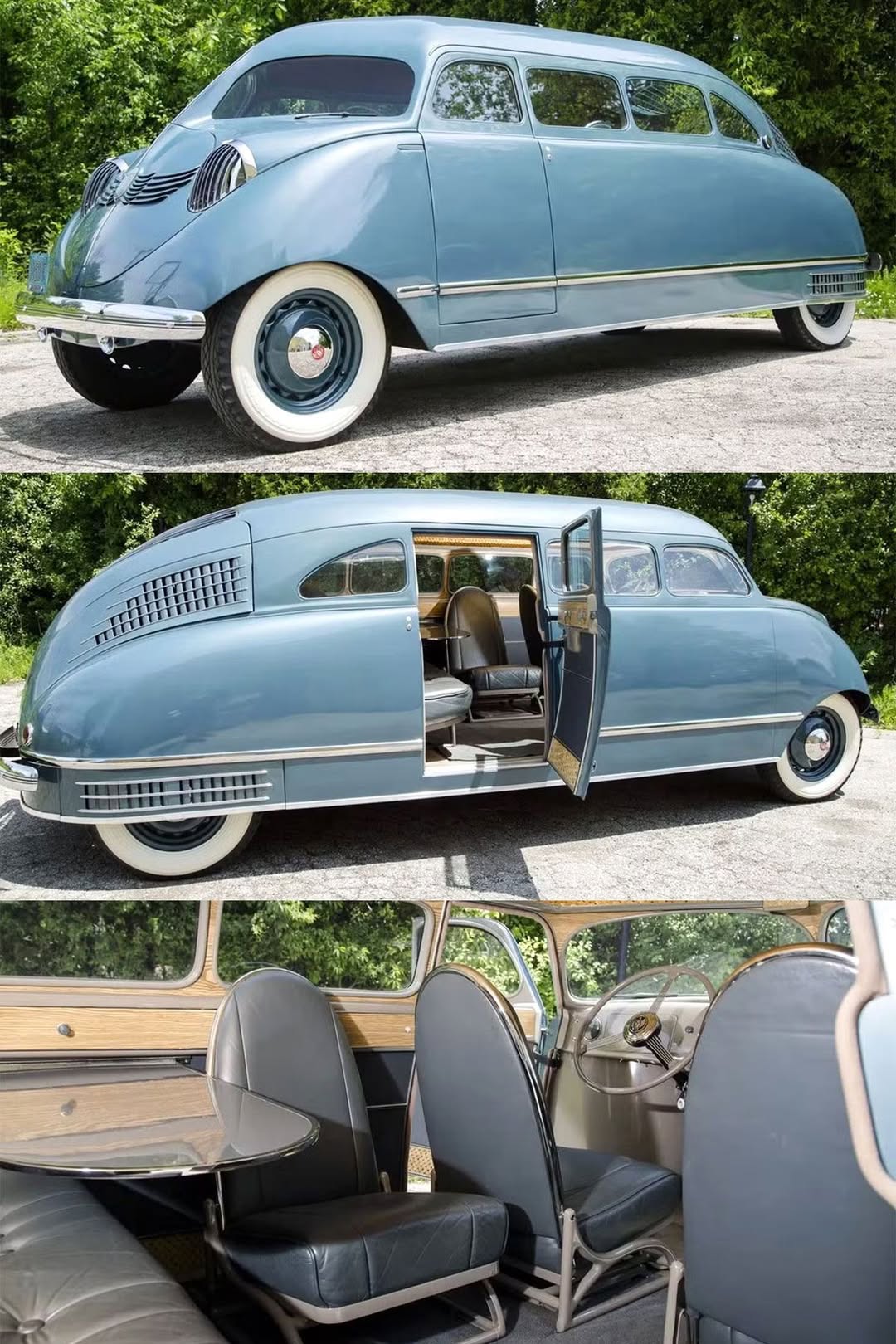
Source