1930 Cord Model L-29 Town Car
Front-wheel drive on a production automobile was still a novelty in 1929, and E.L. Cord arrived at it through an unlikely route: impressed by Harry Miller’s front-drive Indianapolis racers, Cord acquired the rights to adapt elements of Miller’s front-drive design for passenger-car use and brought in engineer Cornelius Van Ranst to develop it for the road.
The consequence was a chassis so low that it set the L-29’s proportions apart from anything else on American roads.
The drivetrain layout (engine, clutch, gearbox, and differential all mounted ahead of the front axle) demanded an exceptionally long hood, which designer Al Leamy treated as a feature rather than a problem, pairing it with a Duesenberg-influenced radiator shell.
Front brakes were mounted inboard, a racing-derived arrangement intended to reduce unsprung weight. Power came from a 298 CI L-head Lycoming straight-eight producing 125 hp, sourced from Auburn and adapted for the Cord’s front-drive configuration.
The low-profile chassis attracted coachbuilders on both coasts, and custom-bodied L-29s won prizes at concours events on both sides of the Atlantic.
Town Car configurations by West Coast coachbuilder Murphy & Co. of Pasadena (already well known for their Duesenberg work) rank among the most admired results.
Total production reached 5,010 examples before the combined pressures of the Depression and modest performance ended the model in 1932, with roughly 300 believed to survive today.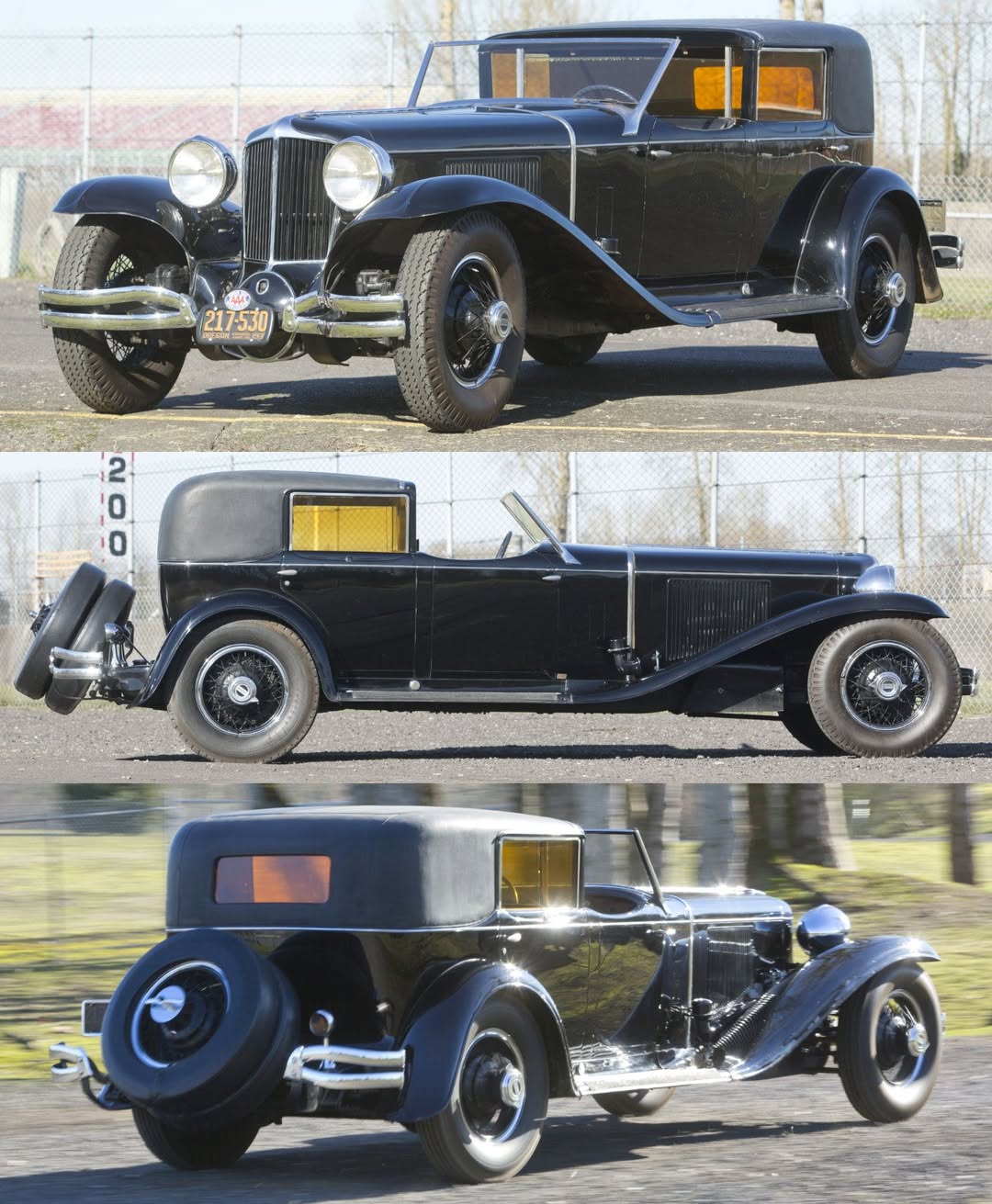
Source