1903 Ford Model A
Commercial automobile manufacturing finally succeeded for Henry Ford after two failed attempts when this pioneering motorcar launched the Ford Motor Company in 1903.
Ford’s first venture, the Detroit Automobile Company (1899-1900), collapsed after producing only a handful of heavy, unreliable cars. His second effort, the Henry Ford Company (1901-1902), ended after disagreements with investors, who reorganized it into Cadillac following Ford’s departure.
These setbacks gave Ford valuable lessons in engineering and business that he carried into his third and lasting enterprise.
Built on a 72-inch wheelbase and weighing 1,240 pounds, the first Ford featured an 8-horsepower opposed twin-cylinder engine positioned under the passenger seat, driving the rear wheels through chain drive.
The horizontal flat-2 engine displaced 100.4 cubic inches and worked through a two-speed planetary transmission with reverse, a design configuration Ford would later refine in the famous Model T.
Top speed reached about 28 mph, sufficient for the era when covering more ground than a horse and buggy represented genuine progress.
Available as either an $850 two-seat runabout or a $950 four-seat tonneau with optional top, the Model A established Ford’s foundational principles of simplicity, reliability, and affordability.
Production totaled 1,750 automobiles during 1903-1904 at the modest Mack Avenue plant in Detroit before replacement by the Model C.
The company’s survival balanced on a knife’s edge of cash flow, with Ford’s bank balance reaching just $223.65 in early July 1903. Three customer orders received on July 13, 1903, provided the financial lifeline that saved the company.
More than 100 examples survive today from the original production, making these foundation-era Fords highly coveted among collectors seeking automotive history’s most significant milestones.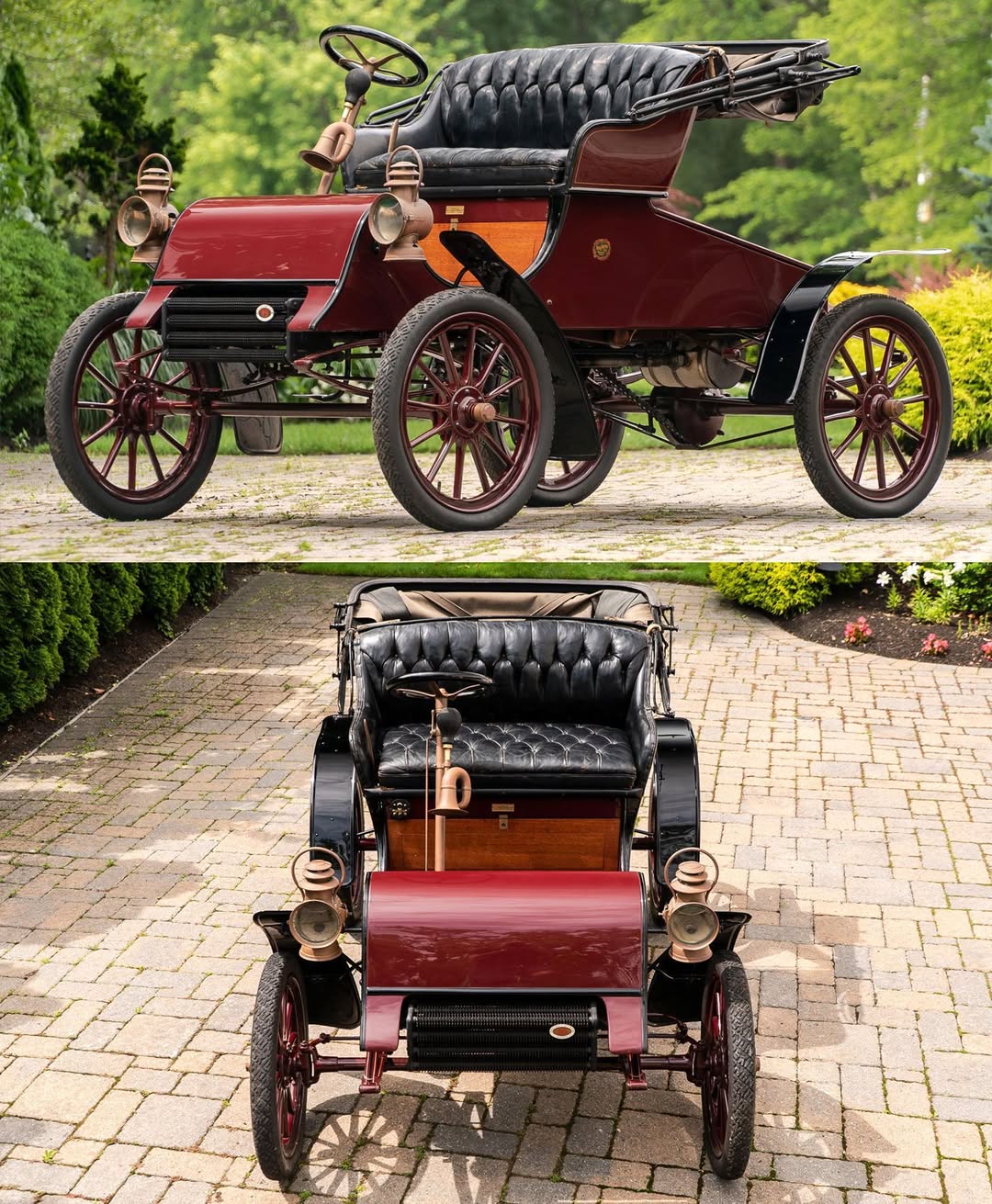
Source