1964 DKW Junior de Luxe
Auto Union’s compact offering for the early 1960s, the Junior de Luxe carried on DKW’s long commitment to front-wheel drive and two-stroke power in a thoroughly modern body.
The two-door notchback, built at Auto Union’s Ingolstadt works, featured clean trapezoidal lines with suggested tail fins, a styling touch very much of its moment.
Chrome trim and upgraded interior materials set the de Luxe apart from the base Junior, which it effectively replaced as the standard model by 1962. Although production ended in 1963, some cars (including this one) were titled as 1964 models when first sold, which was not uncommon for imported European cars in the U.S. at the time.
The 796cc three-cylinder two-stroke engine produced 34 horsepower, driving the front wheels through a four-speed manual gearbox. A notable feature of the de Luxe was the Frischölautomatik (an automatic oil injection system that eliminated the need to pre-mix fuel and oil, reducing the characteristic two-stroke smoke).
The optional Saxomat semi-automatic clutch was also available. Despite modest power output, the car offered more interior and trunk space than the contemporary Volkswagen Beetle.
Approximately 118,600 Junior de Luxe examples were produced between 1961 and 1963, after which the model was succeeded by the DKW F12.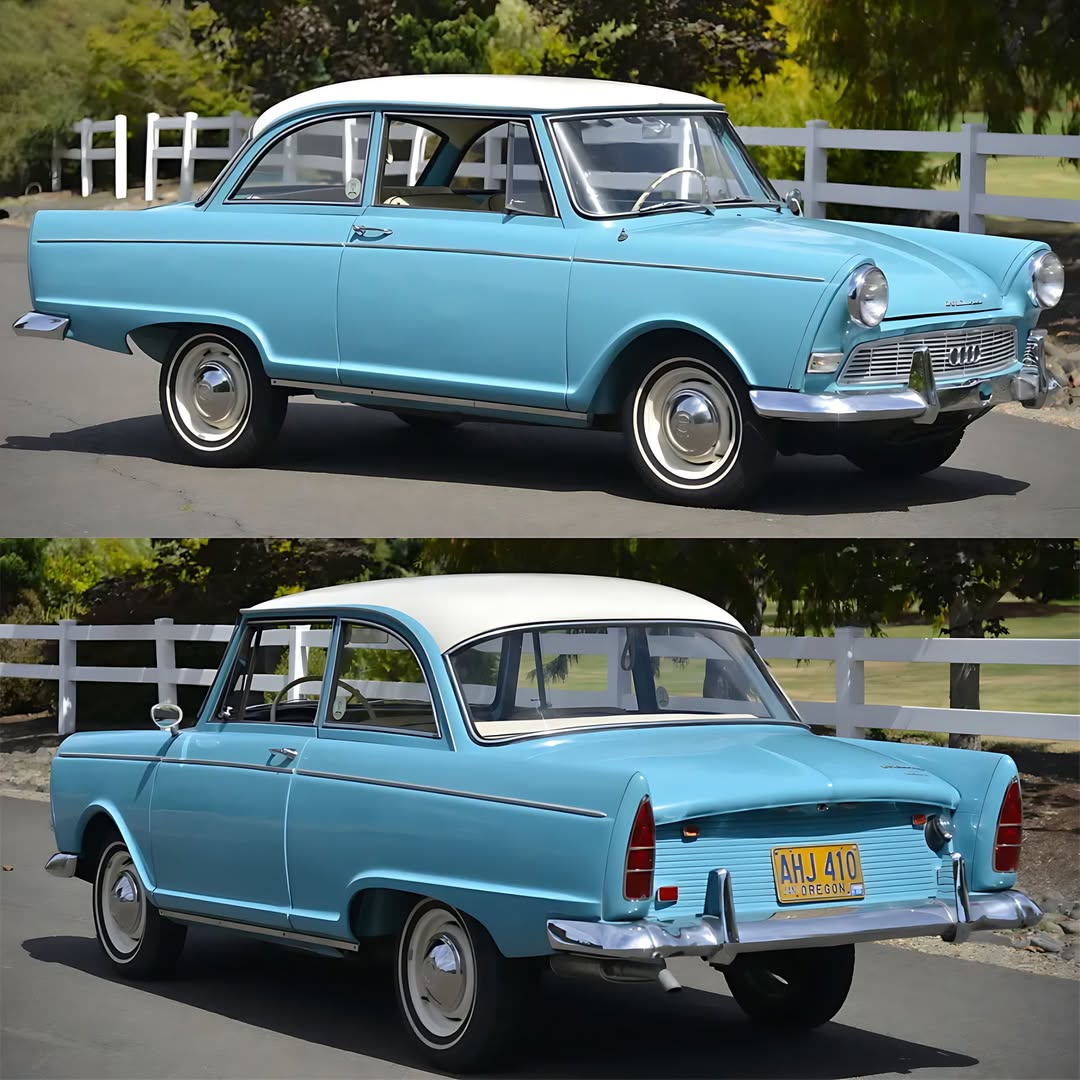
Source