1960 Aston Martin DB4 Series II
Introduced at the 1958 London Motor Show, the DB4 was the first Aston Martin built entirely at the Newport Pagnell works in Buckinghamshire.
Its body, designed by Carrozzeria Touring of Milan, was constructed using the Superleggera method, with aluminum panels fixed over a network of small steel tubes attached to a rigid platform chassis, producing a shell that was both light and torsionally stiff.
The Series II, produced from January 1960 through April 1961, addressed several refinements to the original design: chromed window frames, a front-hinged hood, and enlarged front brake calipers were the most visible changes, along with a substantially larger oil sump. Approximately 349 were built.
Tadek Marek’s 3,670cc (3.7 liter) twin-overhead-camshaft inline six featured an aluminum block and alloy cylinder head, fed by twin SU carburetors and producing approximately 240 horsepower. Drive went to the rear wheels through a four-speed David Brown all-synchromesh gearbox.
Up front, unequal-length wishbones and coil springs replaced the sliding pillar arrangement of the preceding DB2/4, while the rear used a live axle located by a Watts linkage with coil springs.
Disc brakes were fitted at all four corners, placing Aston Martin among the early adopters of four-wheel discs on a production GT.
The DB4 was claimed to be the first production car capable of accelerating from rest to 100 mph and back to a standstill in under 30 seconds.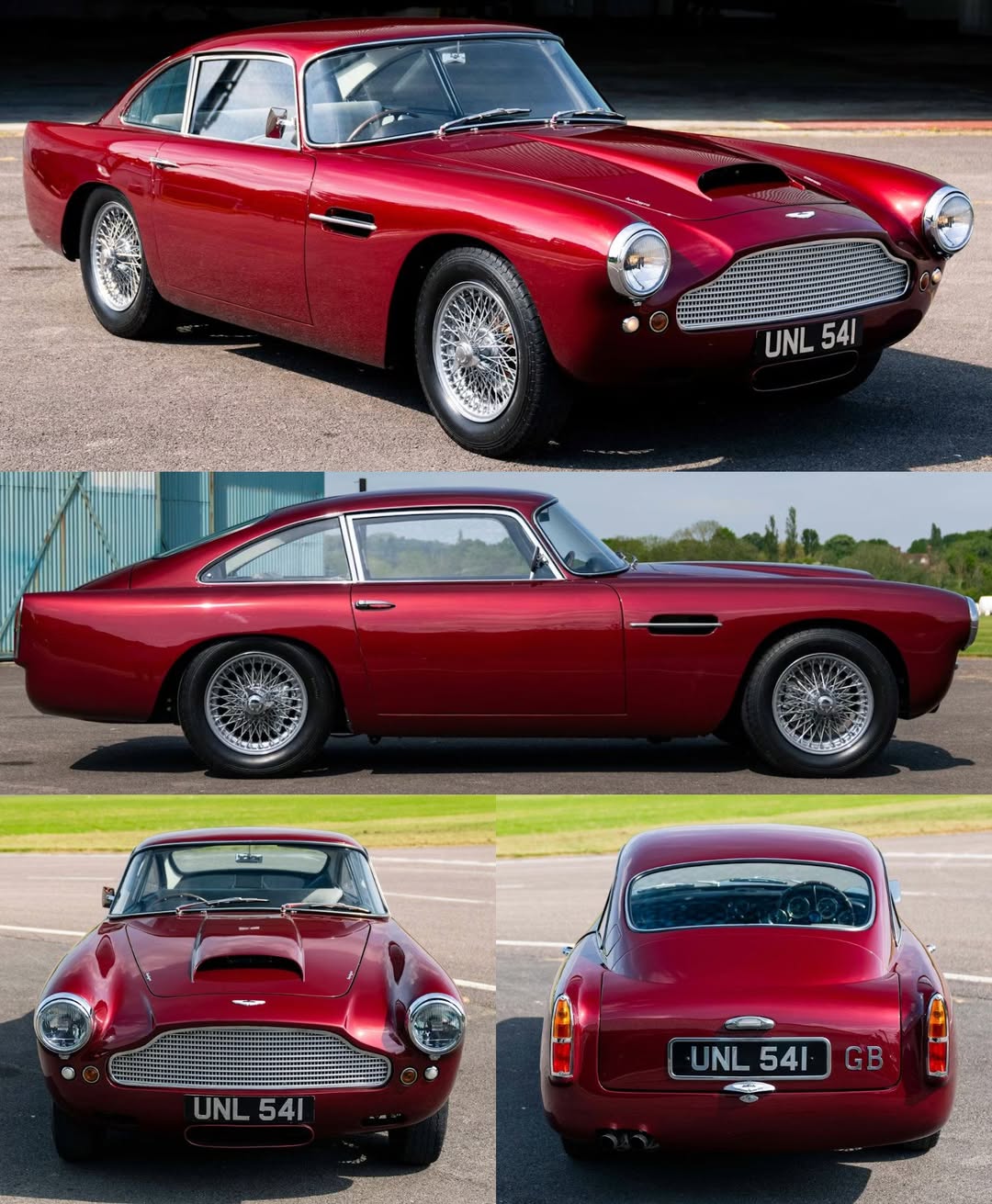
Source