1947 Chrysler Town & Country Convertible
Wood and steel combined in an unusual luxury experiment during the late 1940s. Chrysler’s Town & Country Convertible featured white ash framing with mahogany-veneered steel panels, constructed using techniques reminiscent of fine boat building. The result projected an image of affluence that drew customers to dealerships nationwide.
Designer Dave Wallace conceived the Town & Country concept in 1939, envisioning a wood-bodied vehicle with the same basic lines as Chrysler’s steel models but with added refinement and artistry. The convertible coupe variant debuted in 1946, replacing the earlier four-door station wagon configuration.
Built on the upscale New Yorker chassis, the Town & Country offered luxury appointments beyond the New Yorker’s standard features. At $3,420, it commanded the highest price in Chrysler’s lineup.
Power came from a 323.5 cubic inch L-head straight-eight producing 135 horsepower, paired with Chrysler’s Fluid Drive transmission featuring Prestomatic semi-automatic operation. The 127.5-inch wheelbase gave the car a substantial presence on the road.
Production remained limited due to the labor-intensive wood construction process, making these convertibles relatively rare survivors from Chrysler’s postwar era of experimentation.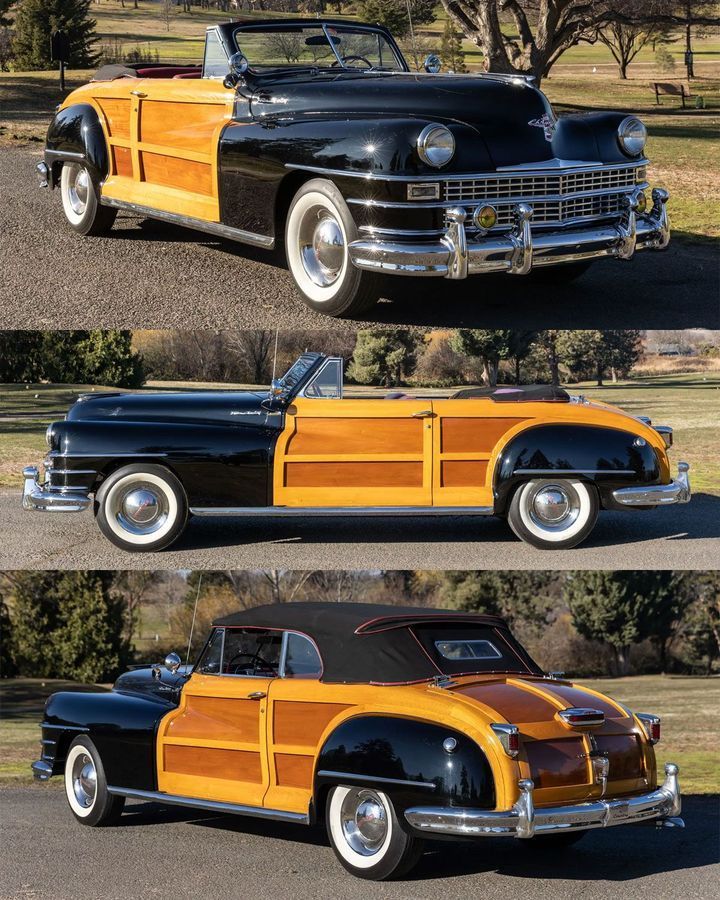
Source