1914 Detroit Electric Model 47 Brougham
The tall, formal Brougham coachwork of the Model 47 is one of the most recognizable shapes from the early electric automobile period, its carriage-derived proportions setting it apart from the lower-slung gasoline cars of the same time.
Steering was accomplished via a long tiller-style lever, with a shorter lever regulating speed (both could be folded away to ease entry and exit), though a steering wheel would become available shortly thereafter.
This arrangement, combined with the absence of a clutch, gearbox, or exhaust noise, made the Model 47 considerably simpler to operate than any contemporary gasoline-powered vehicle.
Power came from a 48-volt DC electric motor rated at approximately 4.7 horsepower (with higher peak output under load). The chassis rode on four-wheel semi-elliptical leaf springs with rear mechanical drum brakes.
Advertised range was around 80 miles per charge, though a well-documented 1914 test car equipped with Edison nickel-iron batteries traveled just over 210 miles on a single charge under controlled conditions.
Built by the Anderson Electric Car Company in Detroit, the Model 47 was aimed squarely at urban drivers (women in particular) who valued its instant start, quiet running, and clean operation.
Henry Ford’s wife, Clara, drove a Detroit Electric Brougham as her personal car, a fact not lost on the man who did more than anyone to displace it.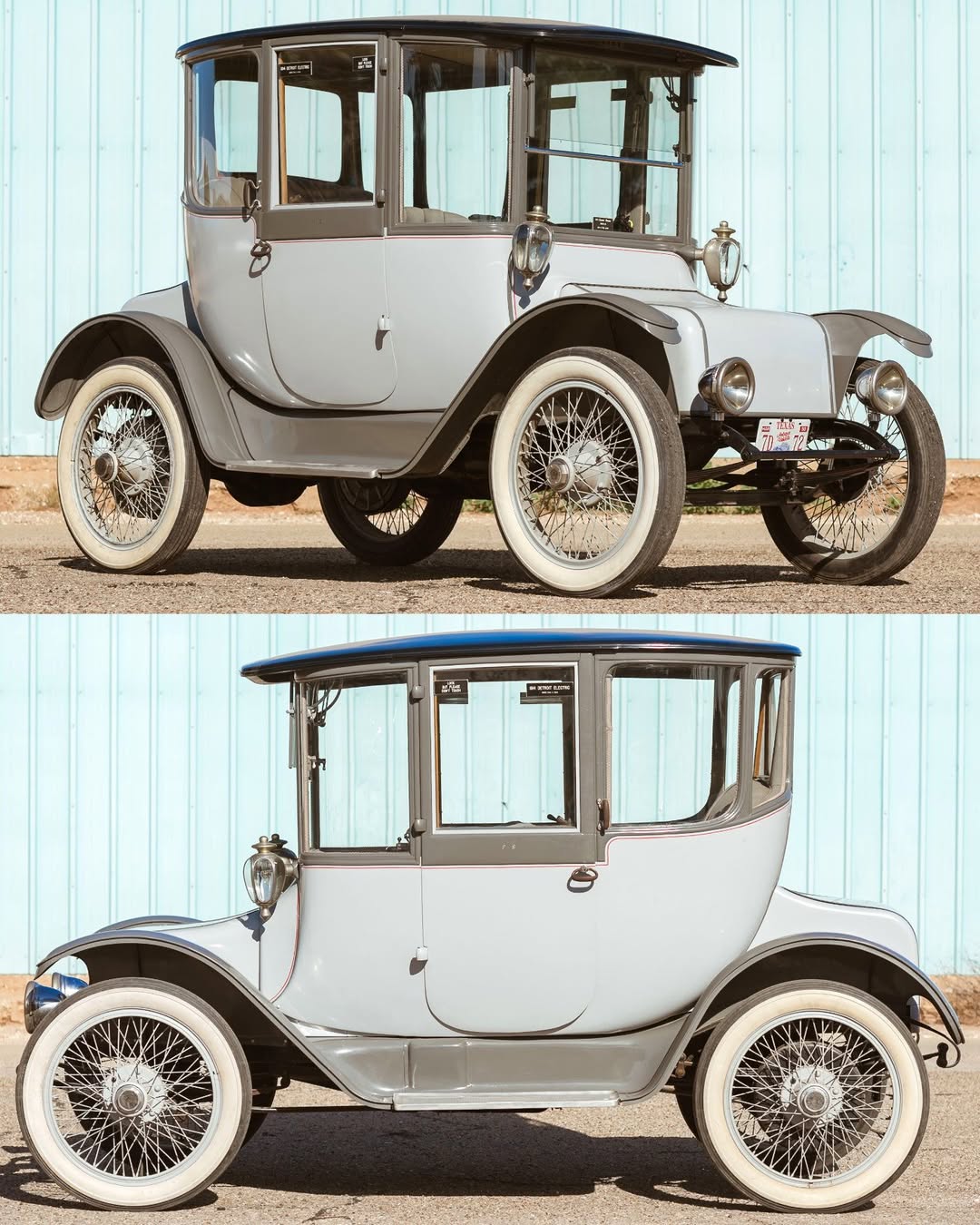
Source