1936 Austin Heavy 12-4 Low-Loading Taxi
Long dominated by French Renault and Unic cabs, London’s hackney trade shifted rapidly after the Austin 12/4 taxi appeared in 1930.
Within five years, a substantial majority of London’s licensed hackney carriages were Austins, and the model’s durability became its defining reputation: individual cabs routinely covered many hundreds of thousands of miles, with some still working the streets into the early 1960s.
The Low Loading variant arrived in 1934, when adoption of a worm-drive rear axle made it possible to fit a lower body while still maintaining a flat floor in the passenger compartment. Compared to the earlier High Lot taxis, the overall body height dropped by approximately 7 inches.
Bodies were made by London coachbuilders Strachan, Vincent, or Jones to Mann & Overton’s specifications. The Strachan coachwork on this example carries the characteristic extended roof section above the driver’s open-sided position, along with a fare meter, FOR HIRE semaphore indicator, and rooftop light.
The Heavy 12/4 used a 1,861cc side-valve four-cylinder engine backed by a four-speed gearbox. The rear passenger compartment’s folding rear-facing jump seats, arranged to face the main bench, were a standard feature of the cab layout and reflect the Metropolitan Police Conditions of Fitness requirements (including a maximum 25-foot turning circle) that governed every aspect of the taxi’s design.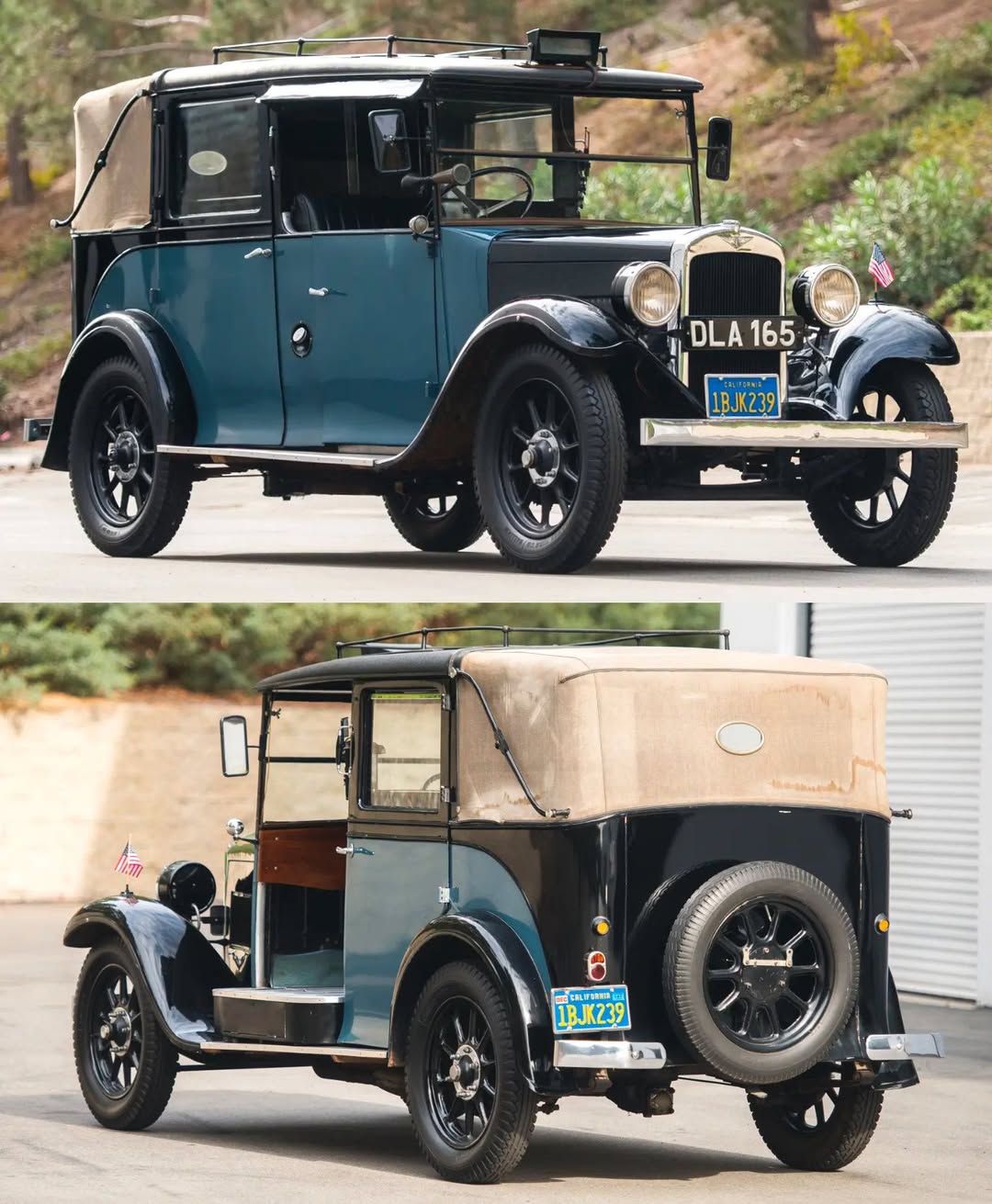
Source