1930 Cord L-29 Cabriolet
American automotive innovation took a bold step forward with front-wheel drive technology in the Cord L-29, which became the first major American production car offered to the public with this configuration.
Engineering contributions from legendary race car builder Harry Miller helped create a system in which the Lycoming straight-eight engine was mounted longitudinally and reversed in the chassis, placing the transmission at the very front.
This mechanical arrangement eliminated the driveshaft tunnel, allowing the body to sit remarkably low on the frame. The result was a car roughly as tall as an average person, with flat interior floors that provided spacious, comfortable seating. The 137.5-inch wheelbase supported several body styles, including the cabriolet.
Power came from a 298 cubic inch (4.9-liter) Lycoming side-valve inline eight-cylinder engine producing about 125 horsepower, paired with a three-speed manual transmission. Quarter-elliptic front leaf springs and semi-elliptic rear leaf springs handled suspension duties, while four-wheel hydraulic drum brakes provided stopping power.
Production began in mid-1929 and ended in 1932, as the Great Depression devastated automobile sales. The timing proved unfortunate for such an advanced design, limiting its production run despite the technical achievements it represented.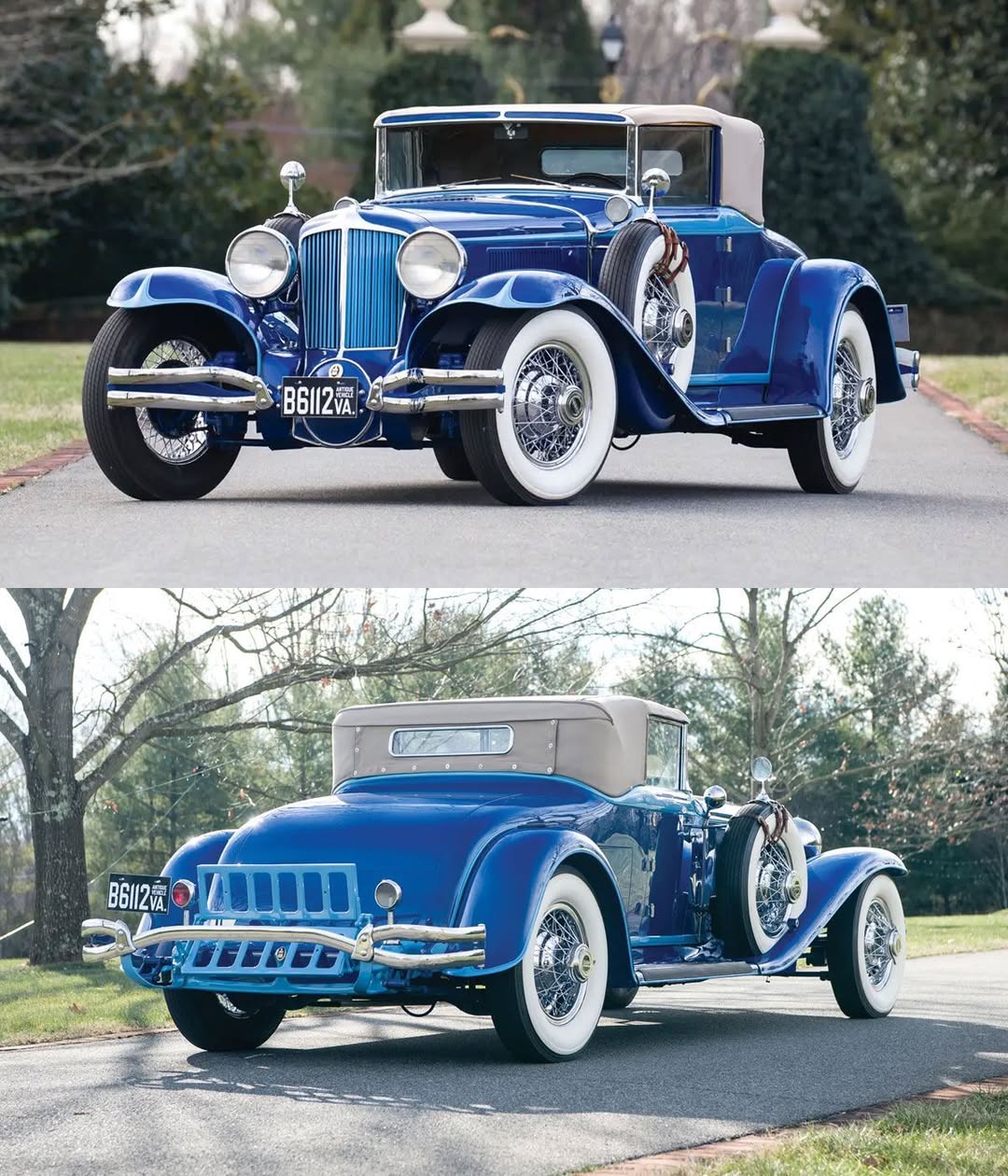
Source