1938 Buick Special Model 46 Coupe
Buick’s 1938 lineup marked a transitional moment in American automotive design, but by this time the company had already moved away from structural wood construction.
Unlike earlier models of the 1920s and early 1930s, the 1938 Special Model 46 Coupe was built entirely with steel body framing, reflecting the industry-wide shift toward all-steel construction.
Buick positioned the Model 46 as its entry-level offering within the Series 40 Special lineup, featuring flowing bodywork characteristic of late-1930s design philosophy.
The coupe’s exterior displayed chrome grille work and shoulder trim that highlighted the car’s substantial proportions, while running boards provided traditional stepping access. Chrome bumpers with guard attachments and script hubcaps on color-matched wheels completed the exterior appointments.
The 122-inch wheelbase provided generous interior space and contributed to the coupe’s balanced appearance. Hydraulic drum brakes at all four corners represented advanced stopping technology for the period, while independent front suspension with coil springs delivered improved ride quality compared to older solid-axle designs.
Buick’s 248 cubic inch Dynaflash overhead-valve inline eight-cylinder engine produced 107 horsepower at 3,400 RPM and 203 pound-feet of torque at 2,000 RPM. Power was delivered to the rear wheels through a three-speed manual transmission with floor-mounted shifter.
This straight-eight design remained in production from 1931 to 1953, establishing itself as a dependable foundation for Buick’s model range.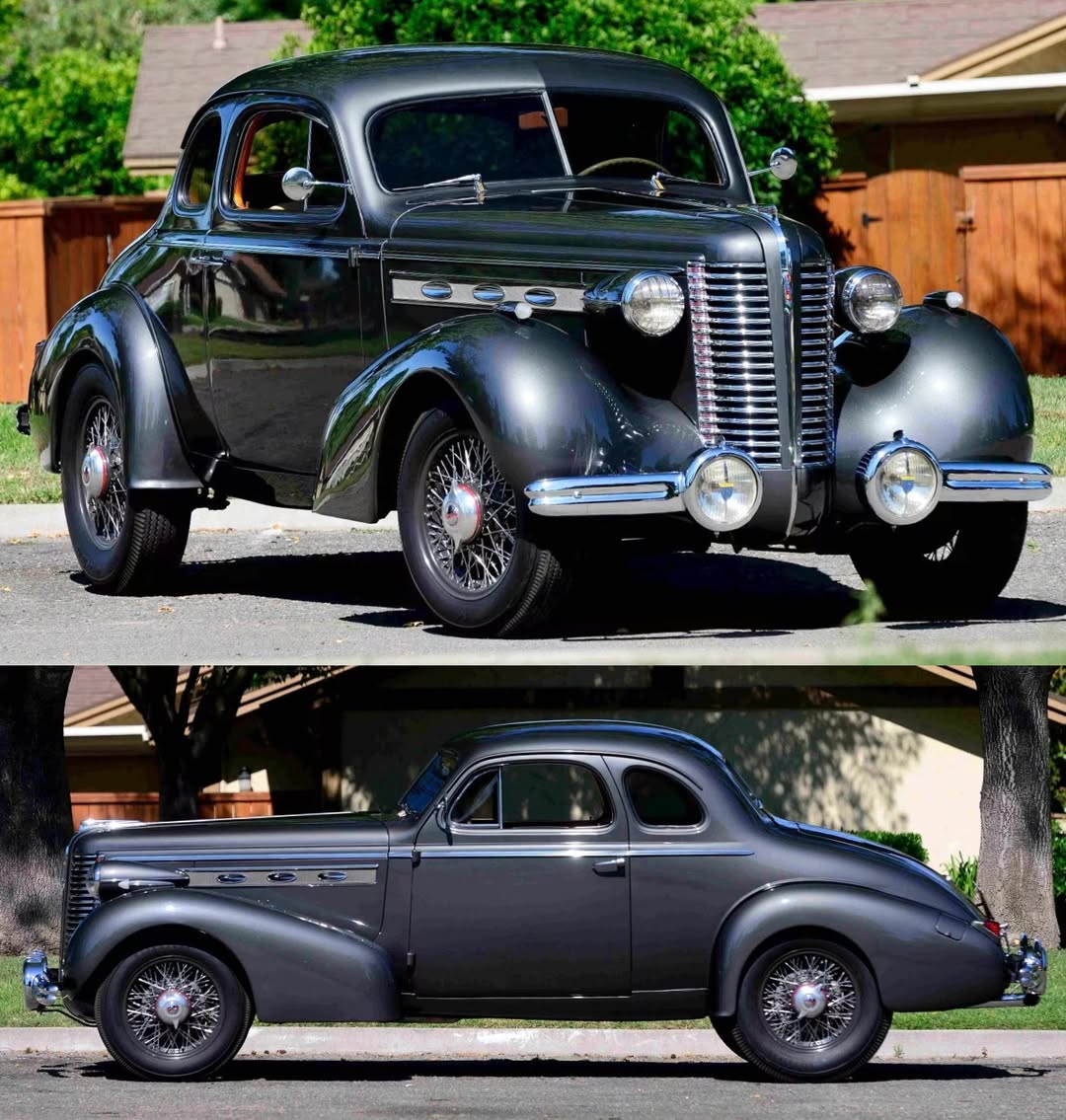
Source