1937 Chrysler Airflow Eight Sedan
Wind-tunnel testing shaped the Chrysler Airflow’s body at a time when most American cars were drawn with little regard for aerodynamics.
The result looked unlike anything else on the road: a rounded silhouette, faired-in headlights, and a forward-leaning profile that polarized buyers and pushed Chrysler to restyle the front end multiple times across the model’s run.
Art Deco motifs carry throughout, from the waterfall grille and fender skirts outside to the interior’s woodwork, instrumentation, and “banjo” Bakelite steering wheel.
Engineer Carl Breer (one of Chrysler’s “Three Musketeers”) positioned occupants between the axles to improve weight distribution and reduce the rear-seat bounce common to conventional cars of the period. The semi-unitized body structure shared stresses that most cars of the day left entirely to the frame.
The 323 CI L-head straight eight under the hood produces 130 horsepower, backed by a three-speed manual transmission with optional overdrive.
Despite these advances, the Airflow never found its audience. Just 4,370 sedans were produced in 1937, its final model year, before Chrysler replaced it with a more conventional design.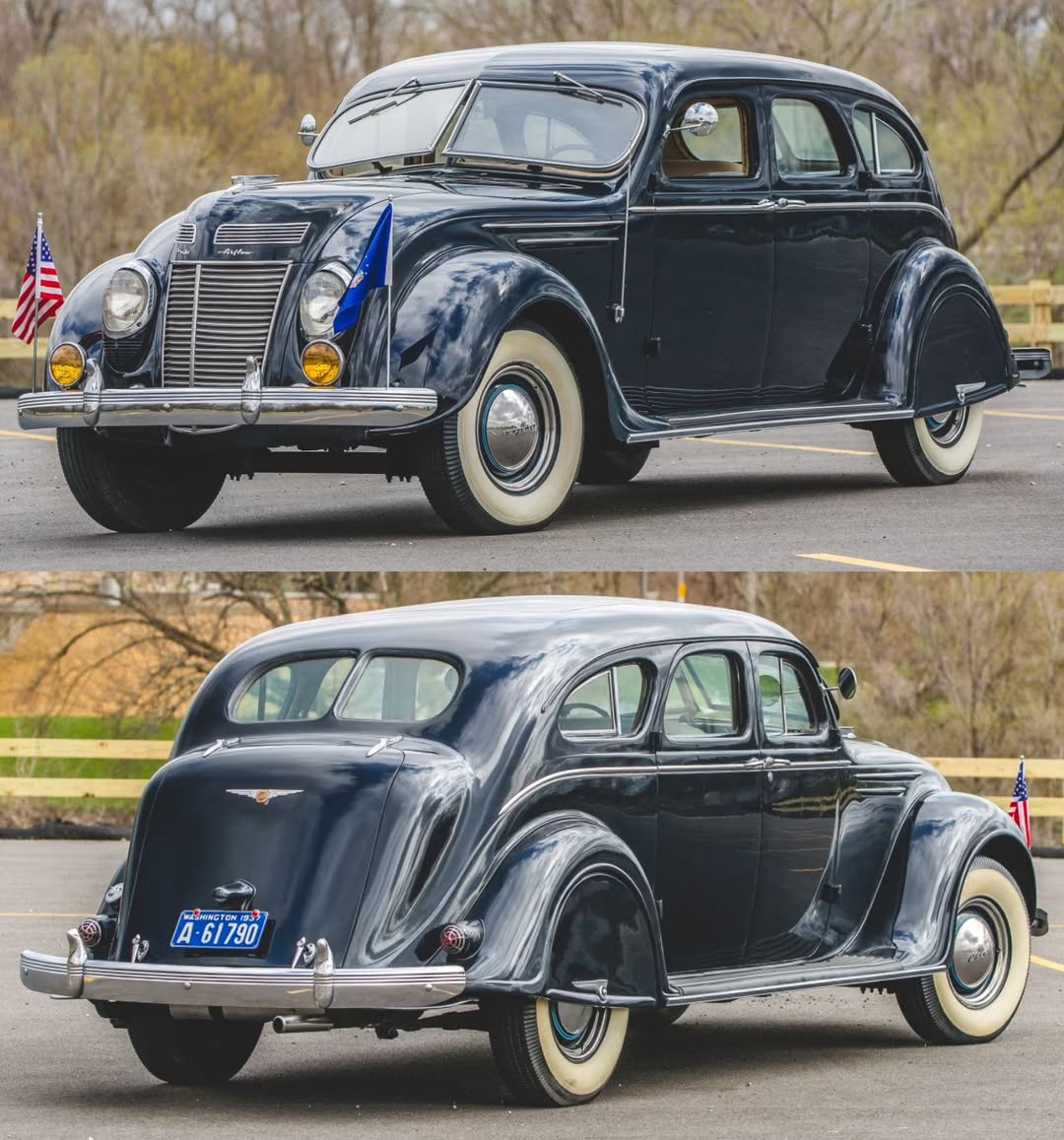
Source