1903 Duryea Three-Wheel Phaeton
The Duryea brothers road-tested one of America’s first gasoline-powered automobiles in Springfield, Massachusetts in September 1893. J. Frank went on to win the 1895 Chicago Times-Herald race (the first American automobile competition), and a Duryea Motor Wagon was among the participants in the 1896 London-to-Brighton Emancipation Run.
The brothers later split, and in 1900, Charles Duryea and Herbert Sternbergh established the Duryea Power Company of Reading, Pennsylvania, and by 1902 it was manufacturing one 3-wheel, gasoline-powered car per week.
This 1903 example runs a horizontal, water-cooled 215 CI 3-cylinder engine mounted under the seat, producing 12 hp. A single front wheel places the body lower than was typical of contemporary runabout practice, easing entry and exit considerably.
A tiller controls steering and throttle and can be operated from either seat, a characteristically Charles Duryea approach that consolidated primary controls in one hand.
Wood-spoke wheels carry white pneumatic tires; Dietz kerosene lamps provide lighting. The carved, fluted body finished in dark green with crimson coachlines and a burgundy chassis accommodates driver and one passenger. Empty weight is approximately 800 pounds.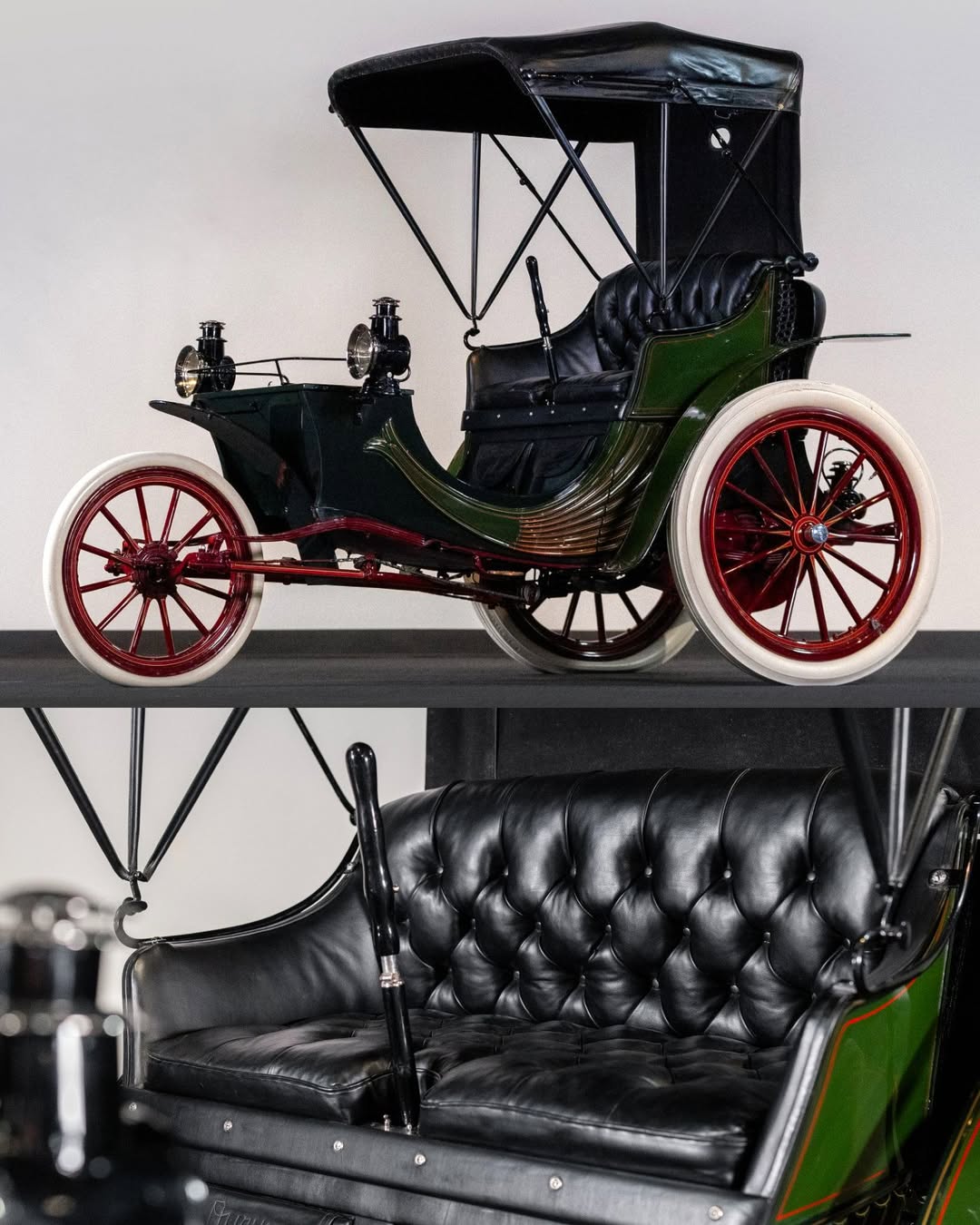
Source