1929 Duesenberg Model J LaGrande Blind Quarter Brougham
Duesenberg’s Model J arrived in December 1928 as America’s response to the world’s finest luxury automobiles, fulfilling Errett Lobban Cord’s directive to create “The Mightiest American Motorcar.”
The LaGrande body style featured a blind quarter design (lacking rear quarter windows) that emphasized privacy and formal coachwork traditions popular among chauffeur-driven luxury cars of the period.
Finished in maroon with a black fabric roof and dual chrome side-mount spare tires, these formal sedans rode on the shorter 142-inch wheelbase rather than the extended chassis option.
The Model J’s mechanical specification included a 420-cubic-inch dual overhead cam Lycoming straight-eight engine producing 265 horsepower, making it one of the most powerful American production engines of its time.
Vacuum-assisted hydraulic drum brakes at all four corners provided stopping power, while 19-inch Buffalo-type steel-spoke wheels with cast brass hubs and red Duesenberg badges supported the substantial chassis.
The floor-shifted three-speed manual transmission directed power through a banjo-type rear axle suspended on semi-elliptic leaf springs.
Weymann initially bodied this chassis before the LaGrande Blind Quarter Brougham coachwork was installed in 1933, demonstrating the common practice of re-bodying luxury chassis to suit changing owner preferences or fashion.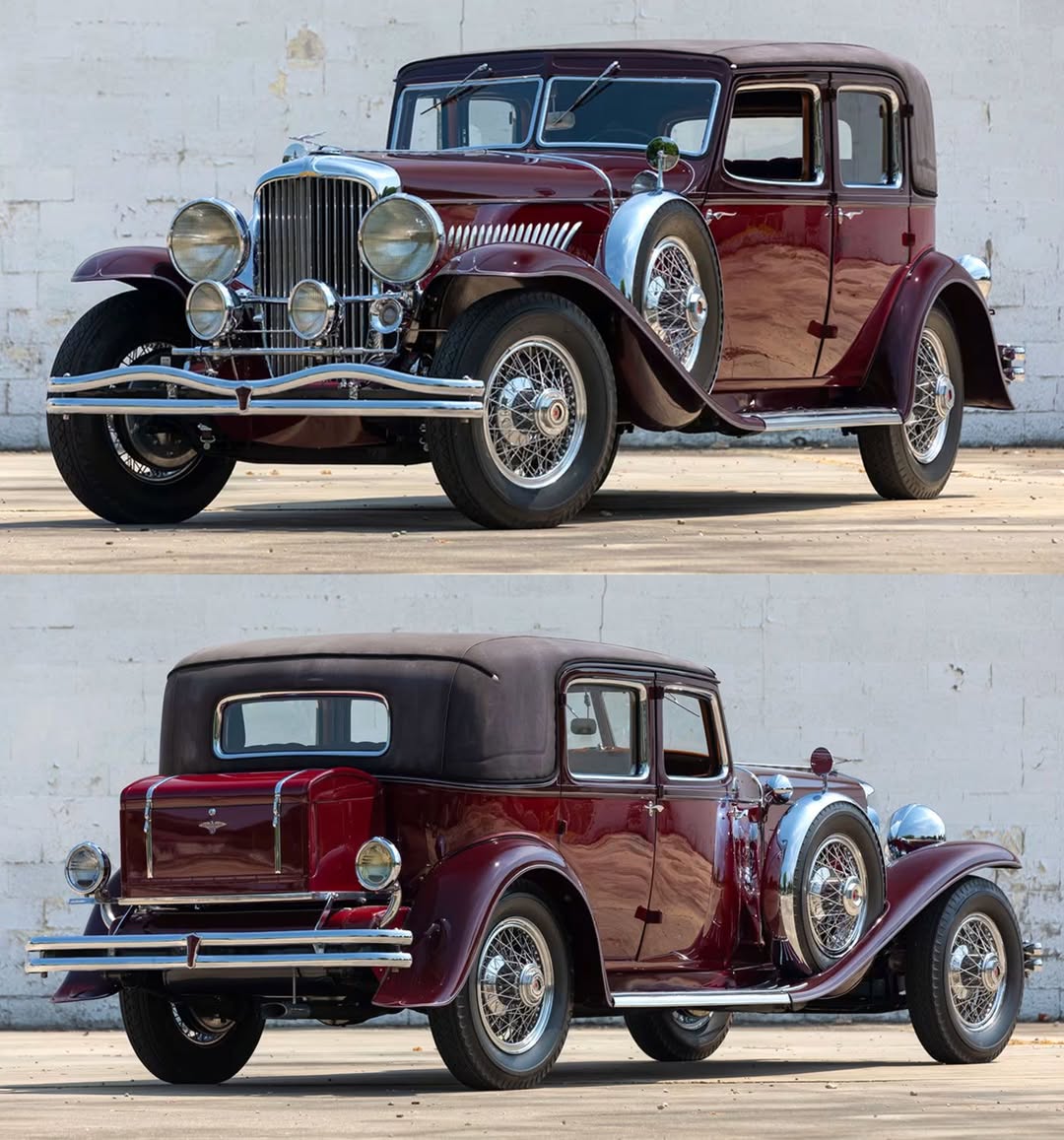
Source