1933 Ford Model 40 V8 Coupe
Henry Ford transformed affordable performance in 1932 by introducing the flathead V8 engine in a mass-produced car, offering eight-cylinder power at a price competitors couldn’t match. The original 221 cubic inch V8 produced 65 horsepower but initially suffered from overheating and reliability issues.
By 1933, Ford engineers had refined the design for the new Model 40, adding improved water pumps, aluminum cylinder heads, and a higher 6.3:1 compression ratio that increased output to 75 horsepower. Power was delivered through a three-speed sliding-gear transmission, with mechanical drum brakes providing stopping power at all four wheels.
The 1933 Model 40 rode on a new X-member double-drop chassis with a 112-inch wheelbase (six inches longer than the 1932 Model 18). Styling updates gave the car a more modern, integrated look, including a forward-leaning, heart-shaped grille, skirted front fenders, curved hood louvers, and gracefully arched bumpers.
The redesigned body extended over the cowl, an influence drawn from the English Ford Model Y, which helped create a sleeker profile.
Ford sold nearly 305,000 V8-powered vehicles in 1933, confirming that buyers embraced the combination of strong performance, elegant styling, and affordable pricing. The 1933 Ford Model 40 later became a favorite platform for hot rodders, prized for its timeless proportions and V8 foundation.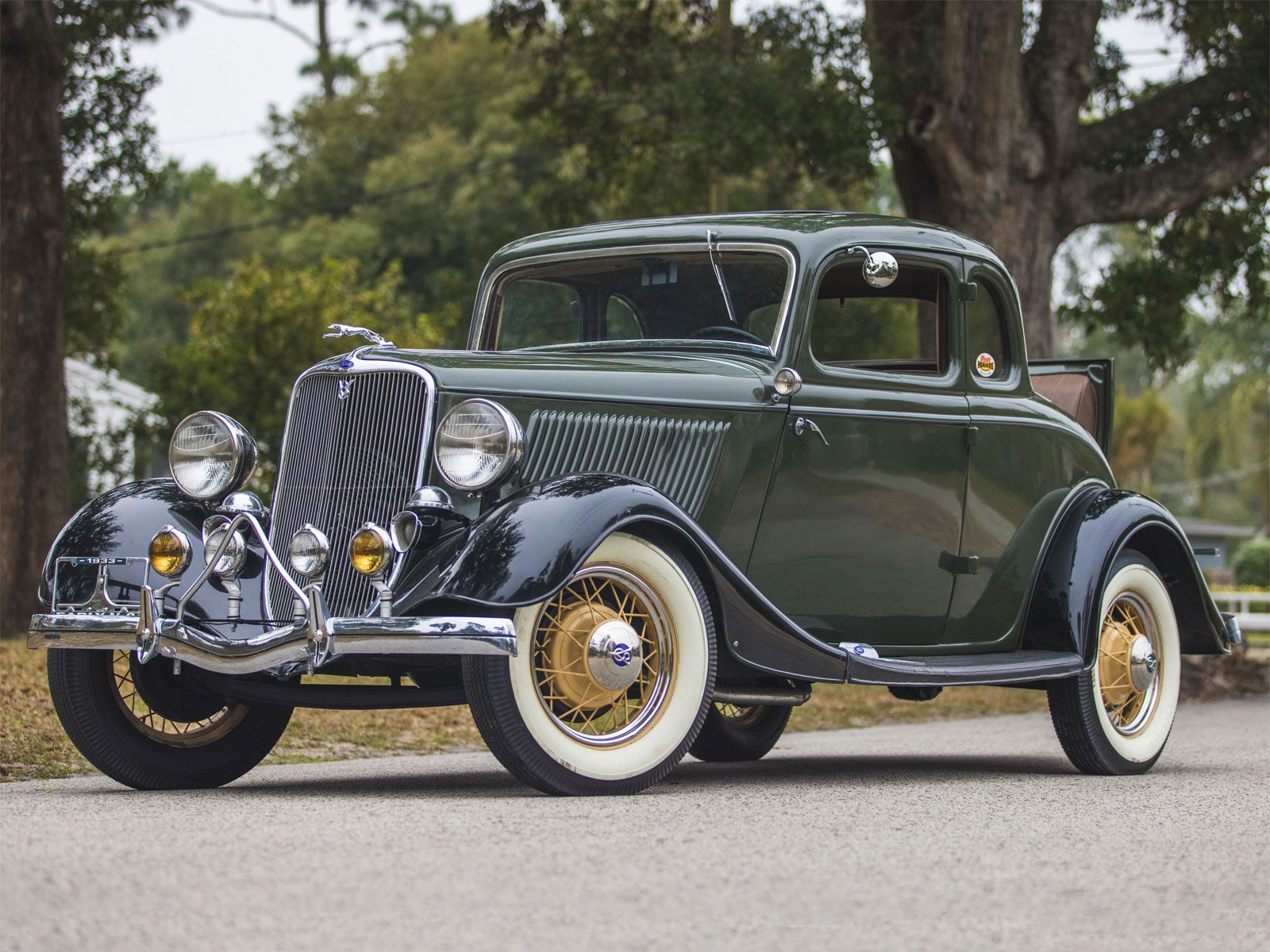
Source