1939 Lincoln-Zephyr Convertible Sedan
The convertible sedan was the rarest body in the 1939 Lincoln-Zephyr lineup. With four doors and a folding canvas top, just 302 were produced that year against 16,663 four-door sedans.
The Zephyr had debuted in 1936 as the first aerodynamic American production car to find commercial success (the Chrysler Airflow had preceded it with similar ambitions and fallen short).
Developed by John Tjaarda at Briggs Manufacturing and shaped for production by E.T. “Bob” Gregorie under Edsel Ford’s direction, its pointed prow, low hood, and integrated fenders gave the Zephyr a profile unlike anything else on American roads.
For 1939, the nose was updated with butterfly-shaped twin grilles carrying vertical bars, and new bumpers (the front one split to improve engine airflow). Doors gained flanged lower sections that concealed the running boards. Inside, a central floor pedestal carried the clock, instrument cluster, heater outlet, and radio speaker, with the gearshift lever emerging from the top on the driver’s side.
The 267 CI L-head V-12 produced 110 hp (the only twelve-cylinder in the segment, pitted against Packard’s eight-cylinder 120). Servo-assisted hydraulic brakes were new for 1939, one step beyond the parallel Ford and Mercury, which got hydraulics without the boost. The convertible sedan was priced at $1,790, the highest in the Zephyr range.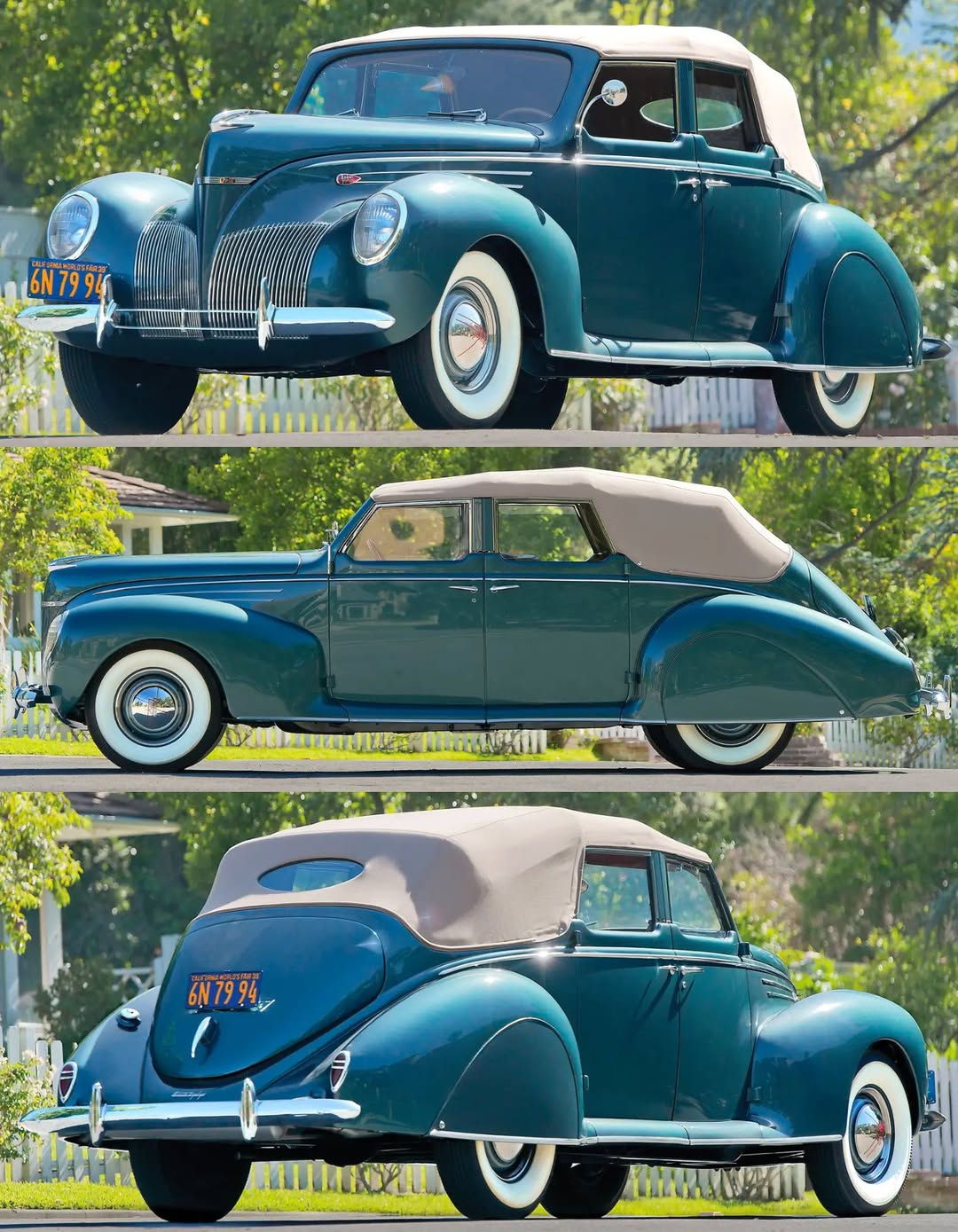
Source