1948 Tucker 48
Preston Tucker’s ambitious sedan featured a distinctive third center headlight that swiveled with the steering at angles beyond 10 degrees. This “Cyclops Eye” gave the fastback four-door an immediately recognizable appearance on American roads. The aerodynamic body measured 219 inches long but stood just 60 inches tall.
A rear-mounted 334 cubic inch (5.5-liter) horizontally opposed six-cylinder produced 166 horsepower at 3,200 rpm and 372 pound-feet of torque at 2,000 rpm. The water-cooled aluminum engine weighed only 320 pounds. Four-wheel independent suspension and a Cord-derived four-speed pre-selector transmission were uncommon features for American cars of the period. Top speed reached 120 mph.
Safety innovations included a padded dashboard, pop-out windshield glass, and massive bumpers. Built in Chicago during 1948, only 51 examples left the factory before the Tucker Corporation closed on March 3, 1949, following an SEC investigation. Although Tucker was acquitted of all charges, the negative publicity destroyed investor confidence and ended production.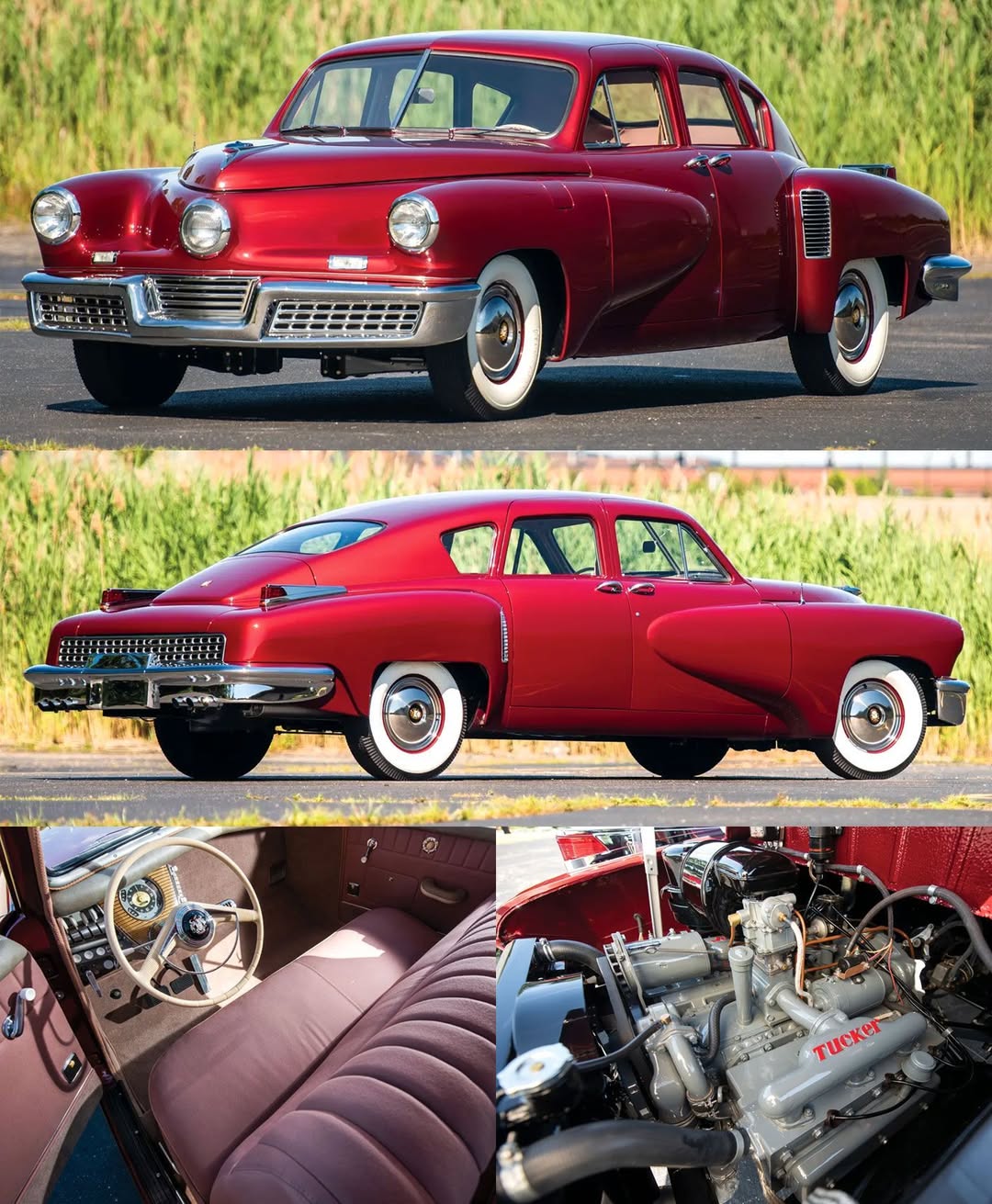
Source