1969 Chevrolet Sportvan 108 Camp Wagon
Chevrolet’s second-generation forward-control Sportvan introduced V8 power and extended wheelbases to the recreational vehicle market. The 108-inch wheelbase Camp Wagon configuration stretched 18 inches beyond the standard 90-inch model, significantly improving ride quality over the shorter version’s cart-like behavior.
The cab-over-engine layout positioned the powerplant directly between the front seats beneath a prominent doghouse cover, maximizing cargo and living space while keeping the overall length relatively compact.
Engine options included an inline-six (most commonly the 250 cubic inch unit rated at 155 horsepower) or an optional 307 cubic inch V8 producing 200 horsepower at 4,600 rpm and 300 lb-ft of torque.
Power was delivered through either a three-speed automatic or a manual transmission, typically a column-shift three-speed, with a floor-shift four-speed available. The chassis used independent front suspension with control arms and coil springs, a solid rear axle on leaf springs, and four-wheel drum brakes.
Recreational conversions flourished during this period, with specialist firms such as Travel Equipment Corporation of Elkhart, Indiana transforming Sportvans into self-contained camping vehicles.
Typical Camp Wagon installations included fold-down dinette tables that converted to sleeping accommodations, pop-up canvas roofs, compact galley kitchens with propane cookers, iceboxes or refrigerators, and roof-mounted air conditioning. These conversions turned utilitarian commercial vans into surprisingly comfortable weekend retreat vehicles.
The second-generation Sportvan’s boxy steel construction and straightforward mechanical layout made it especially well suited to customization, helping fuel the growing van culture of the late 1960s.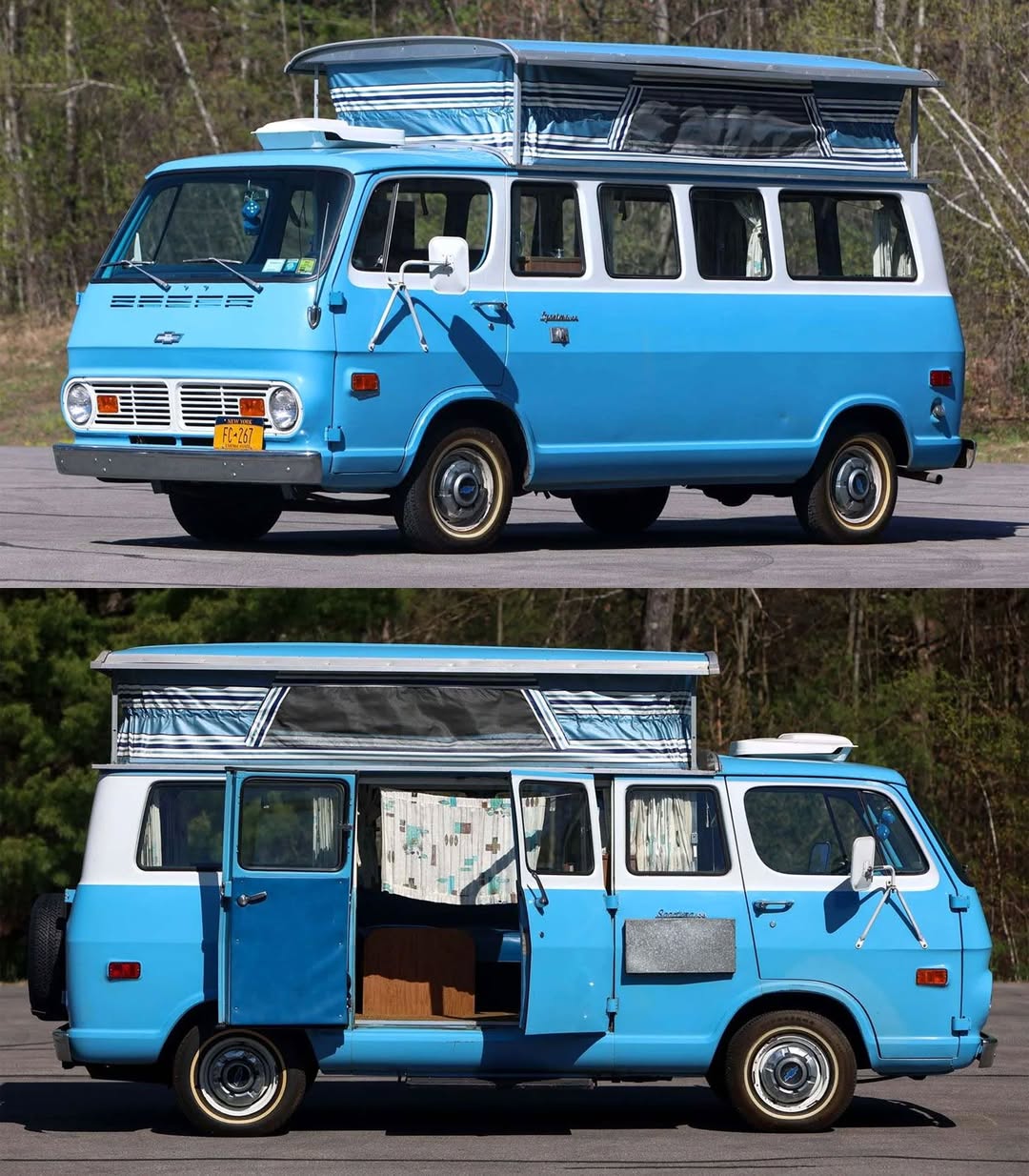
Source