1937 Chevrolet Carryall Suburban
Chevrolet introduced the Carryall Suburban in the 1935 model year as one of the industry’s earliest all‑steel wagon bodies mounted on a truck chassis, responding to demand for a vehicle combining passenger comfort with commercial durability.
Unlike many contemporary car-based wagons with composite or wood construction and canvas tops, the Suburban employed steel body panels on a half-ton truck platform, creating a new vehicle category that would eventually evolve into the modern sport utility vehicle.
The 1937 model year brought updated styling incorporating Art Deco design influences and increased power output. The 216.5 CI overhead-valve inline-six engine (Chevrolet’s “Stovebolt” design) generated 79 HP, a significant improvement over the original 60 HP rating in earlier versions of the engine. Power transmitted through a three-speed manual synchromesh transmission to the rear wheels.
The two-door configuration accessed seating for up to eight passengers arranged in three rows, while removable second and third-row seats created approximately 115 cubic feet of cargo capacity.
Built on a 113.5-inch wheelbase, the Suburban measured just under 197 inches in length and featured front-hinged doors with either a rear tailgate or optional double rear “barn-door” configuration. Pricing started around $685, positioning the vehicle for both commercial and private use in an era when the average new car cost was slightly higher.
Production continued through 1940 before the second-generation design arrived for 1941, making the 1937 Suburban part of the original first-generation series that established one of the longest-running automotive nameplates in history.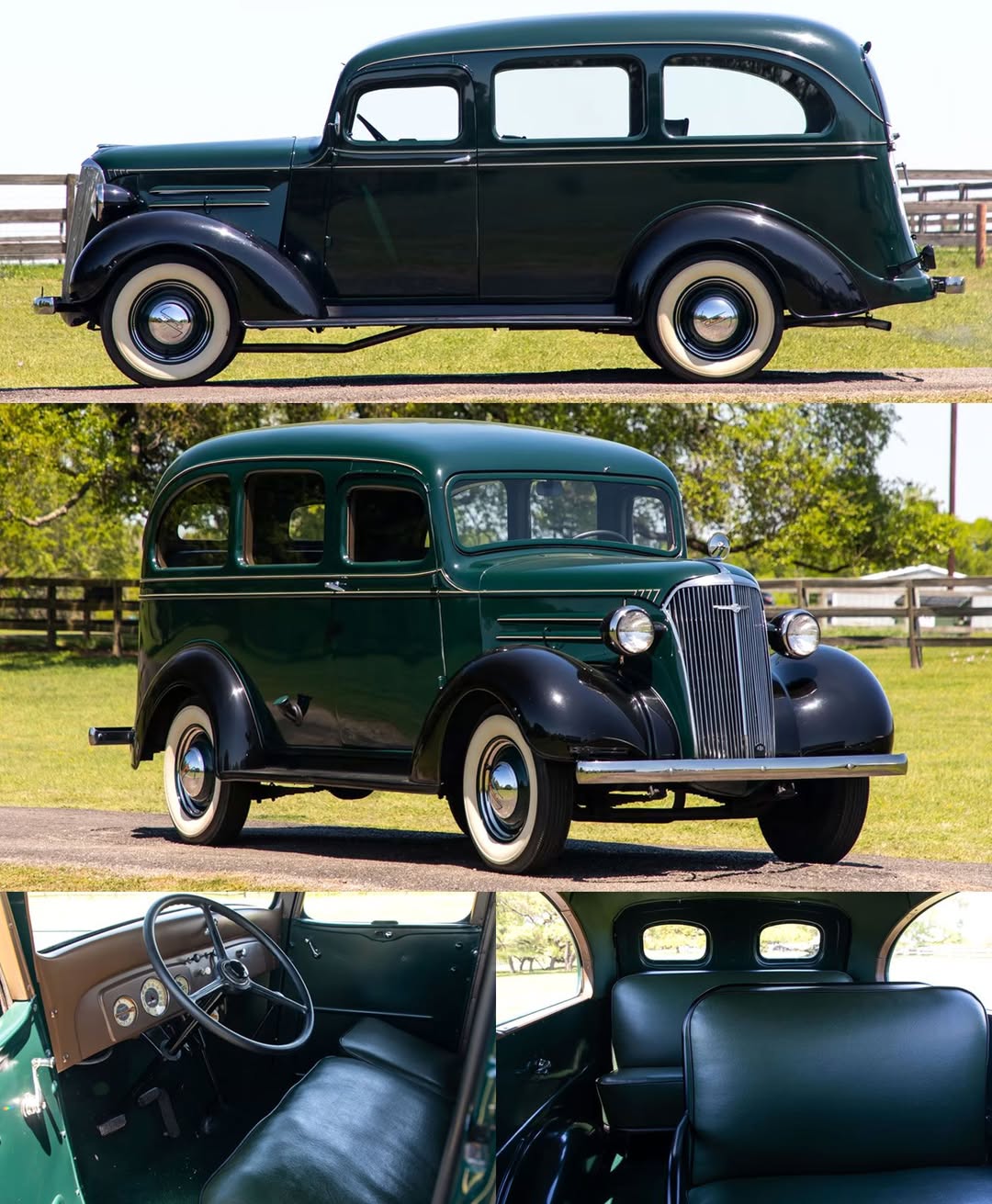
Source