1975 Opel GT/W Genève Concept
General Motors’ commitment to rotary engine development during the early 1970s spawned this mid-engined two-seater, designed in Rüsselsheim in 1972 under Chief Designer Erhard Schnell.
The GT-W designation referenced the twin-rotor Wankel engine intended to power the low-slung sports car, which featured pop-up headlights and proportions suggesting Italian design influence.
Work progressed through 1974 before the oil crisis and tightening fuel-economy concerns prompted GM to abandon its entire Wankel program, leaving the project incomplete.
Rather than shelve the design entirely, Opel renamed the concept “Genève” and presented a fiberglass mockup at the 1975 Geneva Motor Show finished in gold paint, displayed purely as a styling study without a functioning drivetrain.
The car appeared in the context of Opel’s broader concept activity of the period, including the later GT2 study shown at Frankfurt’s IAA, which explored future sports-car themes rather than being a direct companion to the Genève that same year.
Though displayed without drivetrain components, the Genève drew considerable attention for its styling. The concept was later repainted orange in 1977 and eventually received a mid-mounted 327 cubic inch V8 closely related to Opel Diplomat hardware, producing roughly 230 horsepower with a claimed top speed around 145 mph.
The GT-W now resides in the Opel Classic Collection, representing what might have been had rotary engine technology proven more viable in the face of oil-crisis realities.
Its design demonstrated Opel’s ambitions to fill the gap left by the outgoing GT with a more exotic mid-engined successor, even if the eventual V8 installation reflected a later driveline solution rather than the original Wankel intent.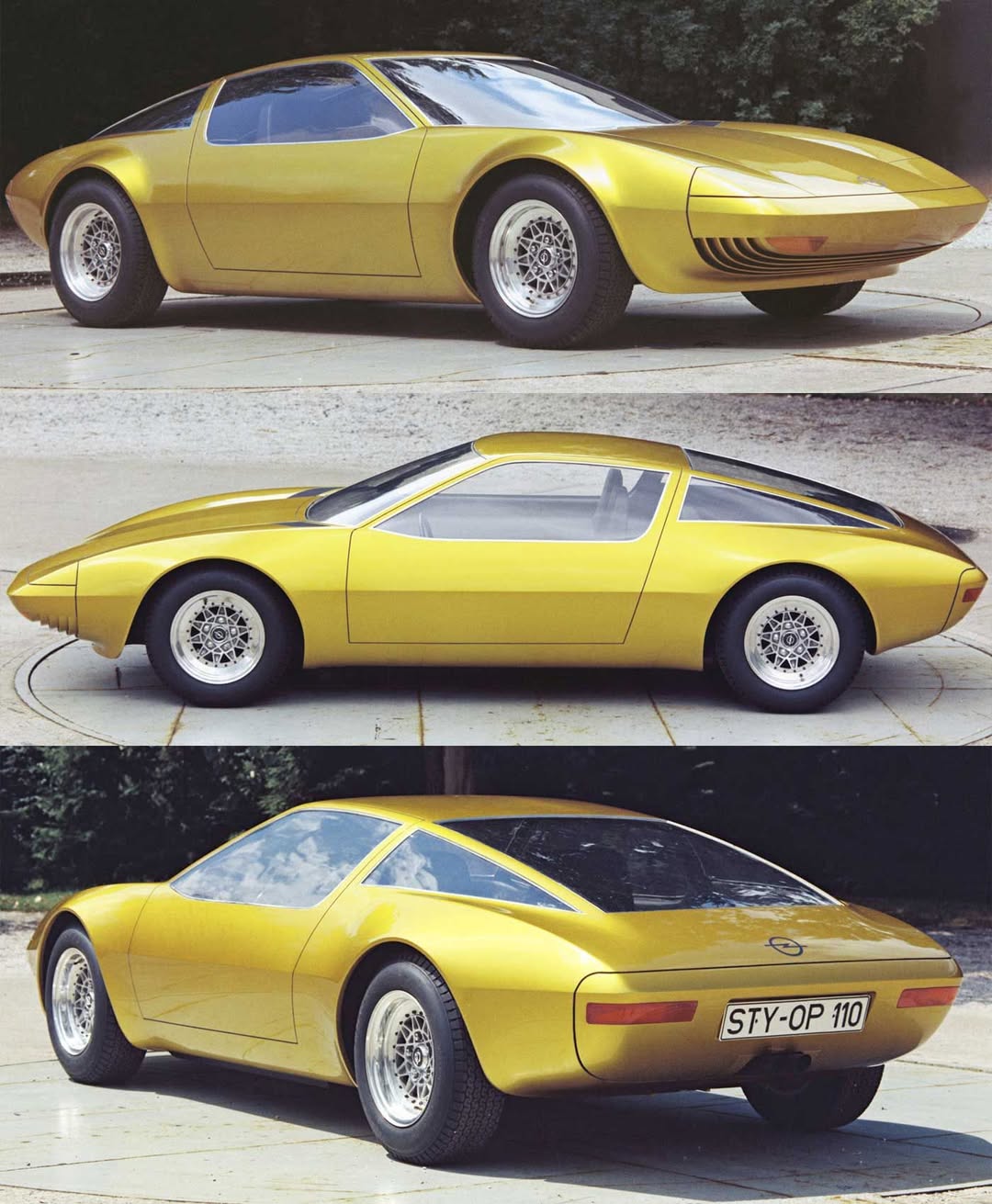
Source