1951 Studebaker Commander Convertible
Aircraft-inspired styling defined South Bend’s most controversial design when Raymond Loewy directed Bob Bourke to create the fighter plane motif for 1950, translating his request to “make the front end look like the airplane” into the now-famous bullet nose theme.
The bullet nose returned in modified form for 1951 with a body-colored outer ring (replacing the previous year’s full chrome treatment) that visually integrated the distinctive spinner into the hood while softening the extreme 1950 appearance.
Commander convertibles represented Studebaker’s premium open-car offering for 1951, with the Commander State Convertible sitting at the top of the line and carrying the highest sticker price in the Studebaker range that year, slightly exceeding even the long-wheelbase Land Cruiser sedan.
Engineering advancements accompanied the polarizing aesthetics. Studebaker introduced its first modern overhead-valve V8 in 1951, a 232.6-cubic-inch unit developing 120 horsepower in Commander trim and available with either a three-speed manual or the new Automatic Drive transmission co-developed with Borg-Warner.
This modern short-stroke design arrived two years after Cadillac and Oldsmobile launched their postwar overhead-valve V8s for 1949, but still three years before Ford replaced its flathead V8 with an overhead-valve design for 1954 and several years ahead of Chevrolet and Plymouth’s first overhead-valve V8 offerings for 1955.
The compact powerplant shared a 115-inch wheelbase chassis with the smaller Champion in 1951, allowing Studebaker to standardize the basic underpinnings of both model lines even though the Commander body was wider and heavier.
Performance impressed contemporary testers despite the convertible’s roughly 3,200- to 3,250-pound curb weight. A Commander won its class in the 1951 Mobilgas Economy Run, averaging in the neighborhood of 28 miles per gallon across the roughly 840-mile course according to contemporary reports, which highlighted the efficiency of the new V8 when driven carefully.
Total 1951 Studebaker output reached approximately 268,565 vehicles, with around 124,000 Commanders built as the line enjoyed a strong postwar sales peak before Studebaker’s long commercial decline set in later in the decade.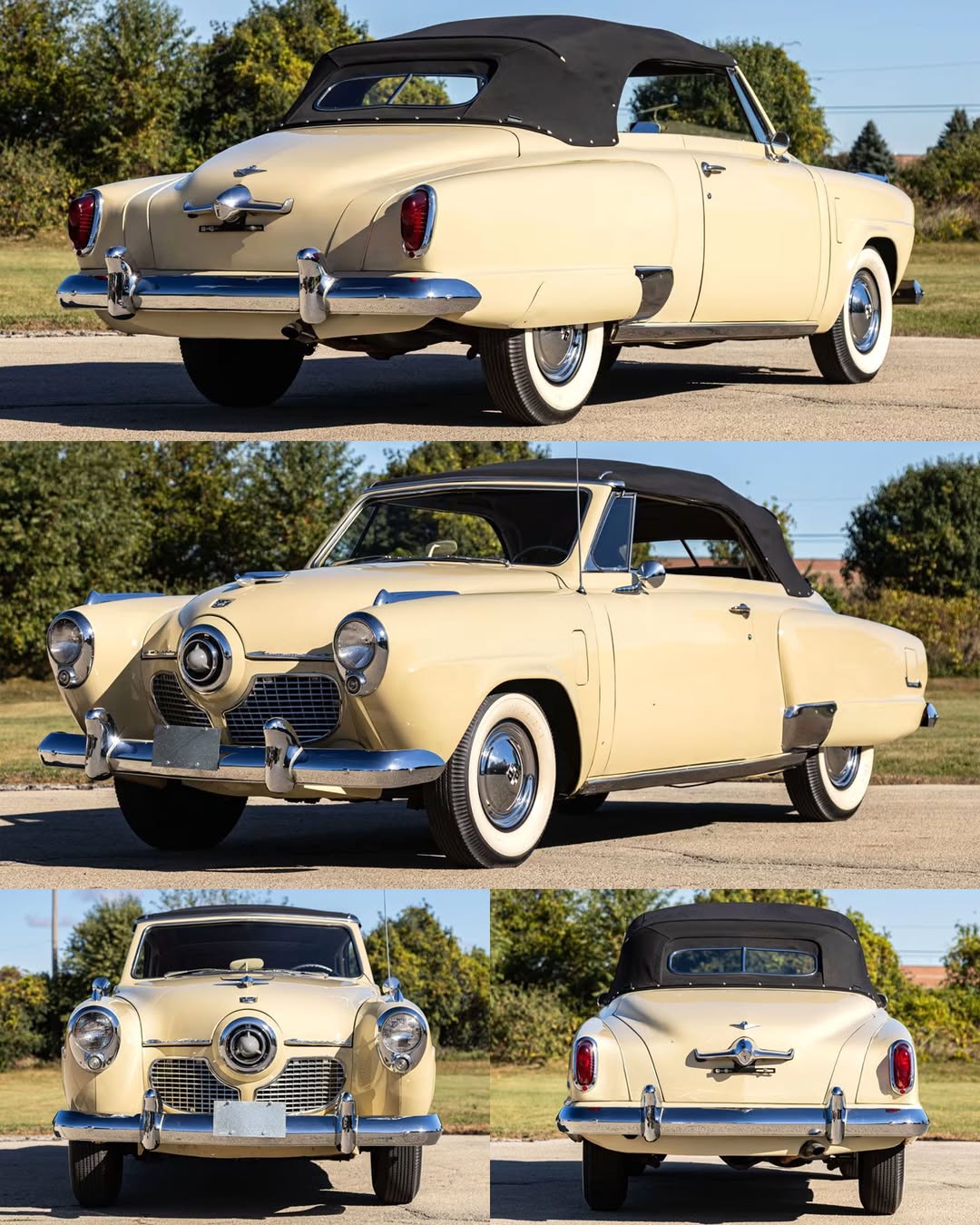
Source