1960 Volvo Amazon
Sweden’s ponton-bodied four-door sedan established Volvo’s reputation for combining safety innovation with practical design. The Amazon (marketed as the 121 and 122S outside Scandinavia) became the first production car fitted with three-point seatbelts as standard equipment beginning in 1959, complementing its padded dashboard and laminated windshield.
Clean styling featured two distinctive oval air intakes at the front and subtle tailfins at the rear, drawing clear inspiration from American automotive design of the period.
The base 121 model used Volvo’s B16A 1.6-liter overhead-valve inline-four producing 60 horsepower, while the sportier 122S employed dual carburetors to achieve 85 horsepower. Both versions drove the rear wheels through manual transmissions (three-speed or four-speed units, with overdrive available on certain models).
The 102-inch wheelbase provided improved interior space compared to Volvo’s earlier PV444 while maintaining manageable exterior dimensions. Solid construction and careful engineering helped give the Amazon a reputation for durability well beyond its modest size.
Production spanned 1956 to 1970, yielding approximately 667,791 examples across four-door, two-door, and wagon configurations. The Amazon’s blend of safety, reliability, and respectable performance made it competitive in rallying and touring car competition while firmly establishing Volvo’s identity as a builder of dependable family cars.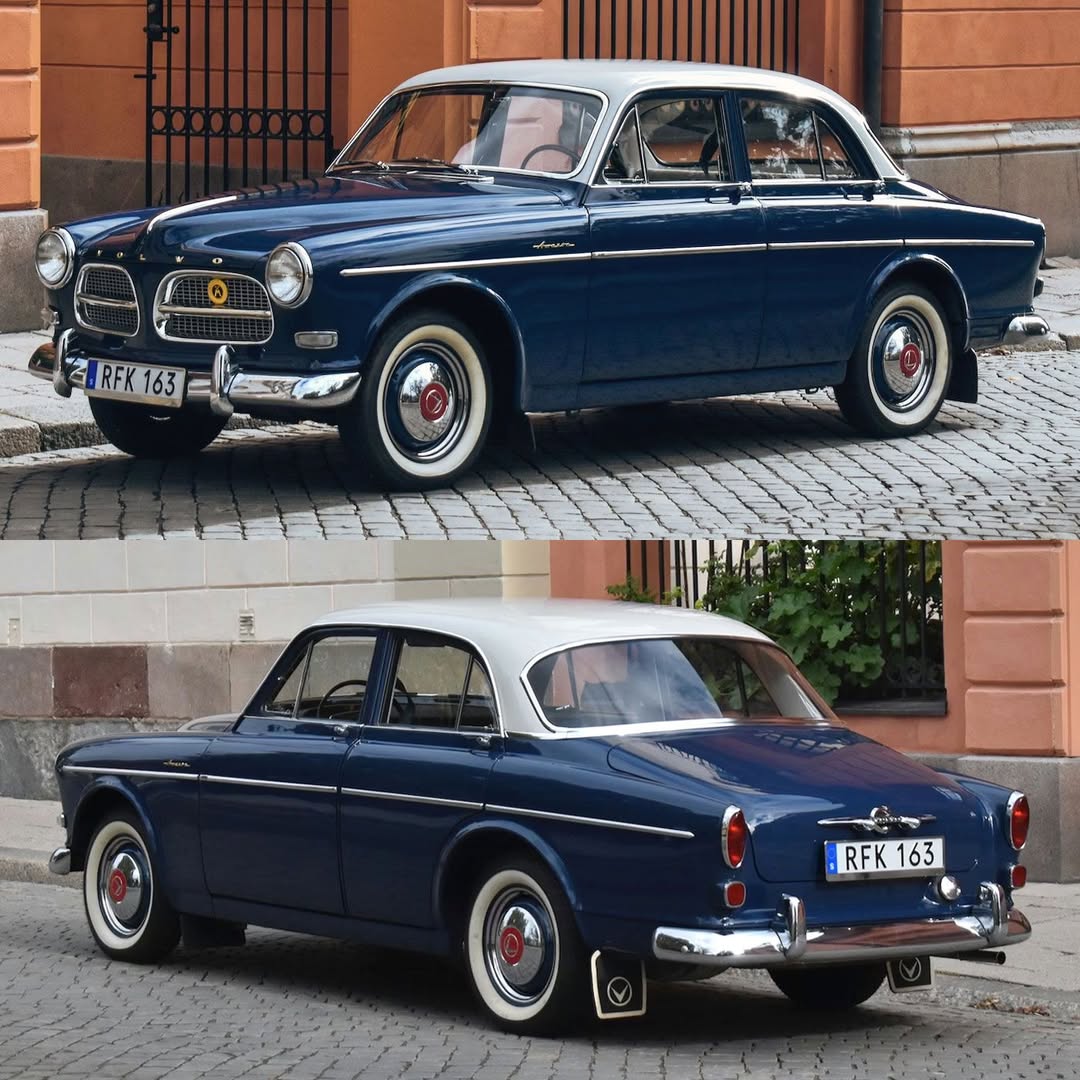
Source