1972 Citröen SM
Citroën had acquired Maserati in 1968 to obtain high-performance engine technology for their new grand touring coupe.
Maserati’s solution to Citroën’s need for a V-6 engine came through an expedient approach: adapting their Indy-derived 90-degree V-8 architecture by removing two cylinders.
The resulting 2,670 cc V-6 with triple Weber twin-choke carburetors produced 170 horsepower at 5,500 rpm, powering what was among the fastest front-wheel-drive production cars of its time at approximately 140 mph.
The SM (Série Maserati) combined this Italian powerplant with Citroën’s DS-derived hydropneumatic suspension, power-assisted four-wheel disc brakes with high-pressure hydraulics, and speed-sensitive DIRAVI self-centering steering.
The steering system used near-zero caster geometry and hydraulic return action rather than conventional mechanical self-centering.
The long, sleek fastback body showcased Citroën’s leadership in passenger car aerodynamics. On early European models, hydraulically adjustable swiveling headlamps sat under a curved glass cover, while an offset hood intake fed the engine.
Self-leveling suspension and partially skirted rear wheels contributed to a drag coefficient of approximately 0.33.
Motor Trend named the Citroën SM its 1972 Car of the Year in the United States.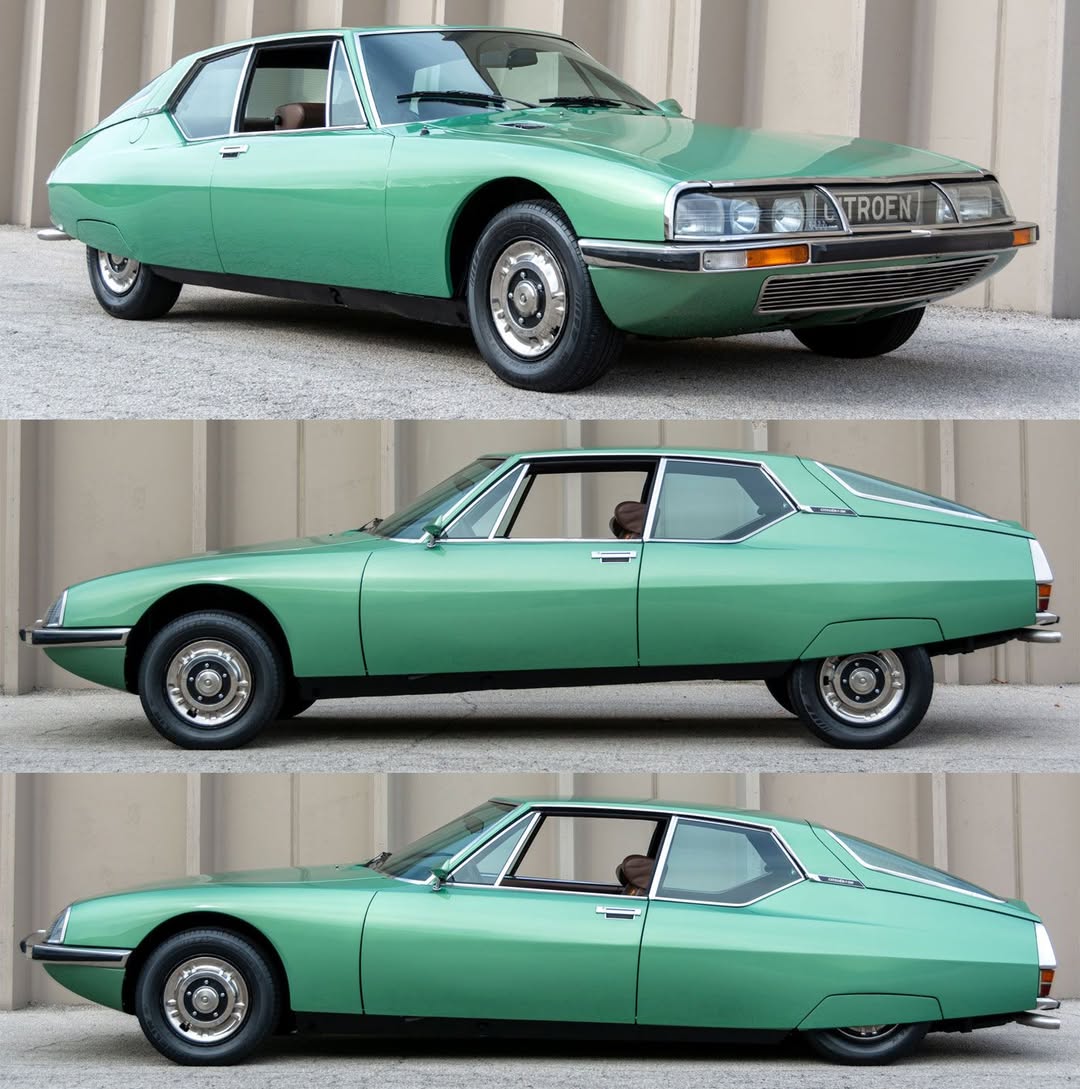
Source