1954 Jaguar Mk VII
Jaguar combined sports car performance with luxury saloon accommodation when it launched the Mark VII at the 1950 British International Motor Show.
The four-door fitted the same 3.4-liter twin-cam straight-six from the XK120 sports car, producing 160 horsepower and enabling speeds of around 100 mph. Curb weight was approximately 3,780 pounds (1,715 kg).
The streamlined body featured integrated headlights and fenders, departing from the separate front wings of its Mark V predecessor.
A two-piece windshield and longer rear overhang contributed to the more contemporary appearance, while the 120-inch wheelbase provided spacious accommodations trimmed in burr walnut and leather.
Independent front suspension used torsion bars and wishbones, with a live rear axle suspended by semi-elliptic leaf springs. In 1953, the Mark VII became the first Jaguar offered with optional automatic transmission (Borg-Warner), addressing preferences in its primary export market. A four-speed manual remained standard.
Factory-prepared Mark VIIs proved surprisingly competitive, winning the RAC Tourist Trophy at Dundrod in 1952 and 1953 with drivers including Stirling Moss. Production reached 20,908 units before the uprated Mark VII M replaced it in 1954, establishing Jaguar’s formula of combining sporting character with luxury appointments.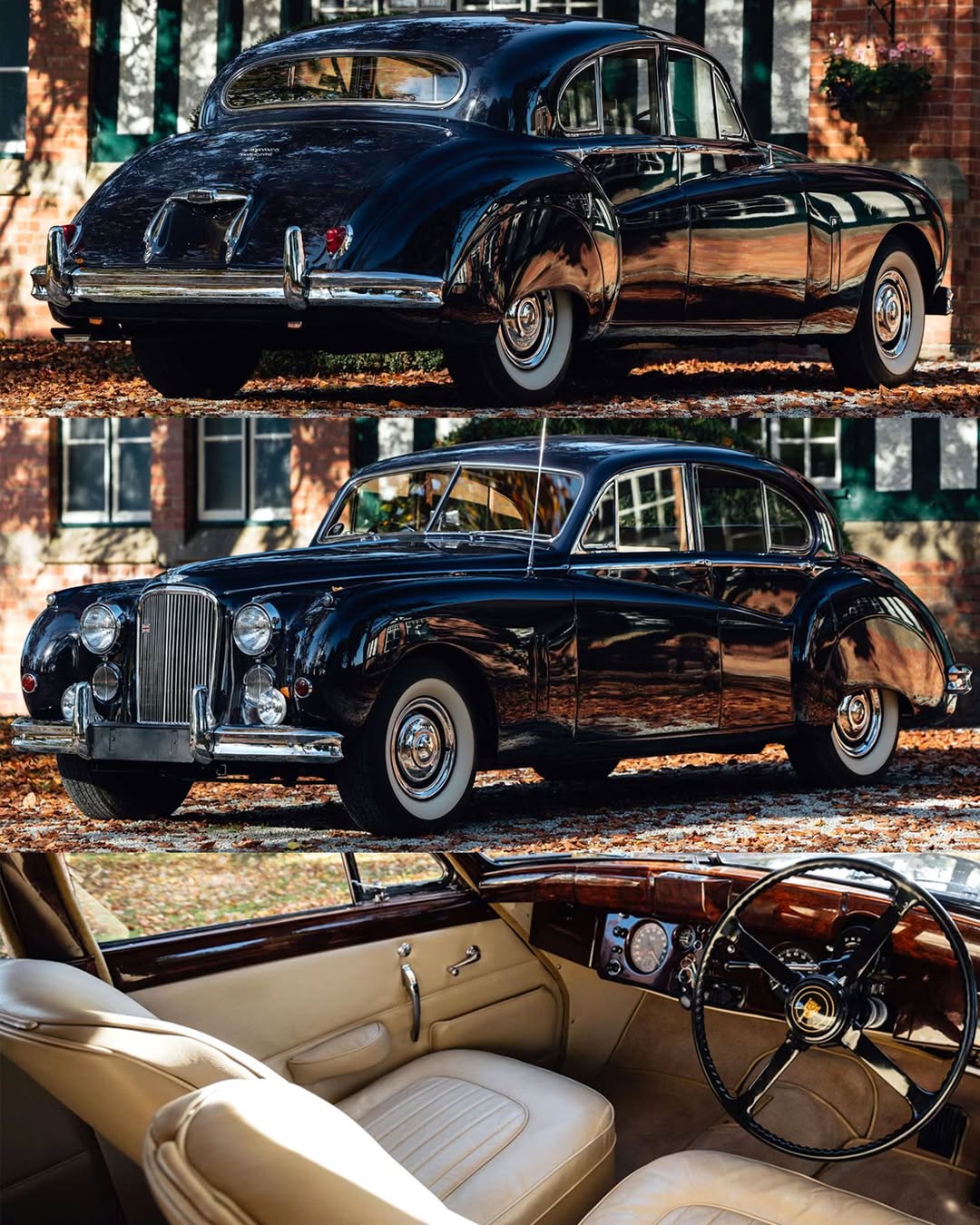
Source