1954 Studebaker Commander Regal Conestoga Wagon
The Conestoga name paid tribute to Studebaker’s horse-drawn prairie wagons of the 1800s, and its arrival in 1954 marked the company’s first all-steel postwar station wagon offering. The Commander Regal was the top-trim variant, with 2,878 produced for the model year, the fewest of any Conestoga configuration.
All Conestogas used a two-door body on a 116.5-inch wheelbase, with a two-piece tailgate and liftgate arrangement for cargo access.
The all-steel construction set the model apart from the wood-bodied wagons that some competitors had offered earlier, and the two-tone paint treatments available on Regal models gave the long, low body additional visual distinction over the base DeLuxe.
Commander models used Studebaker’s overhead-valve 232 CI V-8, rated at 127 horsepower, up from 120 horsepower in 1953. Either a three-speed manual (with or without overdrive) or a Borg-Warner-built automatic could be specified.
Inside, two rows of seating accommodated up to six passengers, with the rear seat folding flat when additional cargo space was needed. The wagons also received reinforced frames and larger brakes compared to Studebaker’s standard sedans.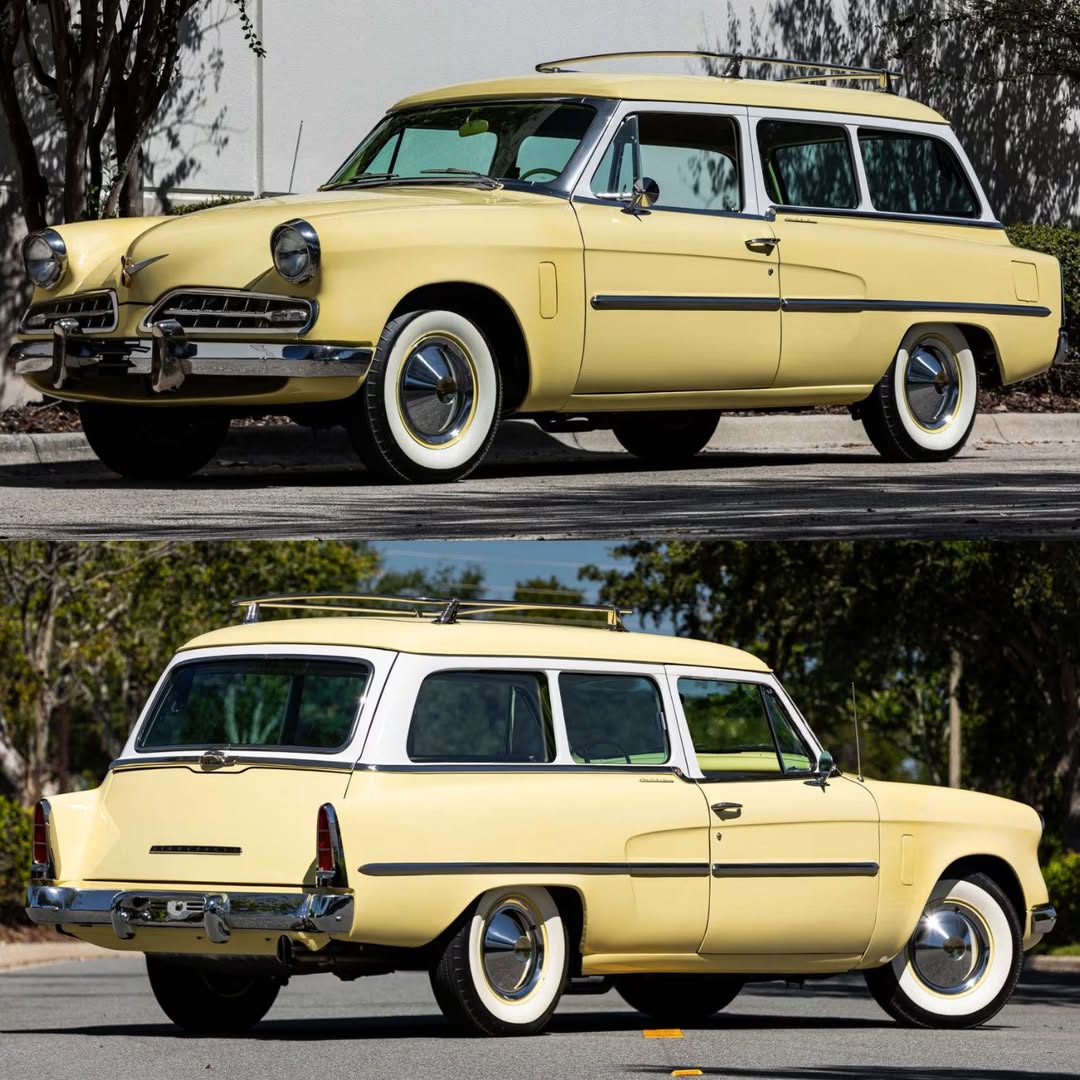
Source