1929 Stutz Model M Four-Passenger Tonneau Cowl Speedster
Stutz built its reputation on the Bearcat, a stripped-down speedster that dominated American performance car culture in the teens. By 1929, the company had moved decisively upmarket with the Model M, yet kept its sporting instincts alive through a handful of semi-custom body styles commissioned from established coachbuilders.
Among these were two LeBaron speedster designs (a two-passenger and a four-passenger), both featuring cut-down racing-style doors and a low, purposeful silhouette.
The four-passenger version added a second cowl and windshield for rear occupants, a configuration that echoed contemporary European practice, though Le Mans regulations of the period did not specifically require four-seat passenger cars.
The long hood, cycle-style fenders, and steeply raked windshield give the Tonneau Cowl Speedster a decidedly European character relative to most American coachwork of the period.
Beneath that hood sits the 322 cubic-inch single-overhead-cam inline-eight producing 113 horsepower, mounted in a 134.5-inch wheelbase chassis with four-wheel Lockheed hydraulic drum brakes and a four-speed manual gearbox.
Stutz delivered approximately 2,320 cars for the 1929 model year. The LeBaron speedster bodies, split between two body styles and ordered against a full range of catalog offerings, account for only a small fraction of that figure.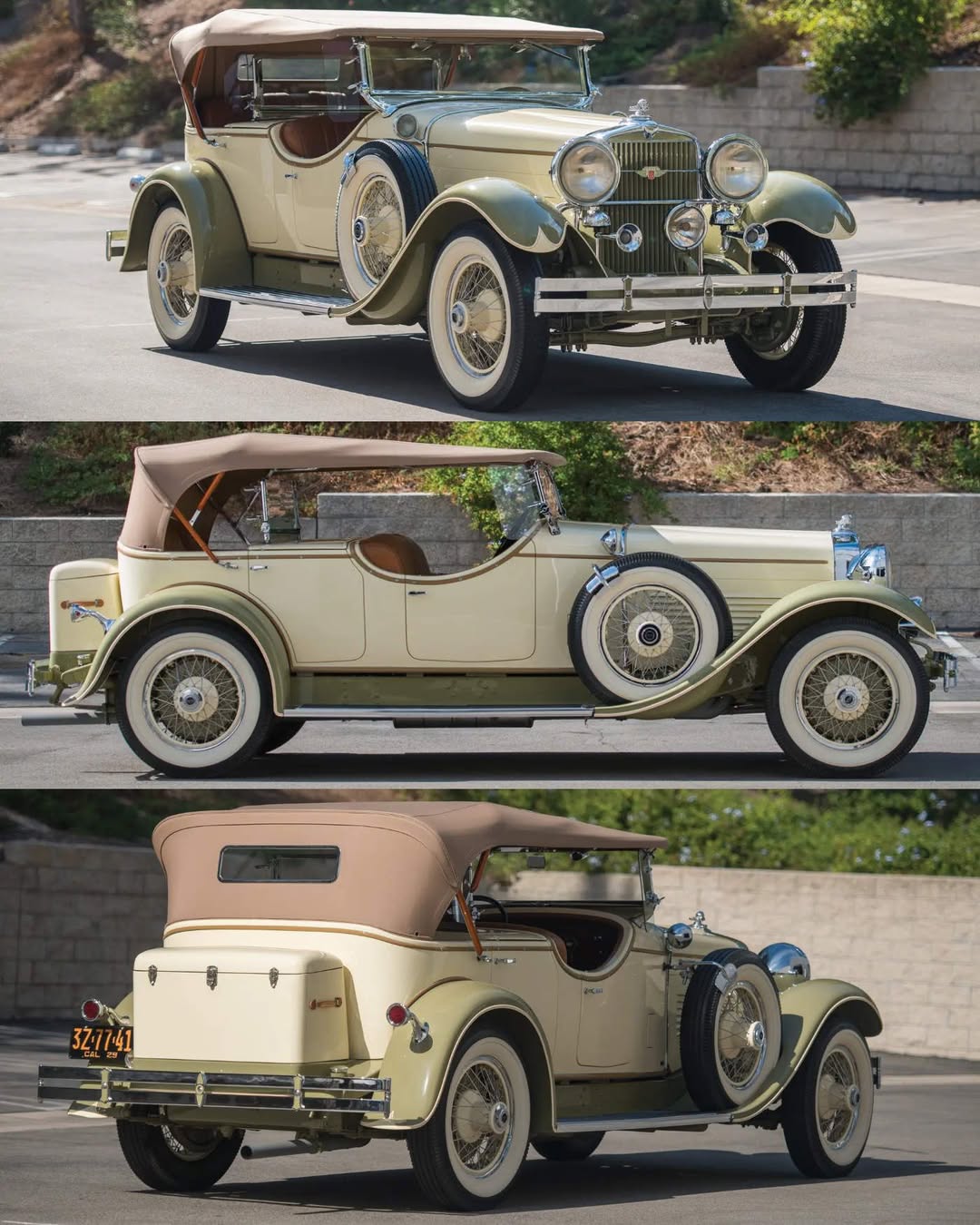
Source