1937 Lincoln Model K Panel Brougham
Nine examples were built for 1937, with two known to survive (the 1937 Willoughby Panel Brougham occupied a singular position atop Lincoln’s already rarefied Model K lineup).
At $7,000, it was the most expensive factory-cataloged body style Lincoln offered that year, a figure that reflected both Willoughby’s meticulous hand craftsmanship and the inherently limited demand for formal coachwork of this kind.
The razor-edge body, with its open chauffeur’s compartment and enclosed rear quarters, followed conventions well established in European coachbuilding.
Optional canework decoration (hand-applied paint simulating wicker paneling across the rear body panels) gave the car a period-appropriate formal elegance. Inside the rear compartment, folding occasional seats, a speaking tube or intercom for communicating with the driver, and smoking and vanity sets catered to passengers who expected their motorcar to function as a private office.
The Model K rode a 136-inch wheelbase and was powered by a 414 cubic inch L-head V12 producing 150 horsepower.
For 1937, the engine benefited from ongoing refinements including improved engine mounting and detail changes aimed at greater smoothness, without altering the fundamental character of a drivetrain already well suited to unhurried, chauffeur-paced travel. The car’s curb weight was approximately 5,700 lbs.
The Panel Brougham had been discontinued after 1933 before returning in limited numbers for 1937, by which point the market for formal open-chauffeur coachwork had all but disappeared.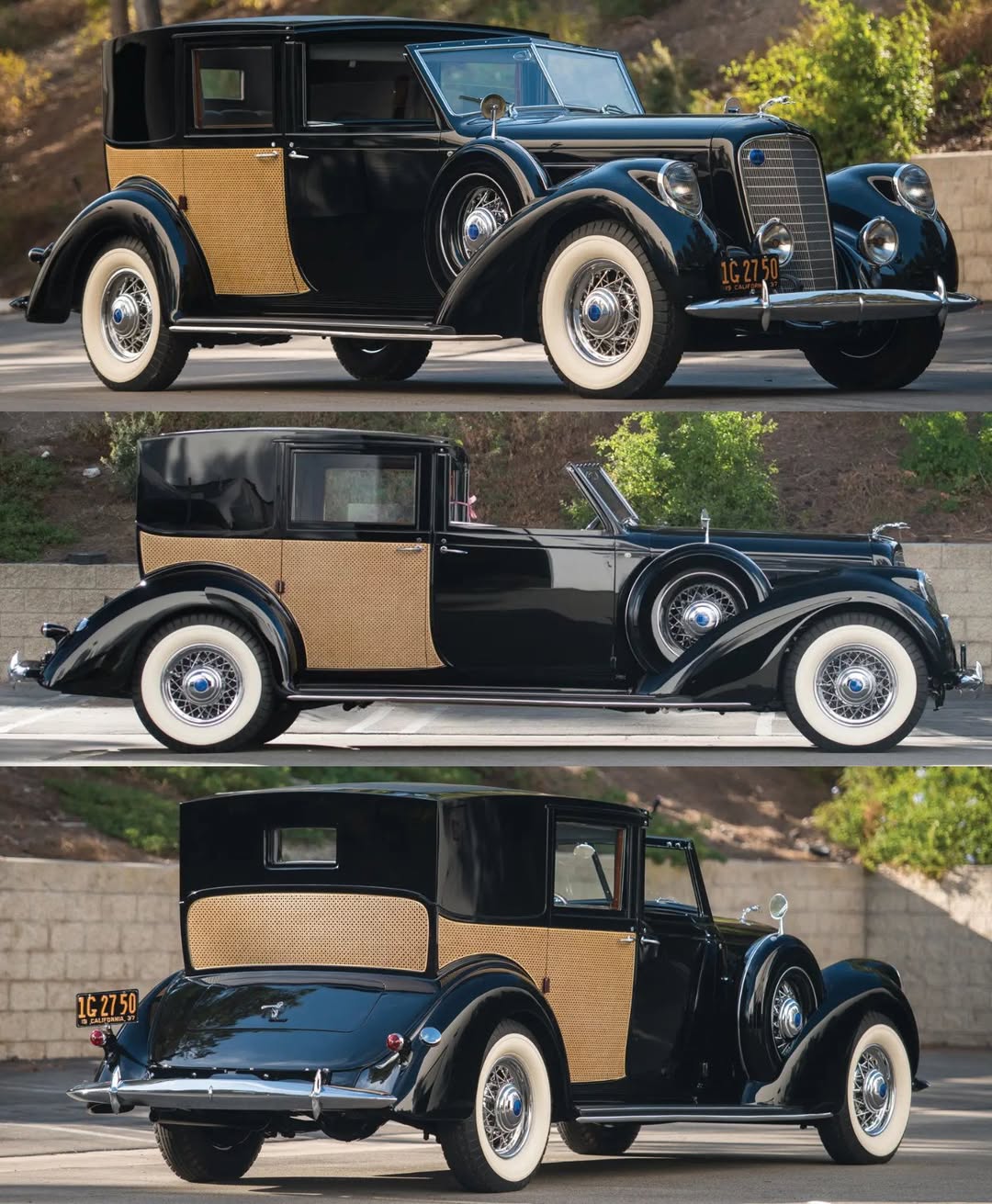
Source