1957 Austin A35
Introduced at the 1951 Earls Court Motor Show as the Austin A30, the model was Austin’s answer to the Morris Minor, priced at £507 on launch (undercutting the Minor by £62) and notable as the first monocoque-construction car the company had produced.
The A35 arrived in 1956 as a direct development, distinguishing itself from its predecessor through a 948cc A-Series engine in place of the original 803cc unit, revised gear ratios, a larger rear window, flashing indicators replacing the earlier semaphore arms, and a painted rather than chromed front grille.
Five body variants were offered across the range: two- and four-door sedans, a Countryman estate, a panel van, and a small number of pick-ups. The two-door sedan was among the most popular configurations, combining a compact footprint with practical, if modest, accommodation.
The A35 rode on a 79.5-inch wheelbase and measured approximately 136.5 inches (about 11 feet 4 inches) in overall length. Curb weight was about 1,500 pounds (around 680-705 kg), depending on body style.
By the time production concluded in 1968, approximately 280,897 examples had been built across all variants, a figure that reflected the A35’s broad appeal as affordable, dependable British transport during the late 1950s and into the following decade.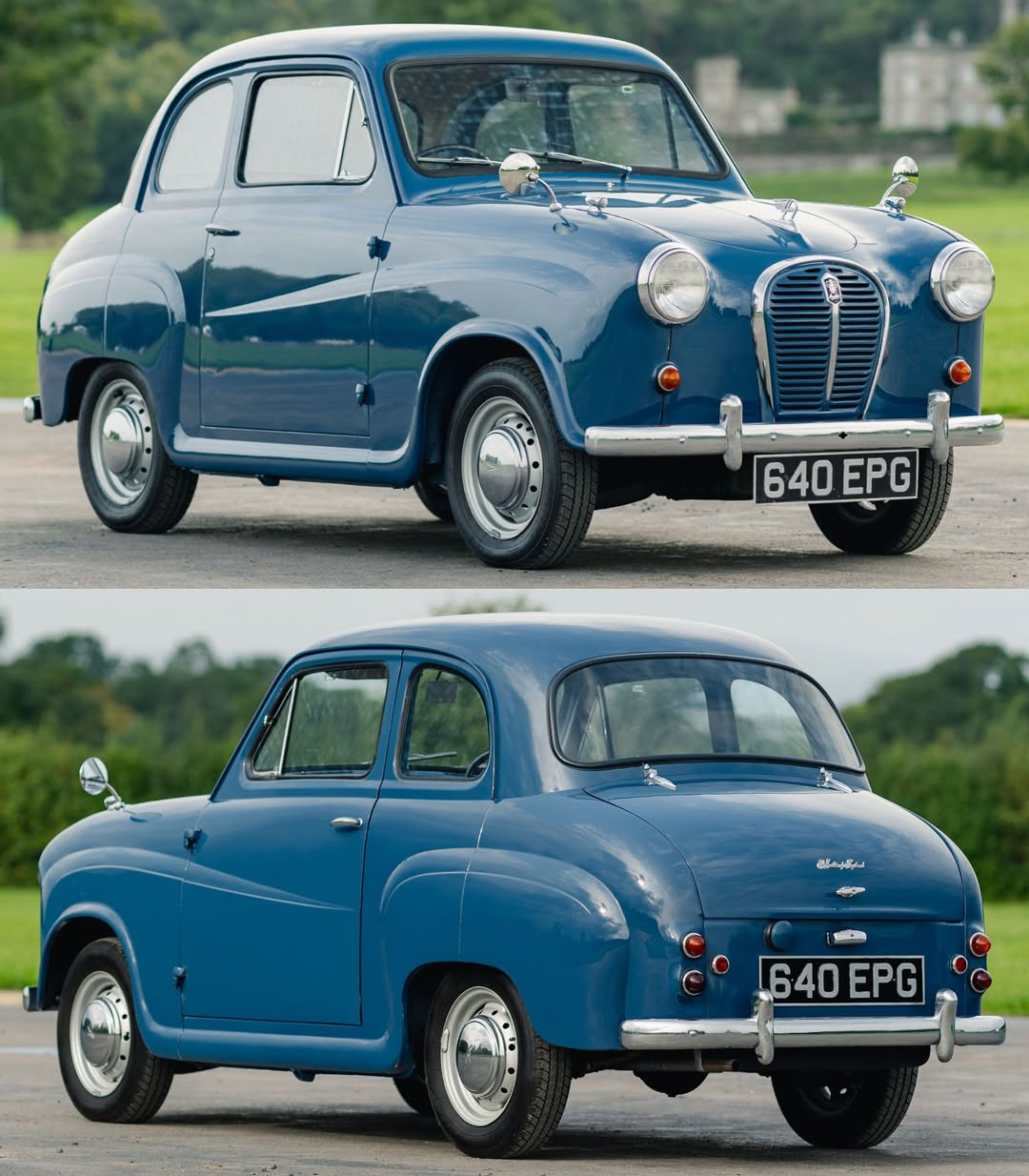
Source