1908 Ford Model-T Touring
Henry Ford’s Model T revolutionized transportation by becoming the world’s first mass-produced automobile, with production beginning in October 1908. This groundbreaking vehicle introduced Ford’s new one-model policy, leading to over 15 million units sold worldwide before production ended in 1927.
The Model T featured pioneering vanadium steel construction, resulting in a lightweight yet durable chassis with a 100-inch wheelbase. Its 56-inch track width was deliberately chosen to match horse-drawn wagons, allowing safe navigation of the rutted dirt roads common at the time.
Power came from a 20-horsepower, 2,896cc (177 cubic inch) four-cylinder side valve engine paired with a simple two-speed planetary transmission.
Advanced engineering details set the Model T apart from contemporary vehicles. The four-cylinder block used single-casting construction with a detachable cylinder head, while most manufacturers still cast their fixed-head cylinders in pairs. Ford also employed a triangulated three-point mounting system that isolated the engine and axles from chassis twisting forces.
Early production cars used a “two-lever” control system, with two levers on the left floorboard, two pedals, and two additional levers mounted on the steering column for ignition and throttle.
This arrangement was soon replaced by the famous three-pedal, one-lever layout that became synonymous with the Model T driving experience.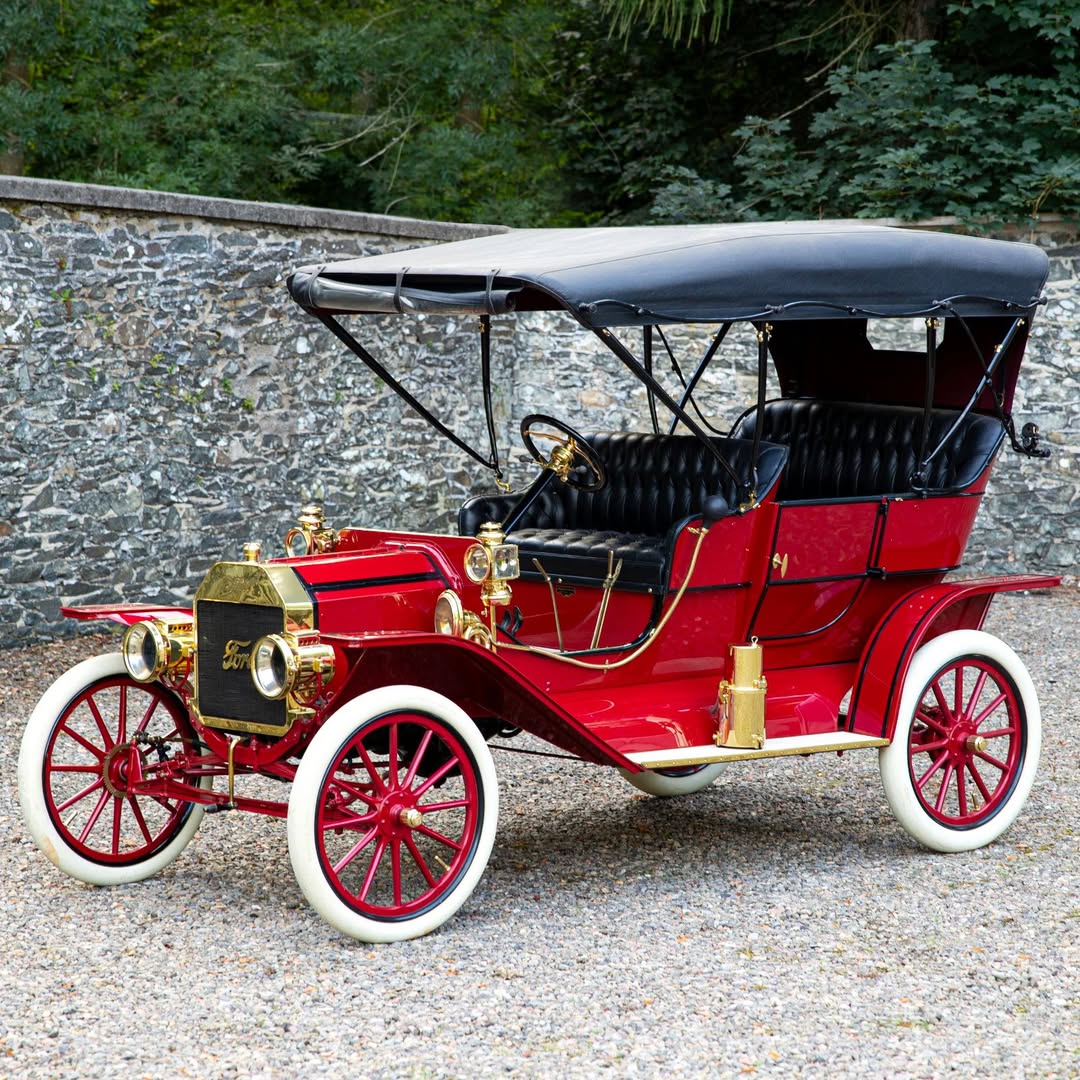
Source