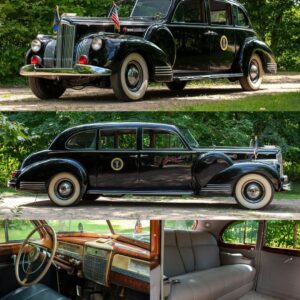
1941 Chrysler Town and Country Nine-Passenger ‘Barrelback’
A distinctive station wagon design emerged from Chrysler in 1941 after company president David Wallace commissioned a secret project based on earlier work by Boyertown Body Works. The resulting vehicle earned its “barrel-back” nickname from its innovative rear bodywork, which featured two side-hinged doors instead of a conventional trunk or tailgate.
Available in six and nine-passenger configurations, the Town and Country featured extensive wood construction, with white ash framing over mahogany panels. These components required hand-formed contouring to match the metal body’s compound curves, with wooden parts sourced from Pekin Wood Products in Helena, Arkansas, before final assembly in Detroit.
Standard equipment included Chrysler’s 112-horsepower L-head inline six-cylinder engine paired with Fluid-Drive transmission, as well as leather upholstery, turn signals, and an electric clock. The six-passenger model retailed for $1,412, while the nine-passenger version cost $1,492.
Production remained limited to just 997 units for 1941, with 797 being nine-passenger models. This low volume reflected both the specialized construction requirements and the vehicle’s appeal to affluent buyers who appreciated its unique blend of luxury and utility.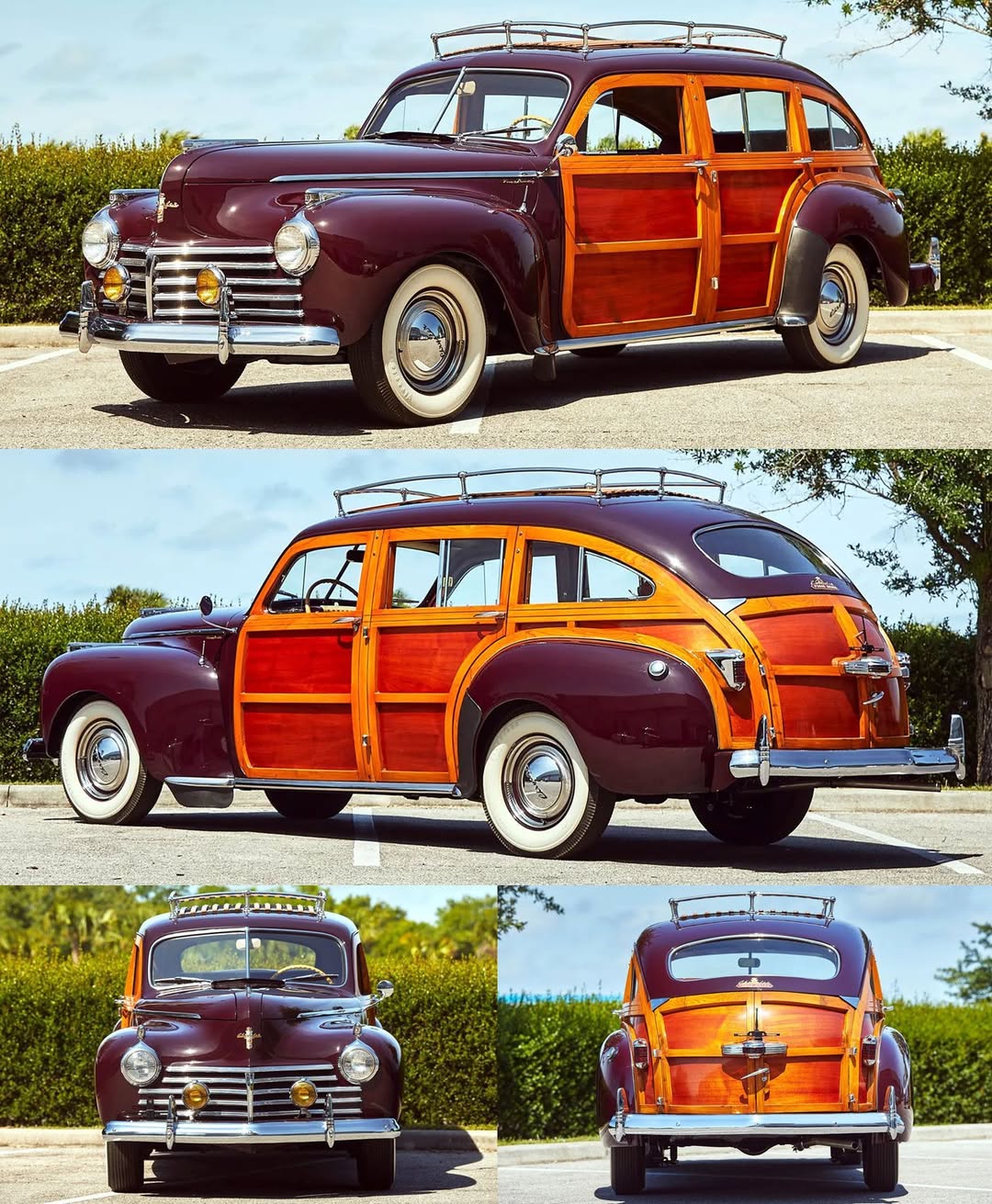
Source