1938 Bugatti Type 57C Aravis Cabriolet
Only three examples of Gangloff’s Aravis Cabriolet design are known to survive from the six originally built between 1938 and 1939. Named after a mountain range in the French Alps, the Aravis was a distinctive 2/3-seater cabriolet body style reserved exclusively for Gangloff of Colmar and Letourneur et Marchand, each producing six examples on the short-wheelbase Type 57 chassis.
Gangloff’s design drawing no. 3912 specified the flowing coachwork delivered to Piot Garage in Dijon in November 1938, built on chassis 57710. The lightweight aluminum bodywork featured graceful proportions, a low beltline, and elegant two-tone finishes befitting a grand touring automobile crafted for Bugatti’s most discerning French clientele.
Power came from Bugatti’s 3,257 cc (199 cubic inch) supercharged inline-eight with dual overhead camshafts, producing approximately 160 horsepower at 5,000 rpm. The “C” in Type 57C denoted Compresseur, identifying supercharged variants.
Power was transmitted through a four-speed manual gearbox to a live rear axle, while a solid front axle with semi-elliptic leaf springs and Lockheed hydraulic drum brakes provided period-correct handling and braking performance.
The Type 57’s 130-inch (3,302 mm) wheelbase offered exceptional stability and composure for high-speed touring on French roads. This particular Aravis design remains one of the most elegant expressions of prewar French coachbuilding.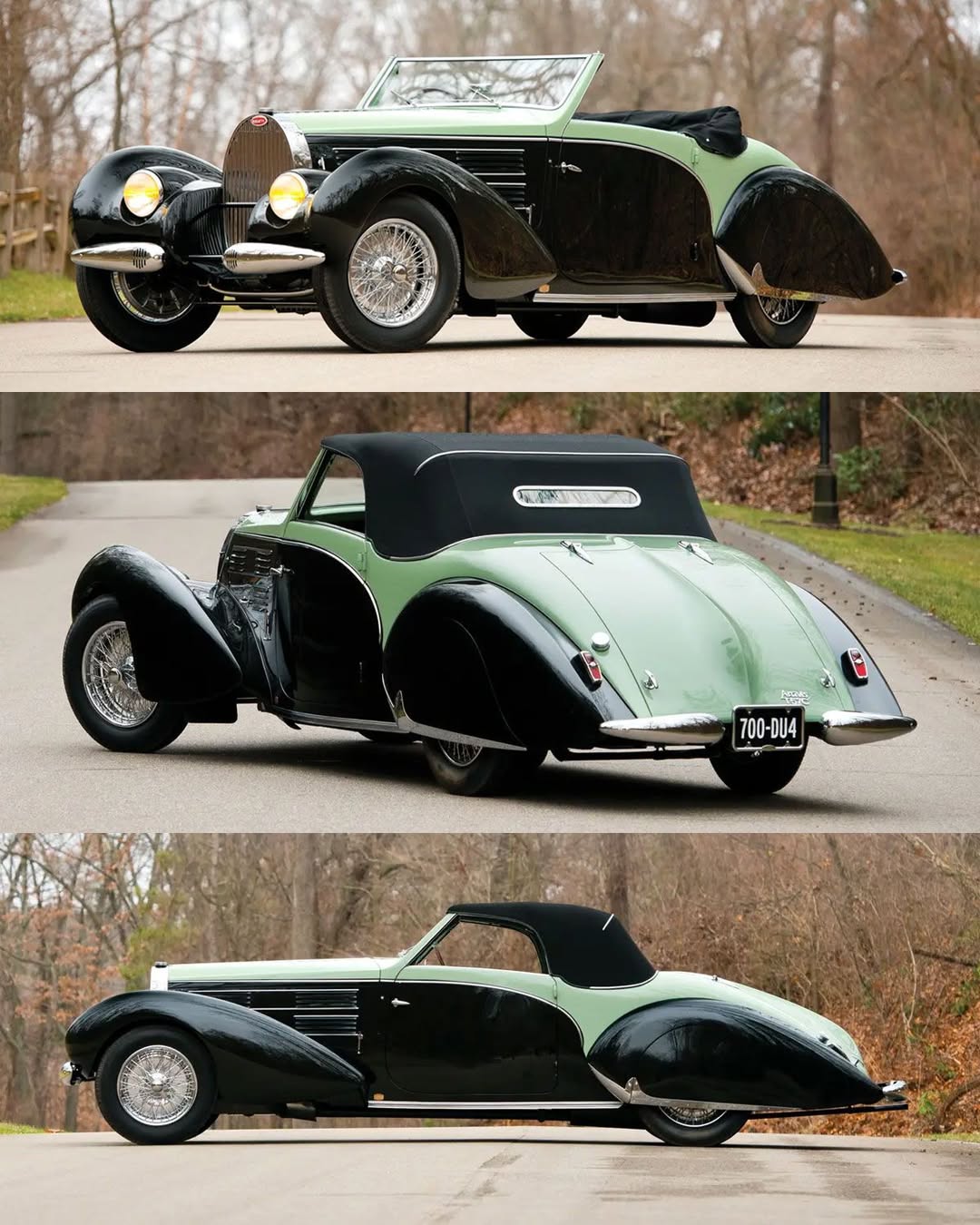
Source