1936 Chrysler Imperial Airflow Sedan
Revolutionary wind tunnel testing with aviation pioneer Orville Wright helped shape America’s first production car designed primarily for aerodynamics. Its silhouette featured integrated headlights, a waterfall grille, and smooth curves that looked decades ahead of conventional 1930s styling.
The Art Deco-influenced design for 1936 incorporated a prominent peaked grille, along with a newly integrated trunk that housed the spare tire internally. Fender skirts and flowing bodylines created an unbroken profile from nose to tail, while the split V‑shaped windshield and distinctive split rear window gave the car a strikingly modern yet unconventional appearance.
Power came from a 323 cubic inch L-head inline-eight producing 130 horsepower, paired with a three-speed manual transmission. The 128-inch wheelbase supported an advanced semi-unitized body construction that provided exceptional rigidity compared to traditional body-on-frame designs.
Despite innovations including chair-height seating positioned within the wheelbase for superior ride quality, only about 4,259 Imperial Airflow sedans were built for 1936. The radical styling proved too unconventional for buyers, making survivors extremely rare today.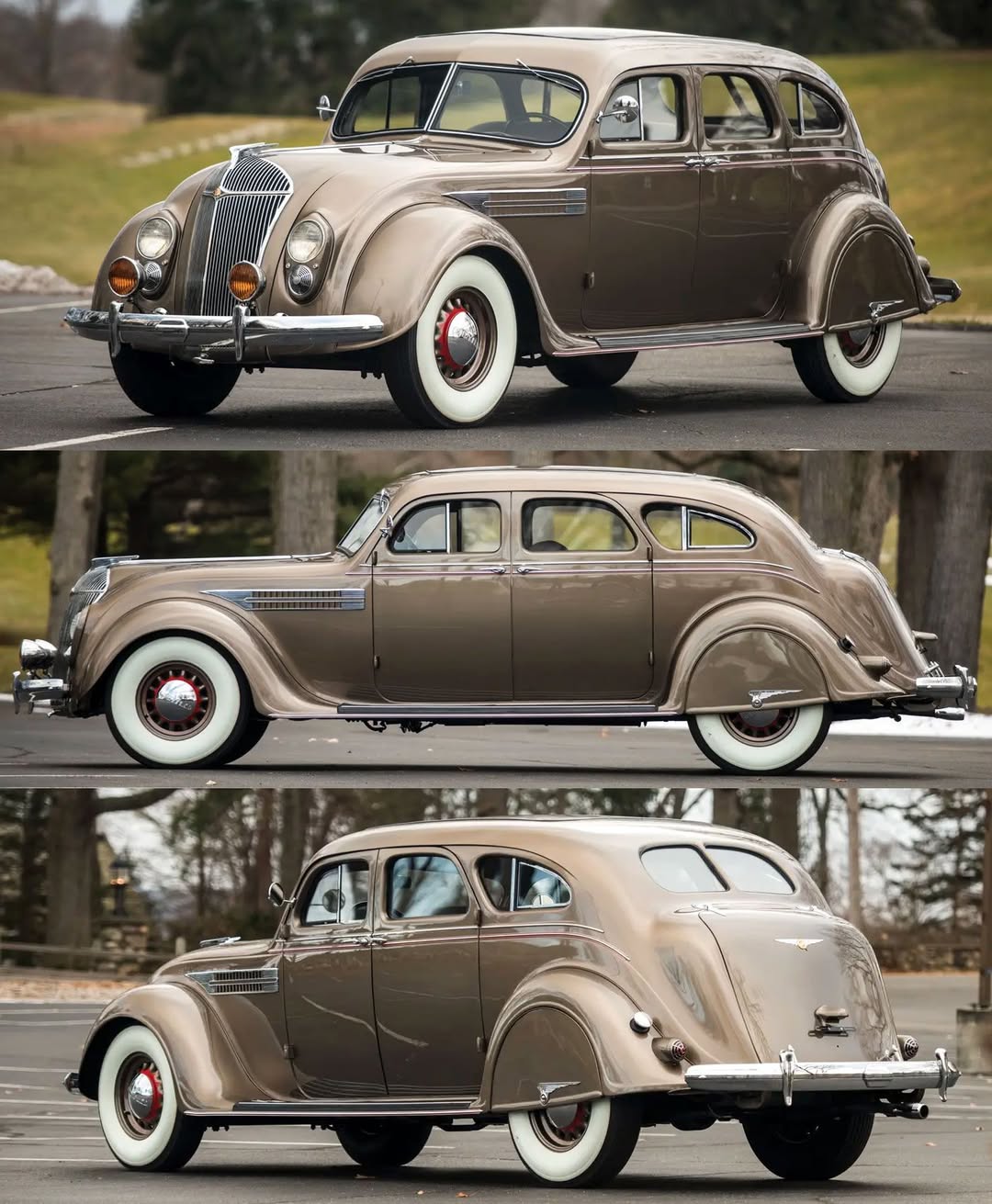
Source