1928 Rolls-Royce Phantom I Transformal Phaeton
Hibbard & Darrin’s Transformal Phaeton coachwork represented one of the most distinctive designs applied to Phantom I chassis. The Paris-based coachbuilder created just 35 of these bodies for Rolls-Royce, featuring their patented convertible design that could transform from an enclosed sedan to an open dual-cowl phaeton.
The unique B-pillar treatment used a removable flap between windows, while the low roofline and trapezoidal side windows created an elegant, modern profile.
Hibbard & Darrin employed their patented “Sylentlite” construction method, which used one-piece alloy castings for doors along with aluminum alloy body panels to reduce weight and minimize rattles. This contrasted with the more traditional coachbuilding practice of using wooden frames with sheet metal skins.
This particular Phantom I was built in Springfield, Massachusetts, where Rolls-Royce of America operated from 1921 to 1931. Springfield cars were tailored for U.S. buyers, with left-hand drive, American-pattern controls, and coachwork often supplied by American or Parisian firms. Only about 1,240 Springfield Phantom I examples were produced, making them rarer than their Derby-built counterparts from England.
Power came from a 7,668cc overhead-valve inline six-cylinder engine producing about 108 horsepower at 2,300 rpm, paired with a three-speed center-shift gearbox.
In 1928, a Springfield Phantom I chassis alone cost around $14,700 before custom coachwork. For comparison, a Cadillac V-8 or Packard Eight could be purchased fully bodied for under $5,000, underscoring just how exclusive a Rolls-Royce was in the American luxury market.
#fblifestyle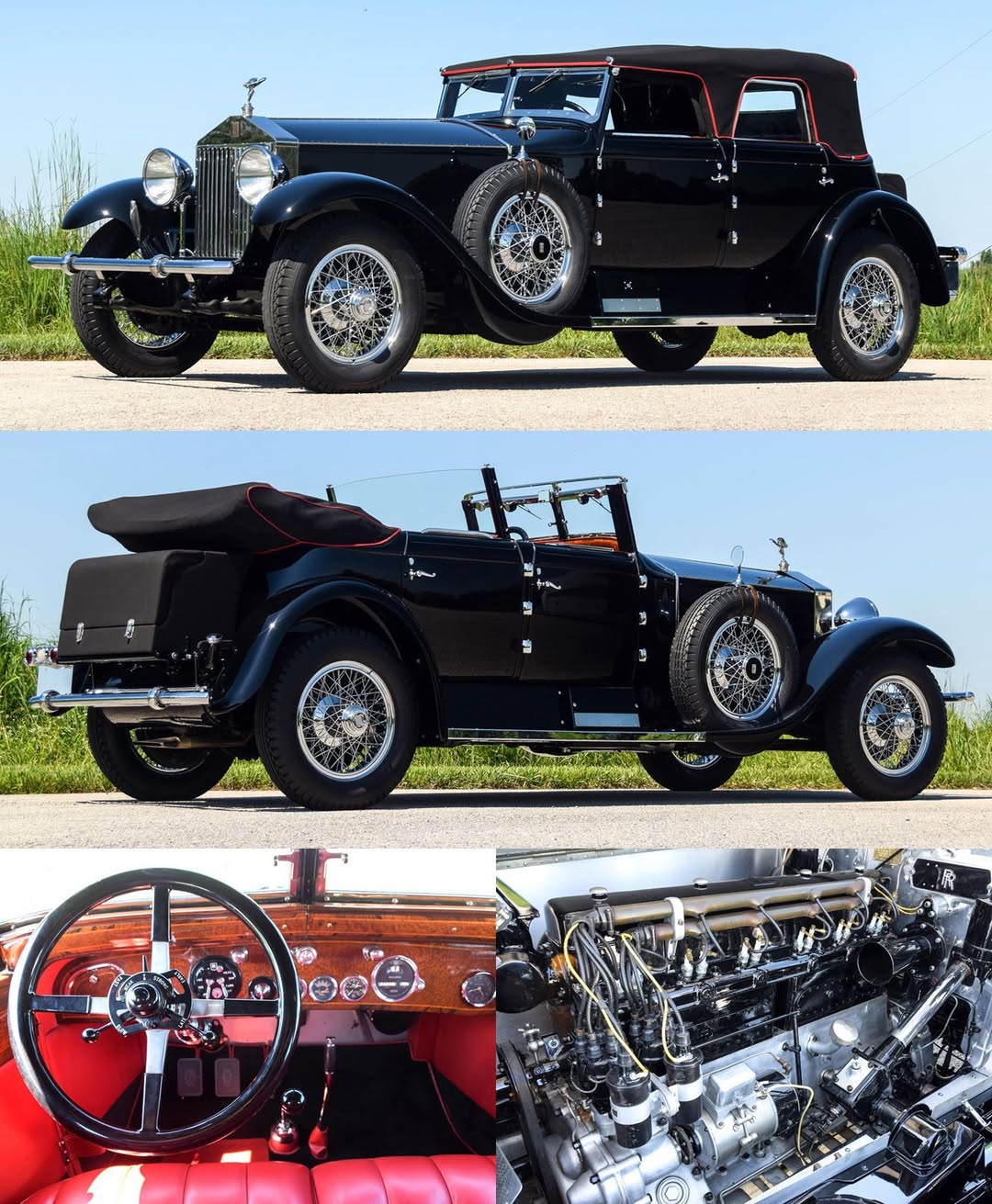
Source