1933 Stutz DV-32 Monte Carlo (by Weymann)
Among the rarest and most advanced American automobiles of the Depression era, this performance sedan represents extraordinary engineering achievement and survival against impossible odds. Only two examples exist on the final and most-developed 1933 DV-32 chassis (both aluminum-bodied).
The DV-32’s sophisticated dual overhead camshaft eight-cylinder engine produced 156 horsepower from 322 cubic inches, matching the power-to-displacement ratio of the legendary Duesenberg Model J. Its “Dual-Valve 32” designation referenced the advanced four-valve-per-cylinder design (32 valves total) with hemispherical combustion chambers, engineered by Charles “Pop” Greuter.
The Monte Carlo body utilized the innovative Weymann construction method, featuring lightweight aluminum panels over a flexible wooden framework rather than traditional steel. This provided superior performance while remaining quiet and “squeakproof.” With only about 200 total DV-32s produced before Stutz’s 1935 closure, survivors rank among the most valuable and pleasurable automobiles of their era to drive.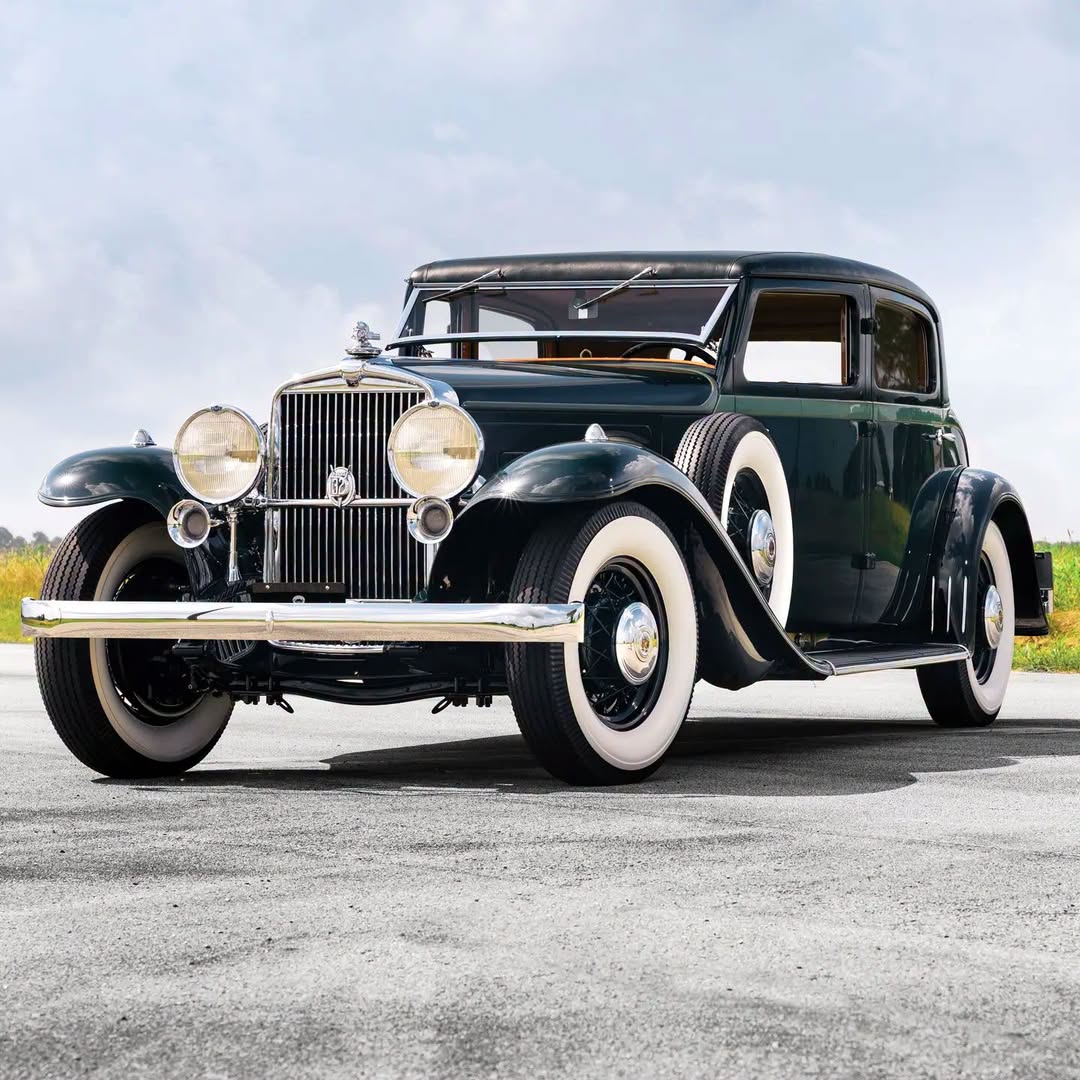
Source