1965 Saab 96 ‘Long Nose’
The 1965 model year brought the most significant visual change in the Saab 96’s production life: the original compact “bull-nose” front was replaced with a lengthened nose repositioning the radiator ahead of the engine, a change made in preparation for a new powerplant, though the two-stroke would carry on through the 1968 model year.
The result was a cleaner, more purposeful profile that gave the model its collector nickname.
The bodywork, carried over in its basic form from the Saab 93, reflected Saab’s origins as an aircraft manufacturer. The front suspension used independent wishbones and coil springs, with a trailing U-beam rear axle on coil springs.
Front-wheel drive, unusual among performance cars of the period, combined with the aerodynamic two-door body to make the 96 a genuinely effective competition tool on loose surfaces.
The 841cc (51 cubic inch) three-cylinder two-stroke engine in the 1965 long-nose cars produced 40 horsepower (SAE gross) in standard tune, with a 57 horsepower version available in Sport and Monte Carlo specification.
A freewheel device allowed the engine to drop to idle on overrun, necessary for adequate lubrication in a petroil-fed two-stroke. Drive went through a four-speed manual gearbox with column shift.
Erik Carlsson won the RAC Rally in 1960, 1961, and 1962, and the Monte Carlo Rally in both 1962 and 1963, results that gave the model an outsized international reputation relative to its modest displacement.
The V4 96 arrived for the 1967 model year, with the two-stroke option remaining available through 1968.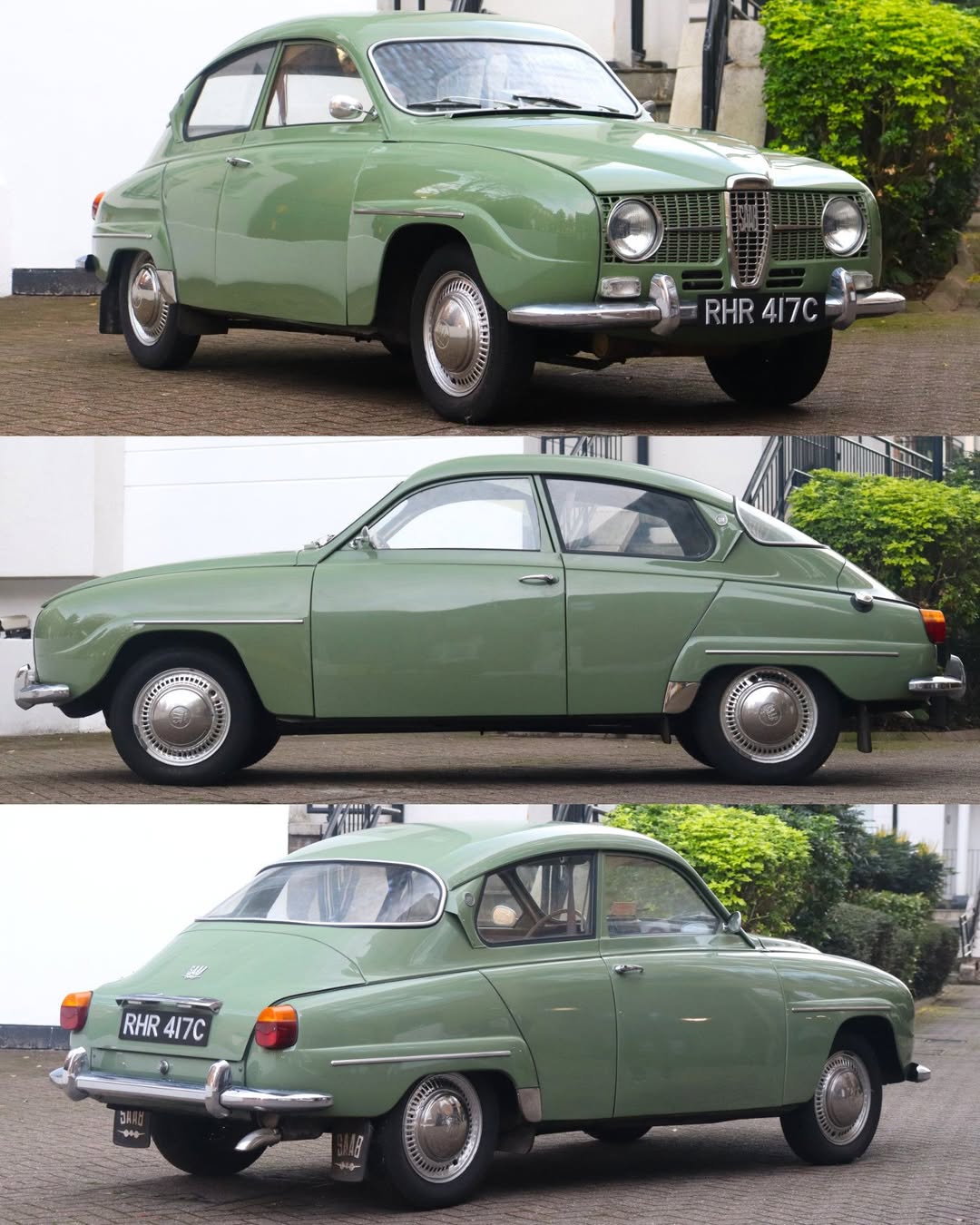
Source