1941 Ford Super DeLuxe Station Wagon
Designed under E.T. Gregorie’s direction, the 1941 Ford line replaced its angular “pointed prow” styling with a fuller, rounder profile, and the station wagon body was updated to match. The wagon received revised contours, a new roofline, and vent windows in the front doors.
Door edges were flared outward at the bottom to partially cover the running boards, giving the body a more cohesive appearance overall. Framing was in maple, with birch or gumwood panels.
Power came from the 221 CI flathead V-8, rated at 85 horsepower, paired with a three-speed manual transmission. The chassis used a solid front axle and live rear axle with transverse leaf springs, and four-wheel hydraulic drum brakes.
Unlike most of the industry, Ford produced its own wood bodies, built from timber harvested at the company’s Iron Mountain mills in Michigan’s Upper Peninsula and assembled at Ford’s Iron Mountain plant.
Production of the 1941 wagon was the highest to that point in the model’s history, with 9,485 examples built across DeLuxe and Super DeLuxe trim levels.
The Super DeLuxe designation brought a higher level of interior and exterior trim over the DeLuxe wagon, and the model is widely regarded among collectors as one of the most desirable of the pre-war Ford woodies.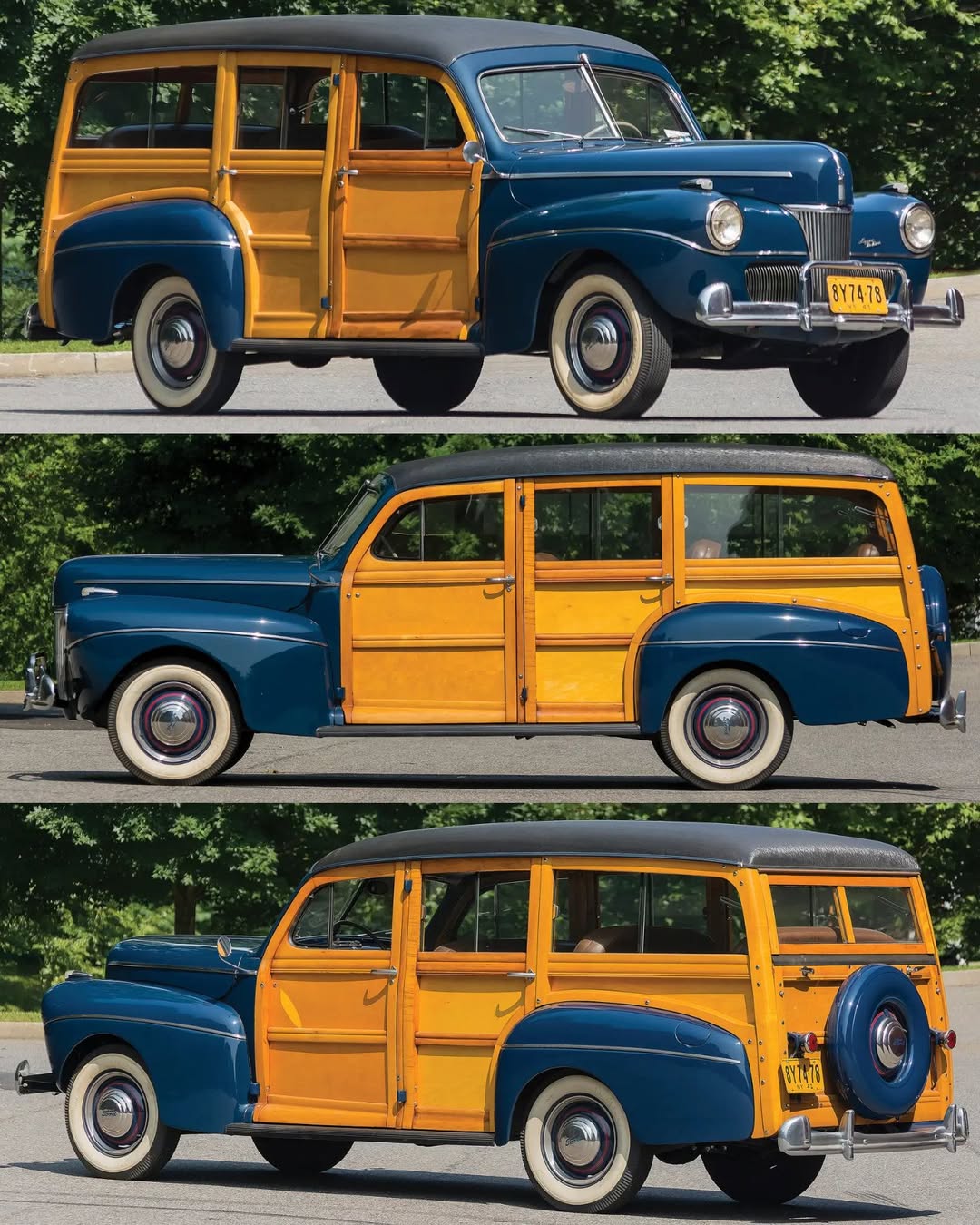
Source