1926 Sunbeam 3.0-Litre Super Sports
Henry Segrave’s victory in the 1923 French Grand Prix (making him the first British driver to win a Grand Prix in a British car) and further success in 1924 gave Sunbeam direct racing credentials to draw from when the 3-Litre Super Sports was introduced at the 1925 London Motor Show.
The engine shared its twin-overhead-camshaft architecture with those competition units: a 2,916cc six-cylinder designed by Vincent Bertarione (recruited by chief engineer Louis Coatalen from Fiat), with an eight-bearing crankshaft, twin Claudel carburetors, and dry sump lubrication throughout.
The chassis used semi-elliptic front suspension with cantilever rear springs, a four-speed in-unit gearbox, and four-wheel brakes. Output was typically quoted at around 90 brake horsepower in standard tune (with higher figures claimed for competition-prepared cars), sufficient for a 90 mph top speed.
At Le Mans in 1925, the only year factory 3-Litres were entered, the Chassagne/Davis car finished second overall, beaten only by the winning Lorraine-Dietrich. Contemporary observers drew comparisons to the Bugatti Type 43 as the closest British equivalent to a racing car in road-going form.
Production ran from 1925 to 1930, with approximately 300 examples completed in total.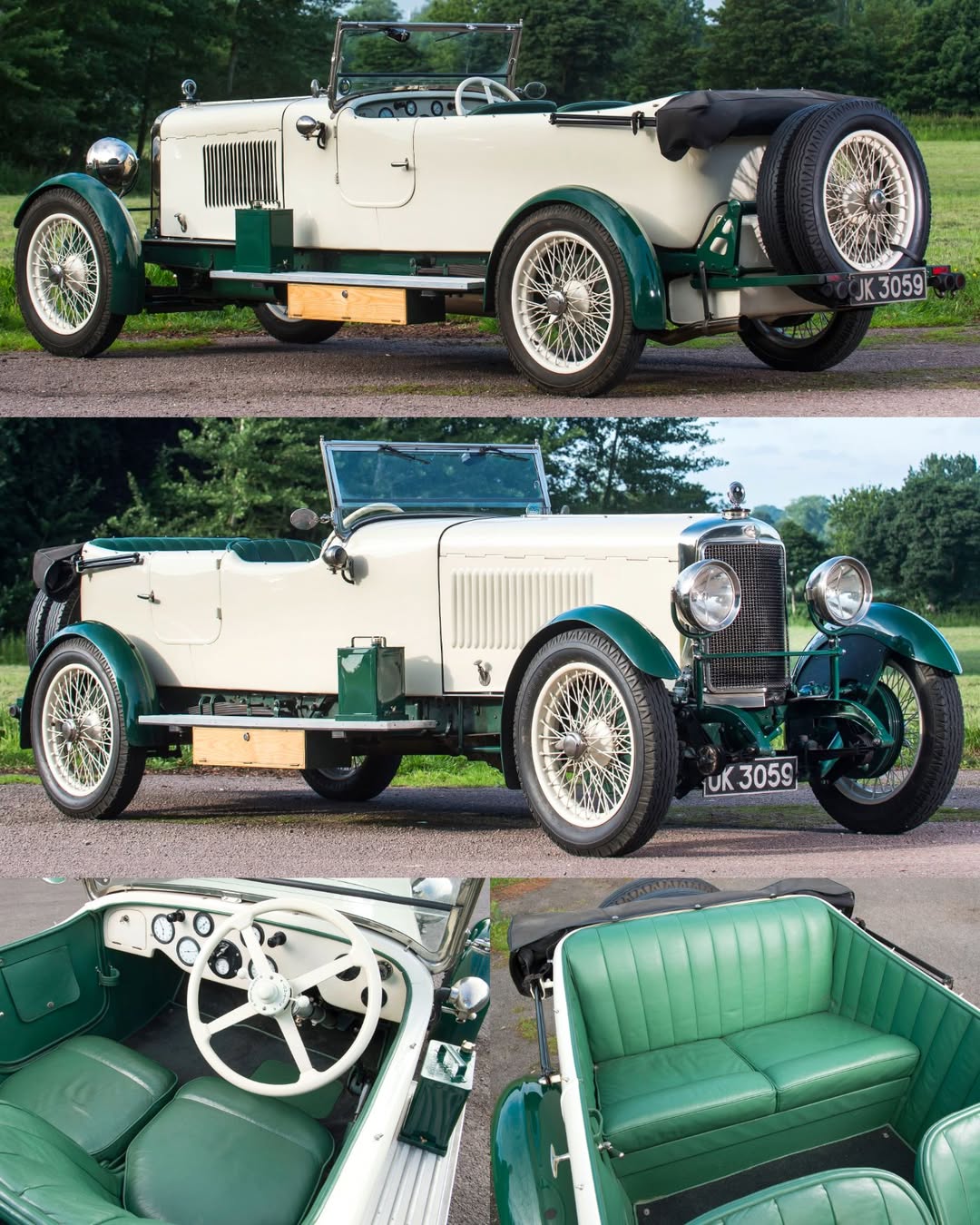
Source