1918 Ford Model T Stake Bed Pickup
Ford’s Model T dominated American roads by 1918, with about half of all cars in the United States being Model Ts.
The stake bed pickup configuration transformed the Model T chassis into a practical work vehicle, featuring an open cargo bed with removable wooden stakes along the sides to contain loads. These commercial variants proved especially popular with farmers, tradesmen, and small businesses needing affordable transportation for goods.
Under the hood sat Ford’s 177 cubic inch side-valve inline four-cylinder engine producing 20 horsepower. The simple design used a two-speed planetary transmission integrated with the engine, both sharing the same lubricating oil.
Power was delivered to the rear axle, allowing a top speed of around 40-45 mph. The cooling system relied on thermosiphon circulation rather than a water pump, keeping costs down and reducing mechanical complexity.
By 1918, Ford had standardized on black paint for most Model T bodies and fenders, moving away from the earlier variety of color options. The chassis featured transverse leaf springs front and rear, with braking handled by transmission bands.
Rear-wheel mechanical brakes were not introduced until 1926, so 1918 models relied solely on the transmission brake. Production techniques had been refined to make the Model T remarkably affordable and accessible to working Americans.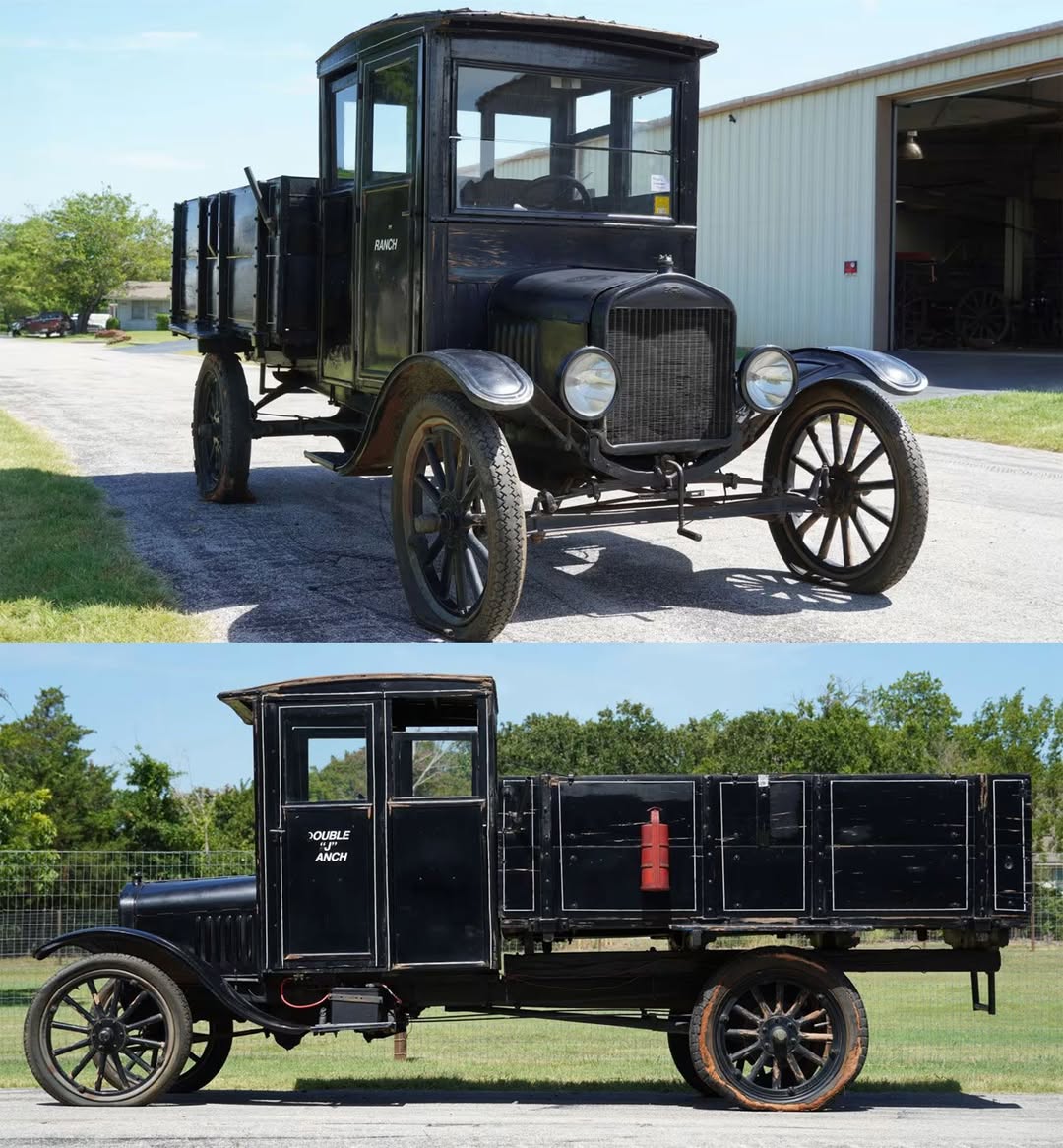
Source