1910 Cadillac Model 30 Tourer
The Model 30 represented Cadillac’s rationalization of its product line in 1909, replacing a five-model catalog that included three single-cylinder and two four-cylinder offerings. Streamlining production to a single four-cylinder model allowed both quality improvements and a 30 percent price reduction.
The model designation remained constant for six years, though a 1.25-inch stroke increase in 1913 substantially increased displacement and power output while maintaining the same nominal rating.
Henry Martyn Leland and his son Wilfred guided this transformation during Cadillac’s sixth year and its second year under General Motors ownership.
Four individual cylinders with copper water jackets characterized the Model 30’s 226 cubic inch inline four-cylinder engine, producing 30 horsepower at 2,300 rpm through a single updraft carburetor.
A three-speed sliding-gear transmission delivered power to the rear wheels, with two-wheel mechanical brakes providing stopping capability typical of brass-era automobiles.
Production volume reflected market acceptance, rising from 5,903 units in 1909 to 15,018 in 1913 and 14,003 in 1914.
The configuration refined design elements from Cadillac’s earlier four-cylinder Model D, introduced in 1905, which had itself incorporated aspects of the company’s successful single-cylinder engines.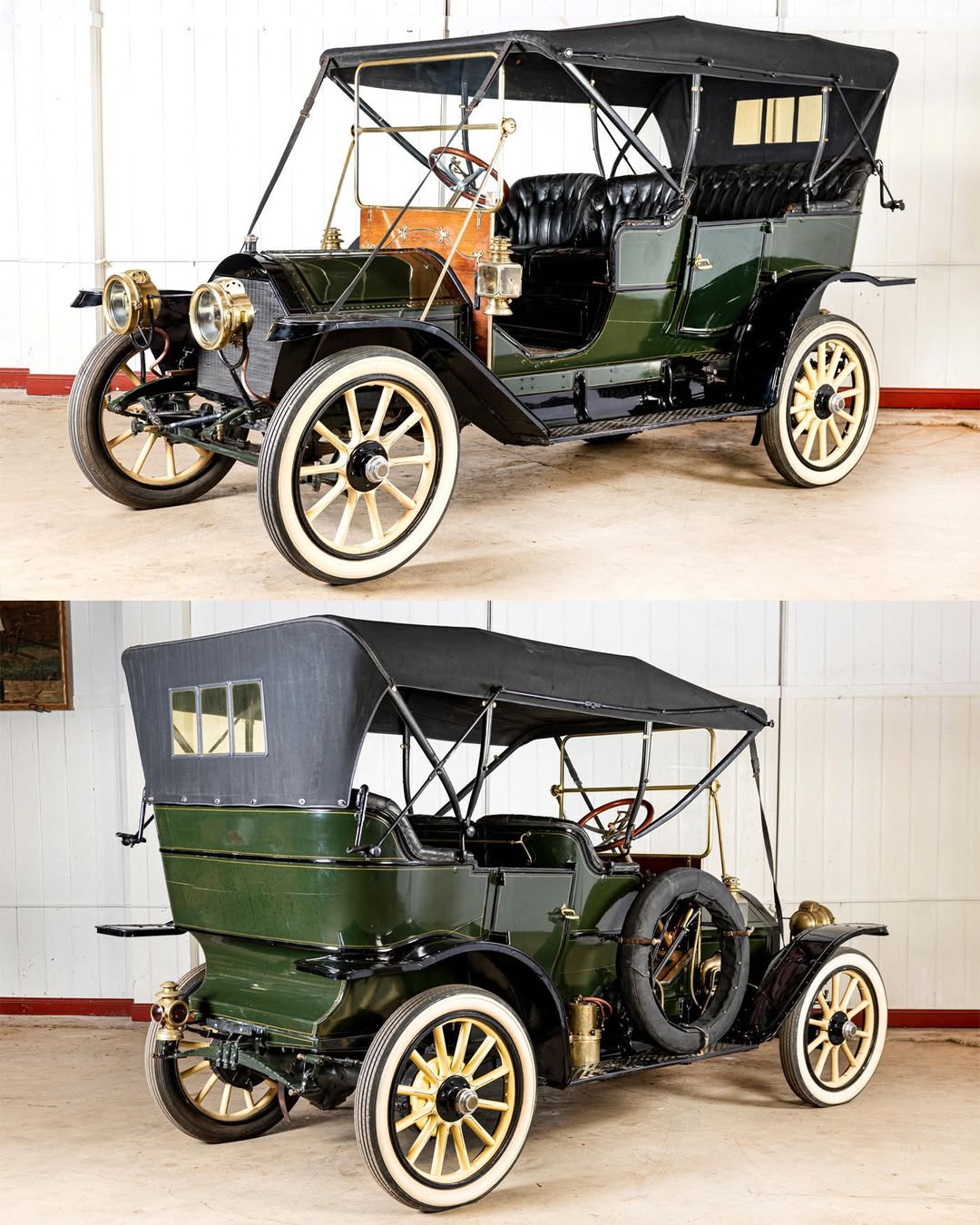
Source