1958 Fiat 600 Multipla
Italian automotive innovation took a radical turn with this compact six-seater that pioneered the modern minivan concept. The egg-shaped design featured an almost vertical front end with the windshield positioned ahead of the front wheels, creating a cab-forward appearance despite having its engine mounted in the rear.
Round headlights flanked a small grille that provided cabin ventilation, while the overall proportions defied conventional automotive styling of the era.
The door arrangement was particularly unusual, with front doors hinged at the rear (suicide doors) and conventional rear doors, both opening from a central pillar. This configuration provided excellent access to all three seating rows while simplifying the structural design. At the back, a sloped engine cover with louvered vents concealed the mechanical components beneath.
Although only about 10 inches longer than the original Mini (introduced a year later in 1959), the Multipla’s interior could seat six people across three rows. The front bench seat had a cutout for the floor-mounted gear shifter, while the middle row tilted forward to allow access to the rear passengers. The driver faced simple instrumentation carried over from the standard Fiat 600.
Power came from a rear-mounted 633cc (38.6 cubic inch) inline-four engine producing 21.5 horsepower at 4600 RPM and 29 foot-pounds of torque at 2800 RPM. The four-speed manual transmission featured synchromesh on second through fourth gears, with a shorter final drive ratio than the regular 600.
Front suspension components were borrowed from the larger Fiat 1100, while the rear used trailing arms from the standard 600. Top speed was about 56 mph (90 km/h), making this unconventional people-mover a practical solution for large families in post-war Italy.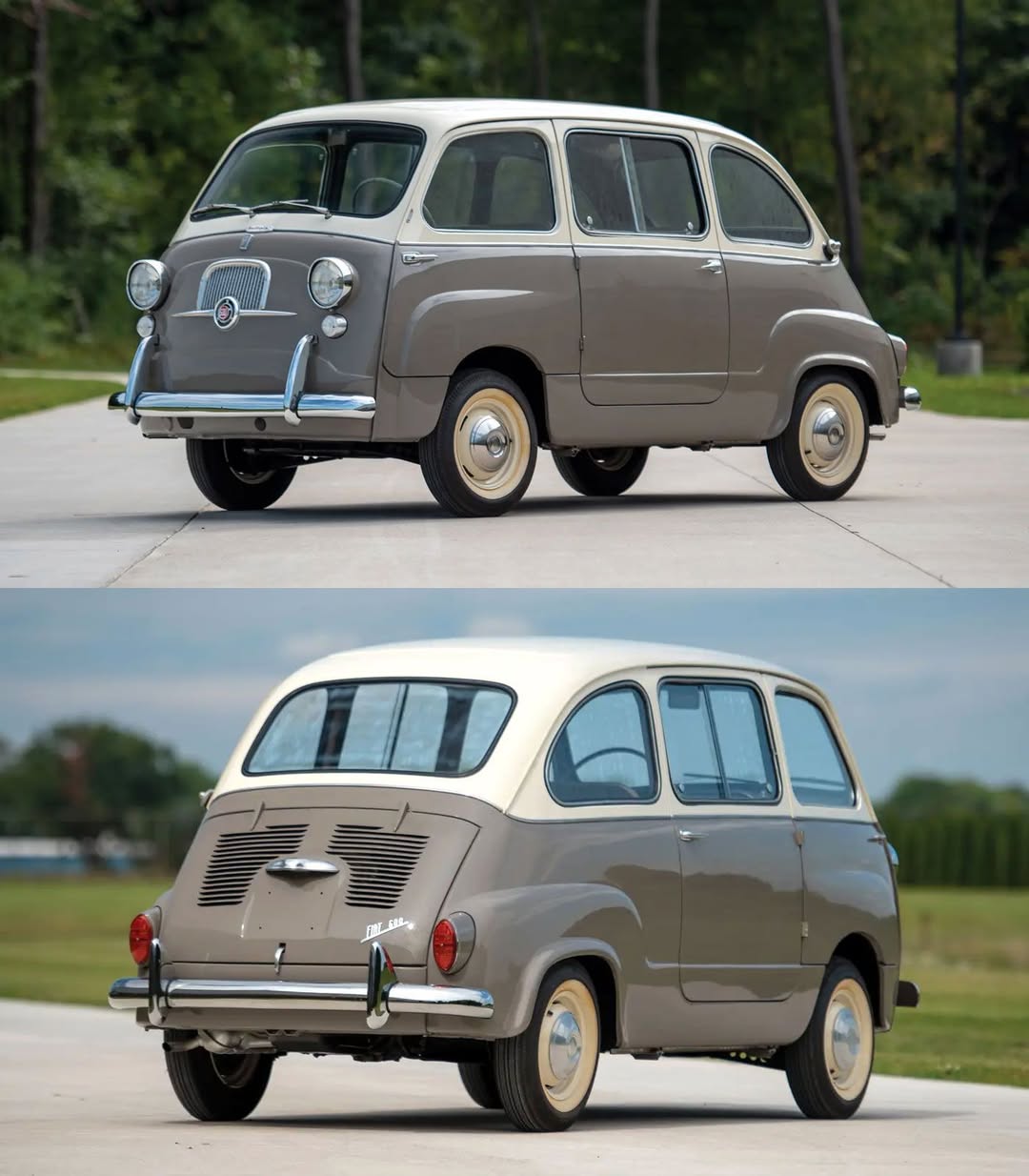
Source