1978 Maserati Bora 4.9
Advanced hydraulic technology and race-derived engineering distinguished this mid-engine supercar when it debuted at the 1971 Geneva Motor Show. Maserati’s first rear-mid-engined production car featured four-wheel independent suspension, marking a significant departure from the company’s previous live-axle designs.
Designed by Giorgetto Giugiaro at Italdesign, the sleek bodywork featured a drag coefficient of approximately 0.30, exceptional for the early 1970s. The monocoque steel chassis supported a sophisticated Citroën hydraulic system that operated the brakes, pop-up headlights, adjustable pedal box, and driver’s seat positioning.
Power came from an aluminum V8 engine tracing its lineage back to the famous 450S racecar. Initial 4.7-liter versions produced about 310 horsepower, while the later 4.9-liter engine generated 330 horsepower at 6,000 RPM in European specification (U.S. models were rated lower due to emissions equipment). A ZF five-speed manual transmission sent power to the rear wheels.
Performance was impressive, with acceleration to 60 mph in approximately 6.5 seconds and a claimed top speed of 171 mph for the 4.9-liter version. Unlike many contemporary supercars, the Bora offered superb practicality with a generous front trunk and superior noise insulation.
Production ran from 1971 to 1978, with 564 cars built in total (289 with the 4.7-liter engine; 275 with the 4.9-liter).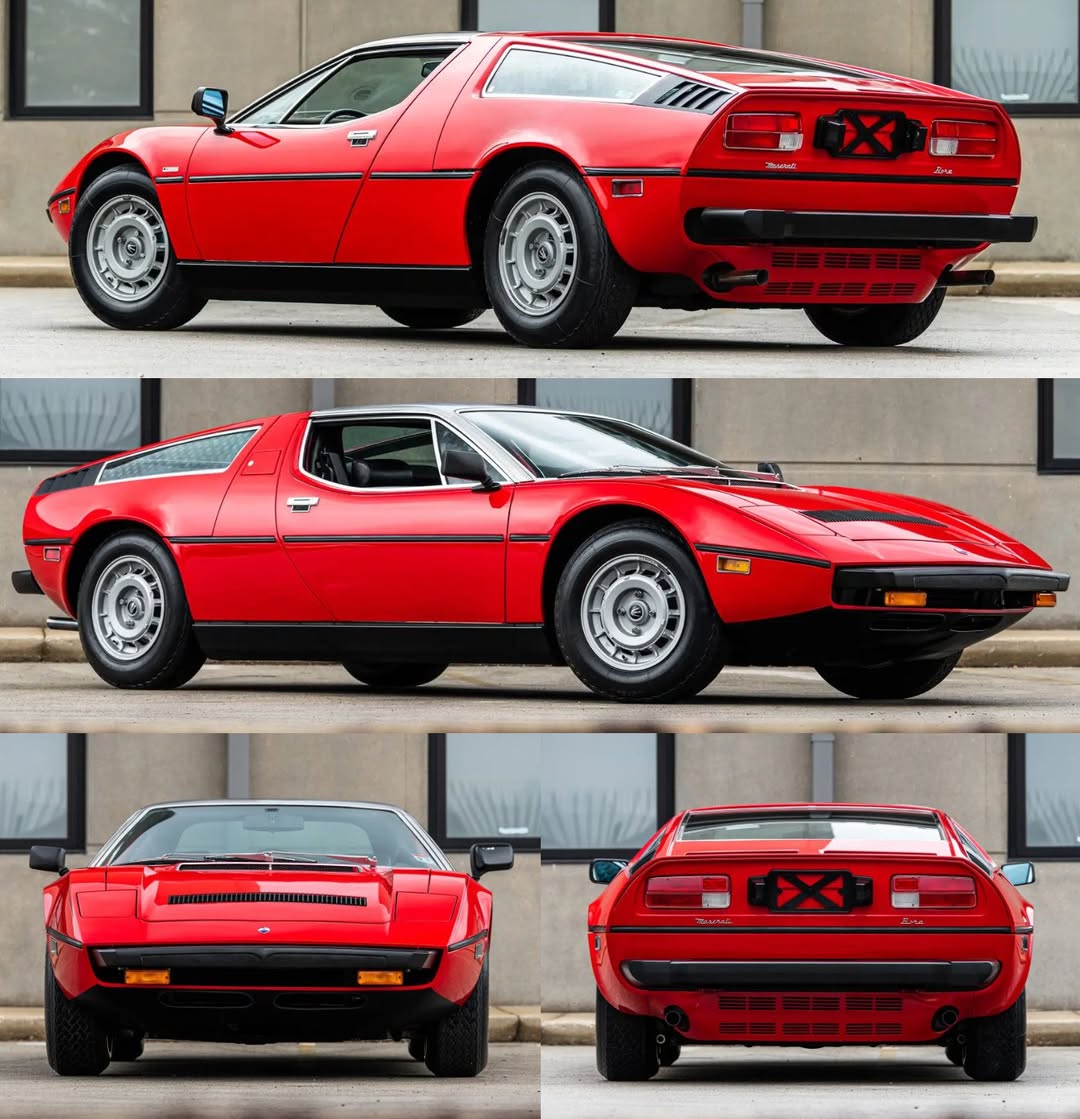
Source