1937 Cord 812 Supercharged Cabriolet
Gordon Buehrig’s revolutionary styling featured manually cranked pop-up headlights integrated into the pontoon fenders (the first use of retractable headlamps on an American production car).
The signature “coffin nose” replaced a traditional grille with wraparound horizontal louvers, directing cooling air to the radiator. Brilliant chrome-plated external exhaust pipes exiting from the hood sides identified the supercharged variant.
The Cord’s front-wheel-drive configuration permitted a very low body line and eliminated running boards altogether.
Under the hood sat the Lycoming-built 289 cubic inch (4.7-liter) L-head V8. In standard form it produced 125 horsepower, but with the optional Schwitzer-Cummins centrifugal supercharger output increased to 170 horsepower at 3,600 rpm.
Power was delivered through a four-speed Bendix “Electric Hand” pre-selector transmission located ahead of the engine, driving the front wheels. Independent front suspension and 12-inch hydraulic drum brakes contributed to refined handling and stability, while a top speed near 110 mph placed the car among the fastest American automobiles of its time.
Cord’s cabriolet body style was often termed the “Sportsman” among enthusiasts. In 1937 only 64 factory-built supercharged cabriolets were produced, out of 688 total supercharged models across all body types.
Overall 810/812 production reached 2,972 vehicles for 1936-1937 combined. Weighing approximately 3,700 pounds and riding on a 125-inch wheelbase, the 812 offered both performance and luxury at prices between $2,500 and $3,600 when new.
Despite its technical brilliance and elegance, Cord Corporation collapsed amid worsening Great Depression finances and mechanical difficulties with the pre-selector transmission. By August 1937, E.L. Cord had sold his holdings, ending production of the Auburn, Cord, and Duesenberg marques.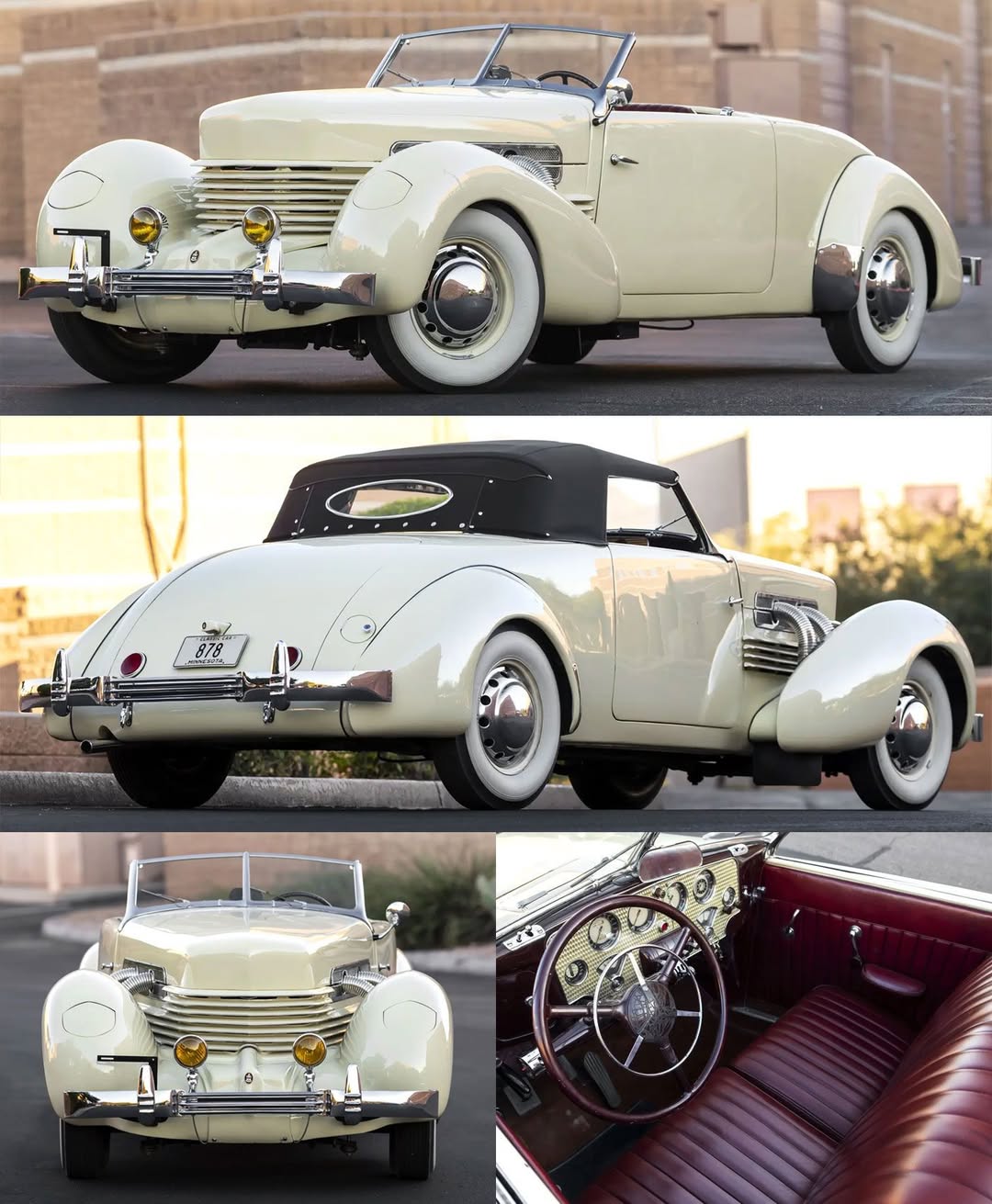
Source