1915 Lanchester Sporting Forty Torpedo Tourer
Conceived under board-level pressure to bring Lanchester in line with conventional practice, the Sporting Forty was introduced in 1913 as the company’s first model with the engine mounted under a conventional hood (a deliberate break from the bluff-fronted, hoodless layout that had defined every Lanchester since 1900).
George Lanchester was by then in effective charge of design, Frederick having stepped back from the company entirely. The long hood, polished aluminum torpedo tourer coachwork, and low-slung proportions placed the Sporting Forty in direct competition with the Rolls-Royce Silver Ghost as a statement of British luxury and engineering.
The board had insisted on a sidevalve six-cylinder engine (a specification Frederick Lanchester found technically objectionable, given his view of the sidevalve’s combustion inefficiency).
The 5.5-liter unit nonetheless carried a characteristic Lanchester detail: leaf springs actuating the valves in place of the conventional coil-spring arrangement. Semi-elliptic springs replaced Lanchester’s earlier cantilever suspension front and rear, moving the chassis further toward mainstream practice.
Only a handful had been completed when the outbreak of WWI redirected the Birmingham factory onto munitions and aero engine production. Approximately six Sporting Fortys were built in total. This car, retained by the factory as its publicity vehicle, is widely regarded as the only surviving example.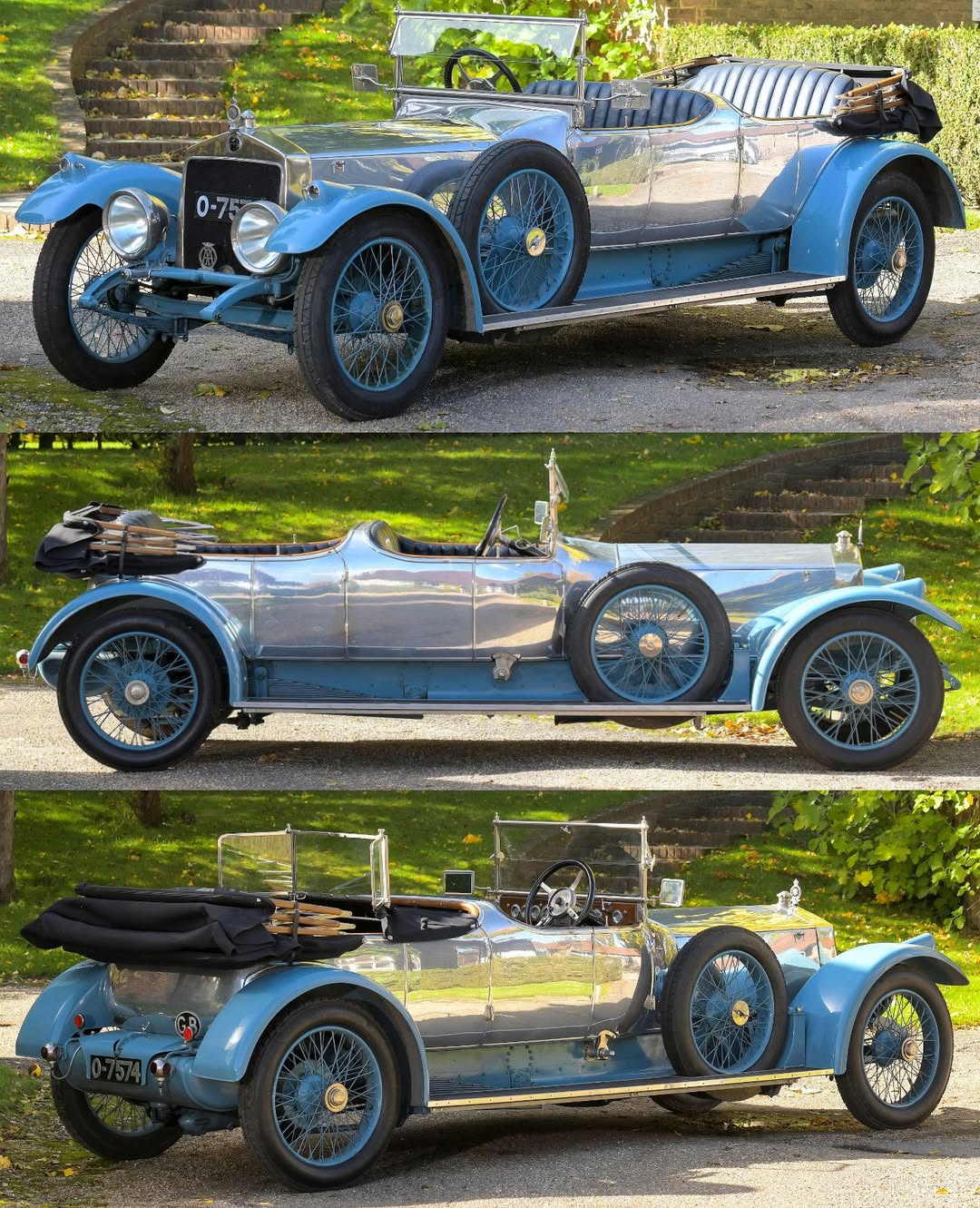
Source