1902 Arrol Johnston 10/12hp Dogcart
Solid tire carriage wheels, varnished coachwork seating up to six, and a body profile drawn directly from horse-drawn practice: the Arrol-Johnston Dogcart made few concessions to automotive convention, and found willing buyers, particularly in Scotland, where highland gradients rewarded low gearing and mechanical durability over refinement.
The engineering beneath the coachwork was less orthodox than the bodywork suggested. Power came from a horizontal underfloor unit in which each of two cylinders contained a pair of opposed pistons (four pistons total), developing 12hp from a 4.25 x 6.50 in bore and stroke (108 x 165 mm).
Short rods rocked levers to drive longer connecting rods rotating the crankshaft (a layout Arrol-Johnston carried into its racing machines). A four-speed gearbox, cone clutch, and Renold chain primary drive sent power to the rear axle by a central chain; top speed in top gear was approximately 25 mph.
One of the so-called “Three As” of Scotland’s early motor industry (alongside Albion and Argyll), Arrol-Johnston was established in Glasgow in 1897 by George Johnston and civil engineer Sir William Arrol, whose projects included the Forth Bridge and the metalwork of Tower Bridge.
An Arrol-Johnston won the first International Tourist Trophy race on the Isle of Man in 1905. Dogcart production ran until 1906; just eight examples are thought to survive.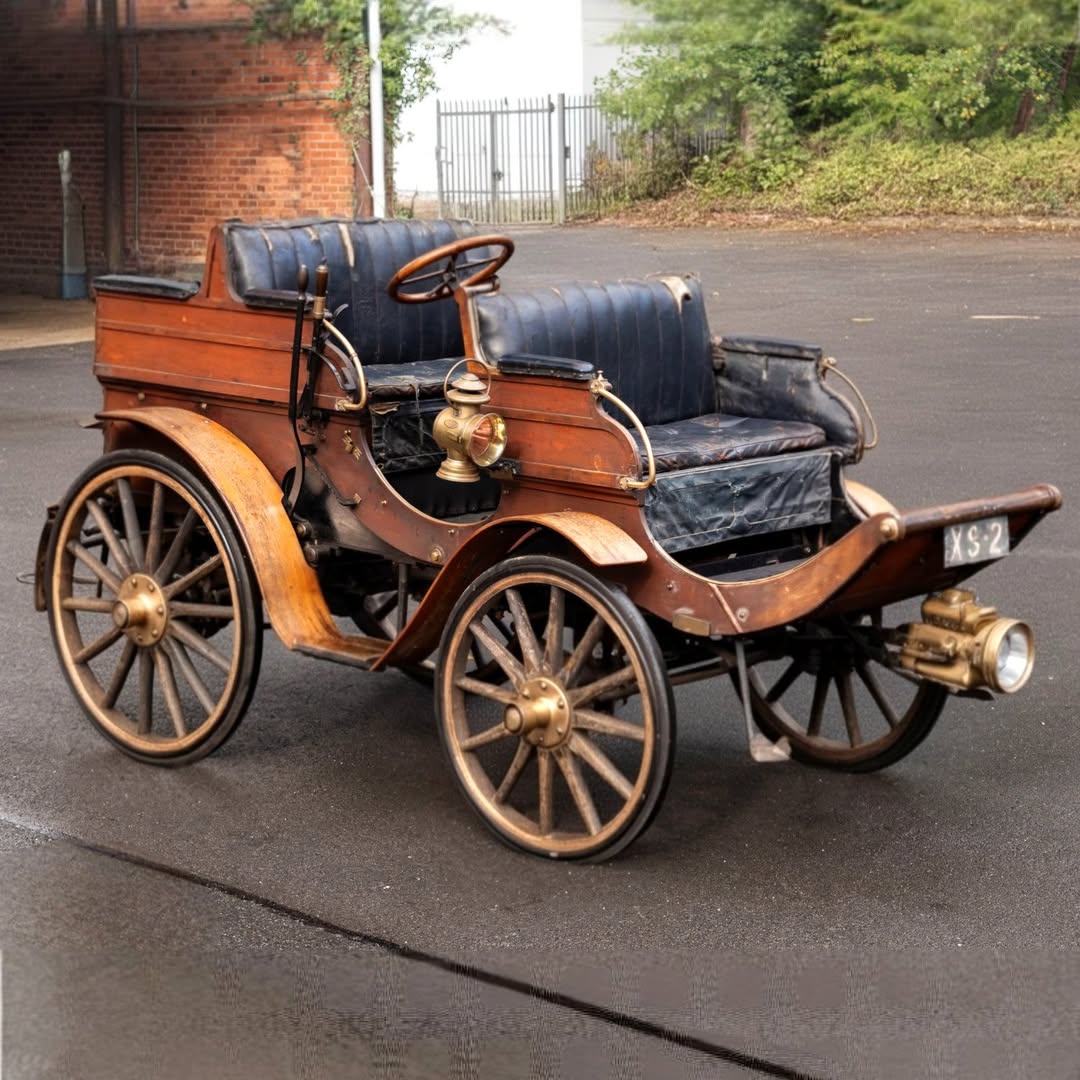
Source