1914 Peugeot Bébé
Ettore Bugatti designed the compact automobile that became the Peugeot Bébé in 1911, originally proposing the design to the German manufacturer Wanderer before licensing it to Peugeot. Introduced at the 1912 Paris Motor Show and built from 1913 through 1916 as the Type BP1, it was powered by a Peugeot-built 855cc water-cooled inline four-cylinder engine producing about 10 horsepower.
Power was delivered through a three-speed manual gearbox to the rear wheels, giving a top speed of roughly 37 mph. Compact and lightweight at just 770 pounds, the Bébé combined simplicity with engineering finesse in a way that reflected Bugatti’s design sensibilities even at this early stage of his career.
The Bébé rode on a 72-inch wheelbase and featured semi-elliptical front leaf springs with reversed quarter-elliptical springs at the rear. Its compact chassis and two-seat roadster body made it ideal for Europe’s narrow early-20th-century roads.
At a time when most automobiles remained expensive luxury goods, the Bébé offered genuine affordability, marking Peugeot’s entry into small-car production on a significant scale. Between 1913 and 1916, a total of about 3,000 examples were sold, establishing it as both Peugeot’s first true mass-market car and the most successful Bugatti-designed vehicle ever built.
Few Bébés survive today, making this restored car a rare and historically important example of Peugeot’s early 1910s engineering achievement and Bugatti’s growing influence on European automotive design.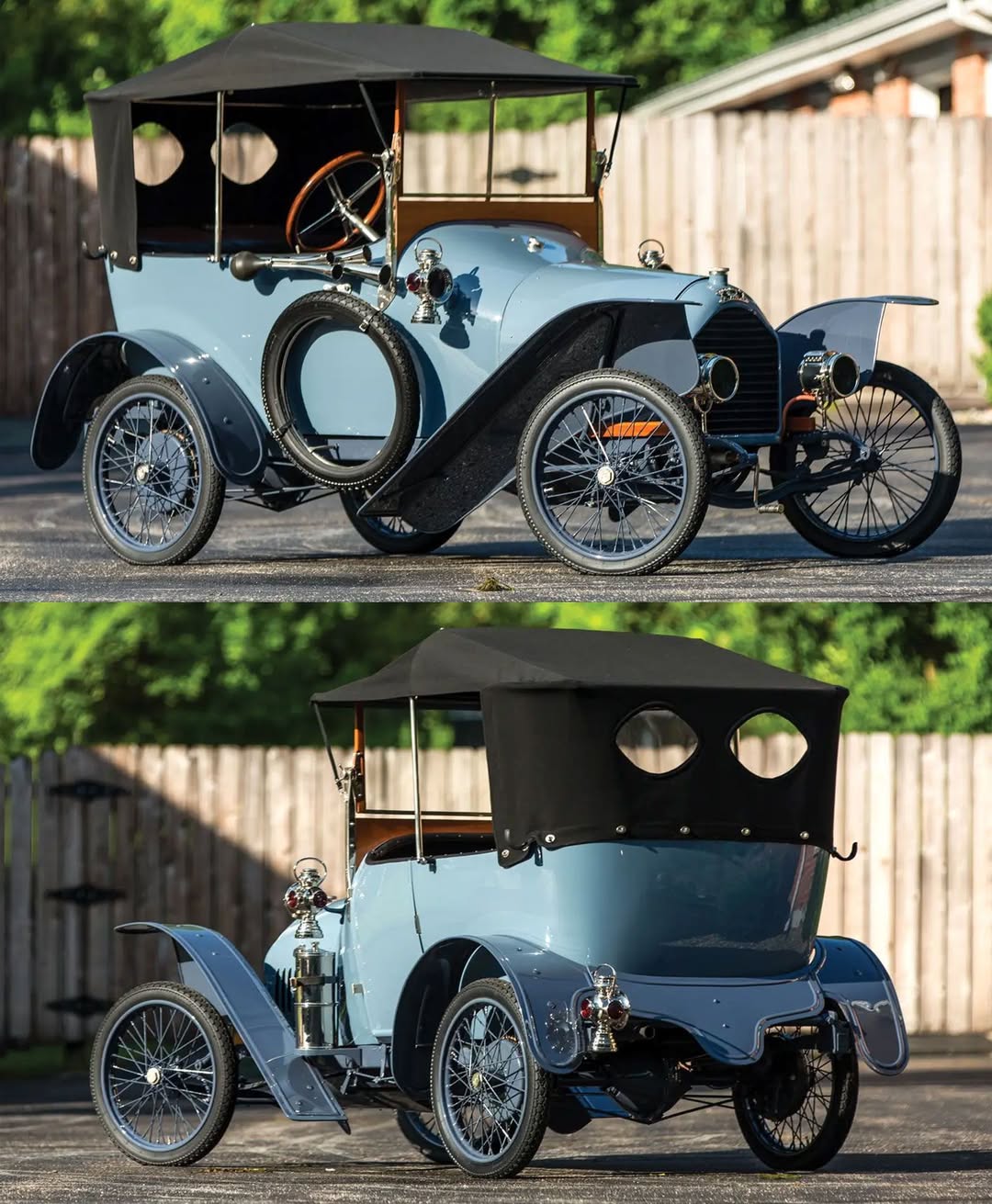
Source