1963 Studebaker Lark Daytona Wagonaire
A sliding rear roof panel distinguished this station wagon from its more conventional competitors. Designer Brooks Stevens engineered a clever mechanism in which the rear section of the roof slid forward into a pocket beneath the fixed headliner, creating an opening large enough to transport refrigerators and other tall cargo upright.
Combined with a drop-down tailgate (equipped with an integrated step), the Wagonaire offered loading flexibility that blurred the line between passenger car and light truck.
The Daytona represented the top trim level in Studebaker’s 1963 lineup, featuring quad headlights, additional chrome trim, and upgraded interior appointments. Built on a 113-inch wheelbase, the wagon seated six passengers with standard bench seating or five with optional front bucket seats. An available rear-facing third-row seat increased capacity to eight.
Daytona Wagonaires came standard with a 259 cubic inch V8 producing 180 horsepower, while buyers could upgrade to the 289 cubic inch V8 rated at 225 horsepower. The most performance-oriented version, the Supercharged R2 289, delivered 290 horsepower and could be paired with either a three-speed automatic or a four-speed manual transmission.
Although the Wagonaire debuted with its signature sliding roof, customer complaints about water leaks prompted Studebaker to introduce a fixed-roof version in January 1963 (mid-model year). Out of 11,915 Wagonaires built that year, an estimated 80-85% had the sliding roof.
Professional photographers, film crews, and tradespeople were especially drawn to the open-air cargo capability, which made the Wagonaire one of the most distinctive and innovative American wagons of the 1960s.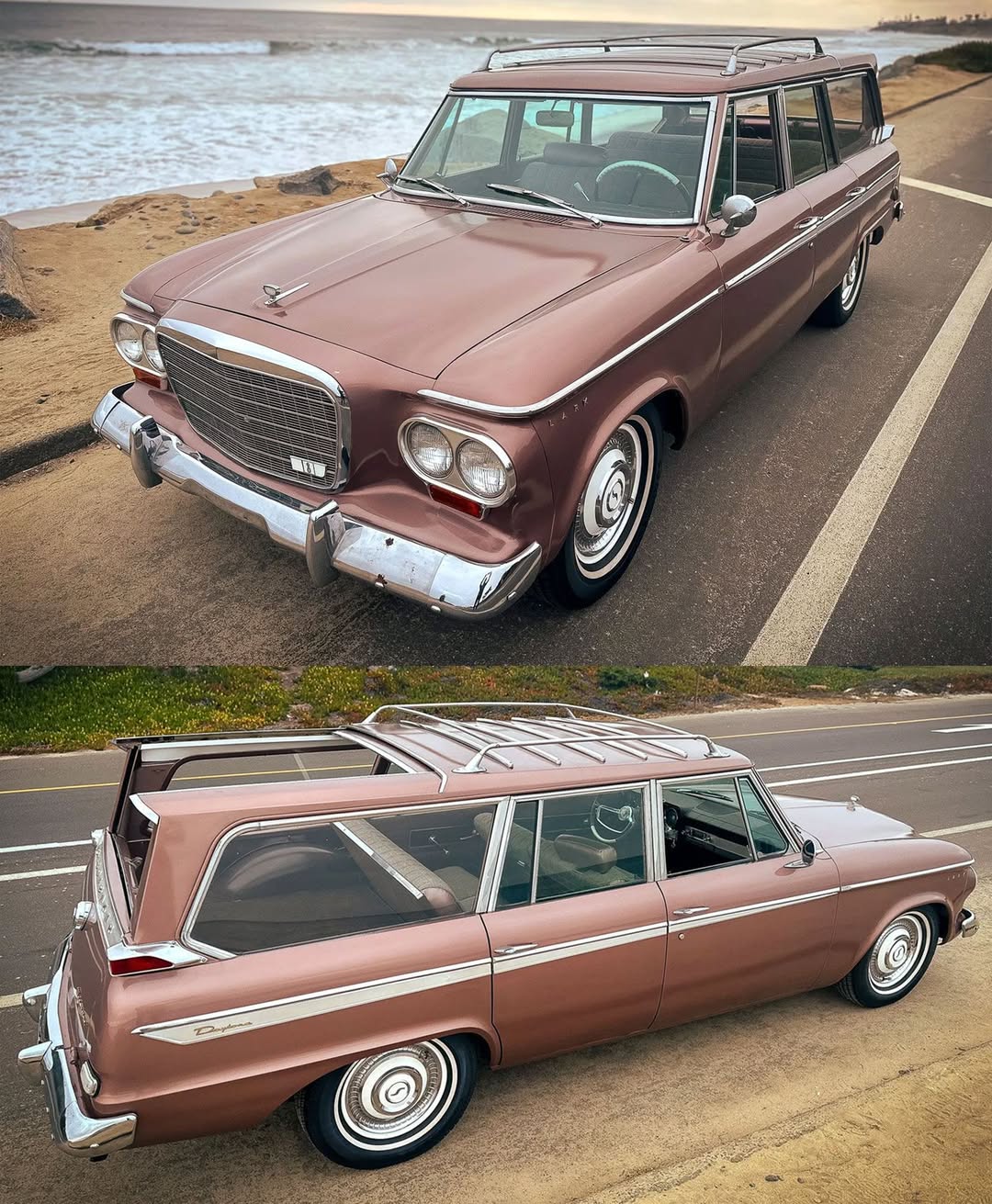
Source