1966 Willys Rural (Brazilian market)
Brasília’s bold modernist architecture influenced the striking 1960 redesign of the Willys Rural, giving this Brazilian wagon a distinctive, angular appearance that lasted through 1977. The vehicle traced its lineage to the 1946 Willys Jeep Station Wagon, which pioneered all-metal station wagon construction in the United States. This Brazilian adaptation offered genuine off-road capability alongside family practicality.
The 1966 model was offered in both two-wheel and four-wheel drive versions. Inline six-cylinder gasoline engines provided power, available in 161 or 183 cubic inch displacements. The 161 CI engine held special significance as Brazil’s first domestically manufactured gasoline powerplant, generating approximately 90 horsepower.
After Ford acquired Willys-Overland do Brasil in 1967, production continued under Ford’s management. From 1975 through the end of production in 1977, Ford’s 2.3-liter OHC four-cylinder engine replaced the original sixes.
Capable of handling dirt roads and challenging terrain while offering family transportation, the Rural demonstrated practical versatility. Curb weight was about 3,500 pounds (1,590 kg), and total production reached approximately 182,000 units. Today, the model is recognized as an important early predecessor to modern sport utility vehicles.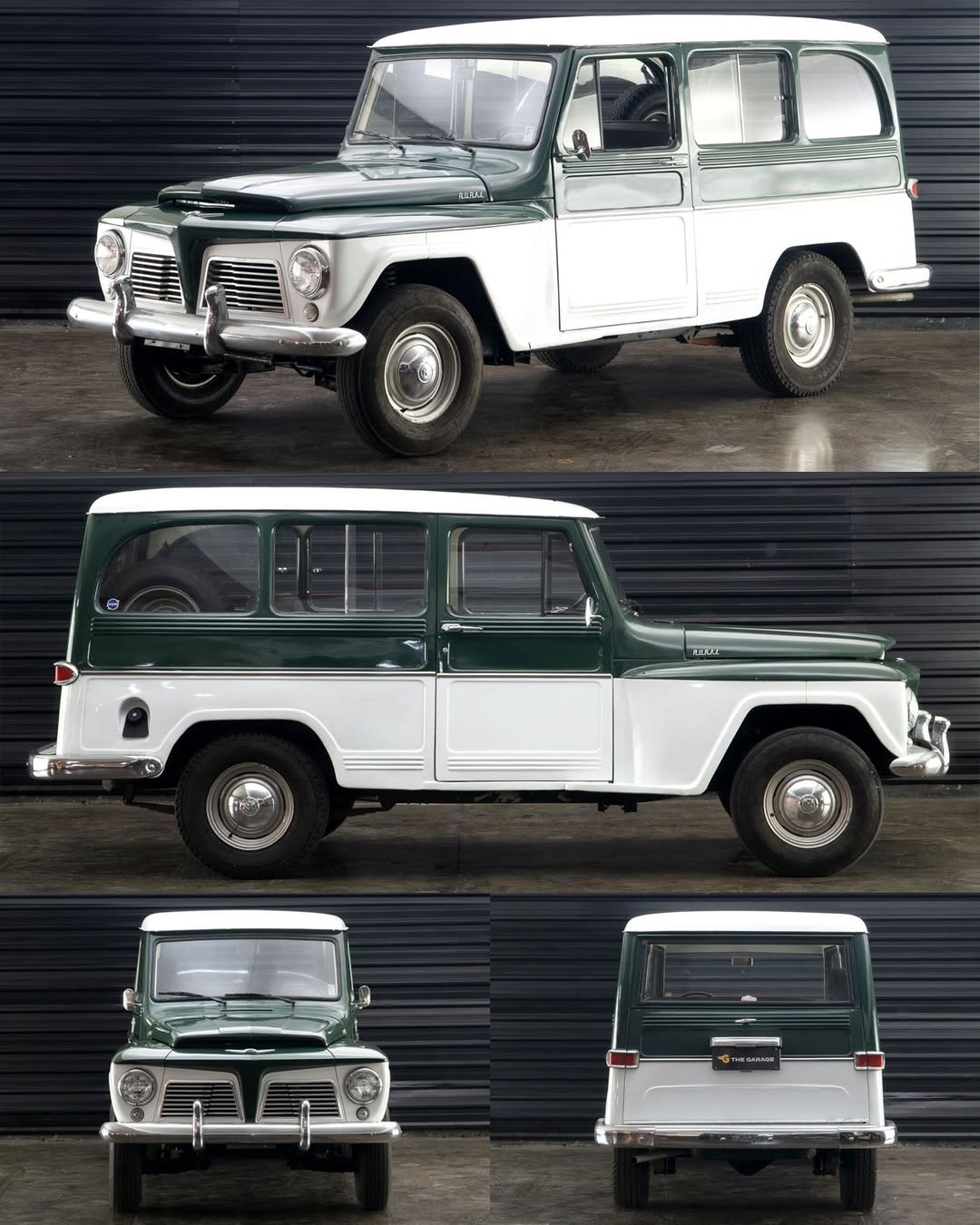
Source