1948 Alfa Romeo 6C 2500 SS Cabriolet
Independent suspension at all four corners distinguished the 6C 2500 Super Sport from typically cart-sprung live-axle contemporaries, delivering superior handling and ride quality. Built on a short 106-inch chassis intended exclusively for coachbuilt bodywork, the Super Sport represented the most technically advanced variant among several 6C 2500 models.
Three Weber carburetors fed the twin-overhead-camshaft inline-six engine, producing about 110 horsepower even on low-octane postwar European fuel.
Pinin Farina’s cabriolet design featured integrated headlights, flowing continuous lines, and recessed door handles (styling elements characteristic of Ferrari and Cisitalia designs from this period). The coachwork was first shown at Lausanne in October 1946 at the Premières Journées d’Élégance, an event aimed at reviving Italian coachbuilding after World War II.
Total production of the 6C 2500 Super Sport reached 458 units, with 75 built between 1939 and 1943 and 383 between 1947 and 1951. Approximately 63 Super Sport Pinin Farina cabriolets were manufactured after the war, making this body style particularly rare.
Racing success validated the engineering, including victories at the 1939 Tobruk-Tripoli race, a 1-2 finish at the 1939 Mille Miglia, and an overall win at the 1950 Targa Florio. The relatively stiff frame and four-wheel independent suspension translated power to the road more effectively than contemporary designs, while the supple ride maintained driver alertness during endurance events.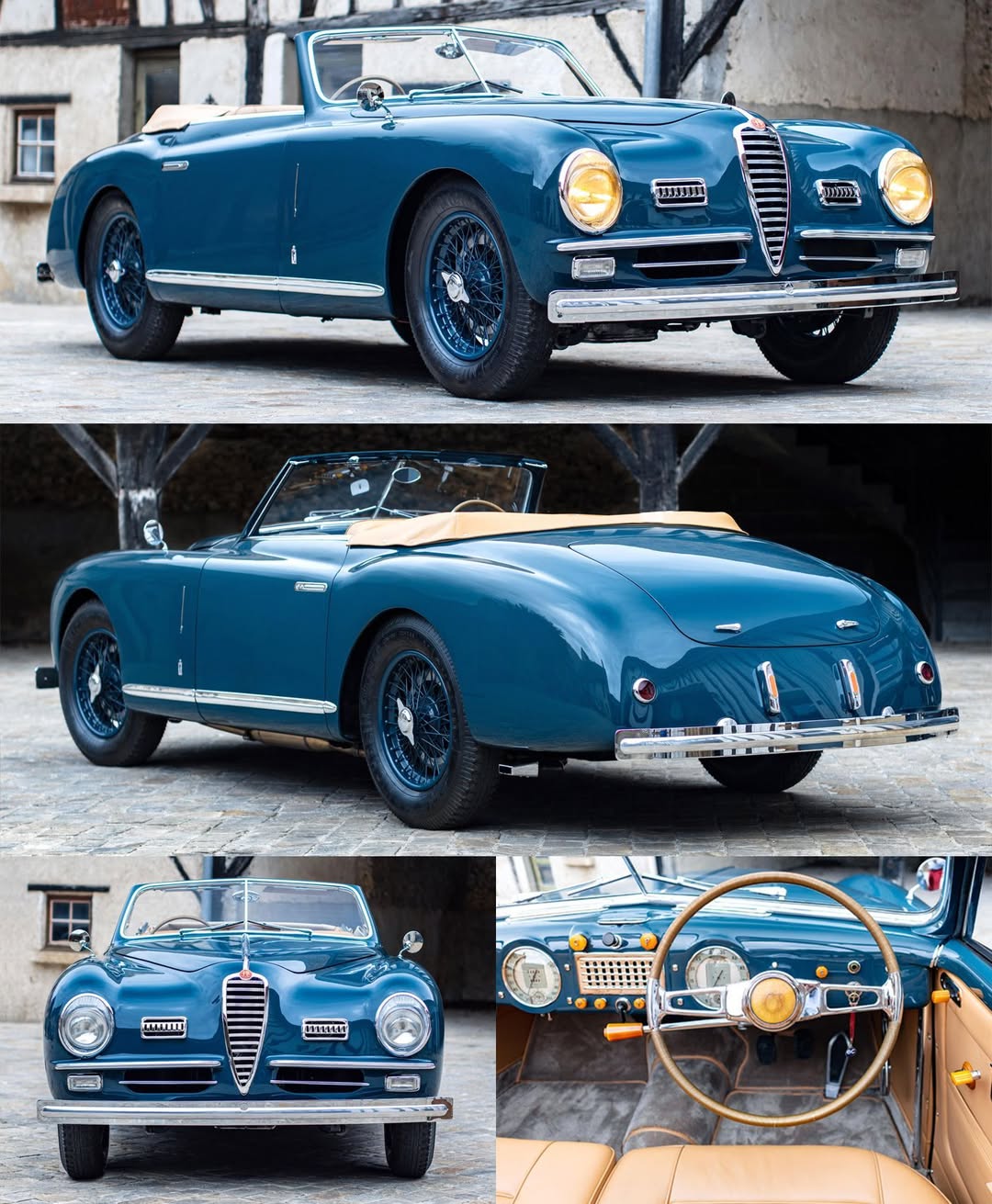
Source