1937 Packard 1508 Twelve Convertible Victoria
Packard’s Fifteenth Series, introduced for 1937, brought major engineering advancements, most notably the adoption of independent front suspension and hydraulic brakes on the top-of-the-line Twelve.
The Series 1508 rode on Packard’s longest wheelbase at 144 inches, a chassis typically reserved for the company’s most luxurious limousines and convertible sedans. This was the final year that the Twelve was offered on this extended platform.
The Convertible Victoria body style combined formal elegance with open-air motoring, featuring an enclosed rear passenger compartment typical of this European-inspired design. When mounted on the 1508 chassis, the proportions appeared particularly graceful and balanced, lending the car a more modern and refined presence than shorter-wheelbase variants.
Power came from Packard’s 473 cubic inch L-head V12 engine, producing 175 horsepower at 3,200 rpm. The engine was fed by a single Stromberg EE-3 downdraft carburetor and paired with a three-speed synchromesh manual transmission featuring a vacuum-assisted clutch. Four-wheel vacuum-assisted hydraulic drum brakes provided confident stopping performance.
Production for 1937 totaled approximately 1,300 Twelve models across all series, with the 1508 representing the pinnacle of Packard’s engineering and craftsmanship that year.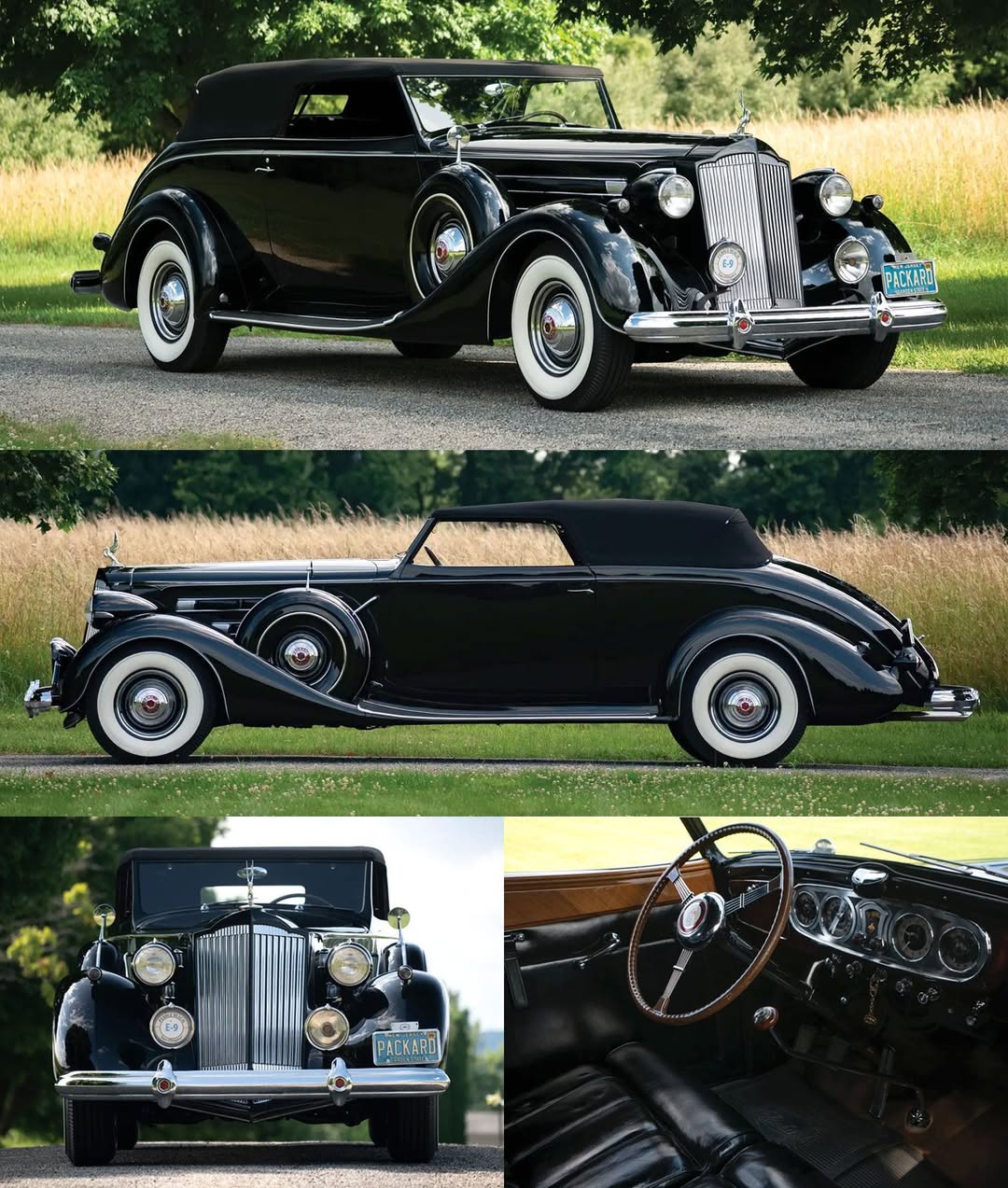
Source