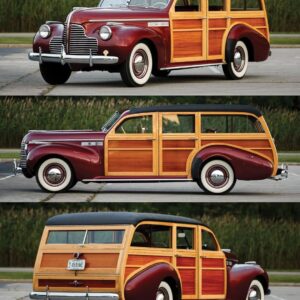
1941 Ford Super DeLuxe Wagon
At $1,015, the Super DeLuxe Station Wagon was Ford’s most expensive model for 1941 (the only car in the lineup where the body was as much a point of pride as the mechanical package beneath it).
The wood structure was no afterthought: Henry Ford had purchased the town of Pequaming in Michigan’s Upper Peninsula along with roughly half a million acres of surrounding forest to supply the maple framing and birch paneling his wagons required.
Ford’s Iron Mountain operation, established in the 1920s under the Michigan Land, Lumber, and Iron Company in the Menominee River Valley, eventually grew from a raw lumber supplier into a full assembly facility, with a dedicated station wagon body production line opening there for the 1936 model year.
For 1941, a broader redesign led by E.T. Gregorie gave the wagon new body contours, a revised roofline, and flared lower door edges that partially covered the running boards. Vent windows were added to the front doors.
Power came from the 221 CI flathead V-8, producing 85 horsepower, backed by a three-speed manual transmission.
A total of 9,485 Ford station wagons were built for the 1941 model year across DeLuxe and Super DeLuxe trim levels. Combined with the inherent difficulty of maintaining wood bodywork over time, that limited production goes some way toward explaining the relative scarcity of well-preserved examples today.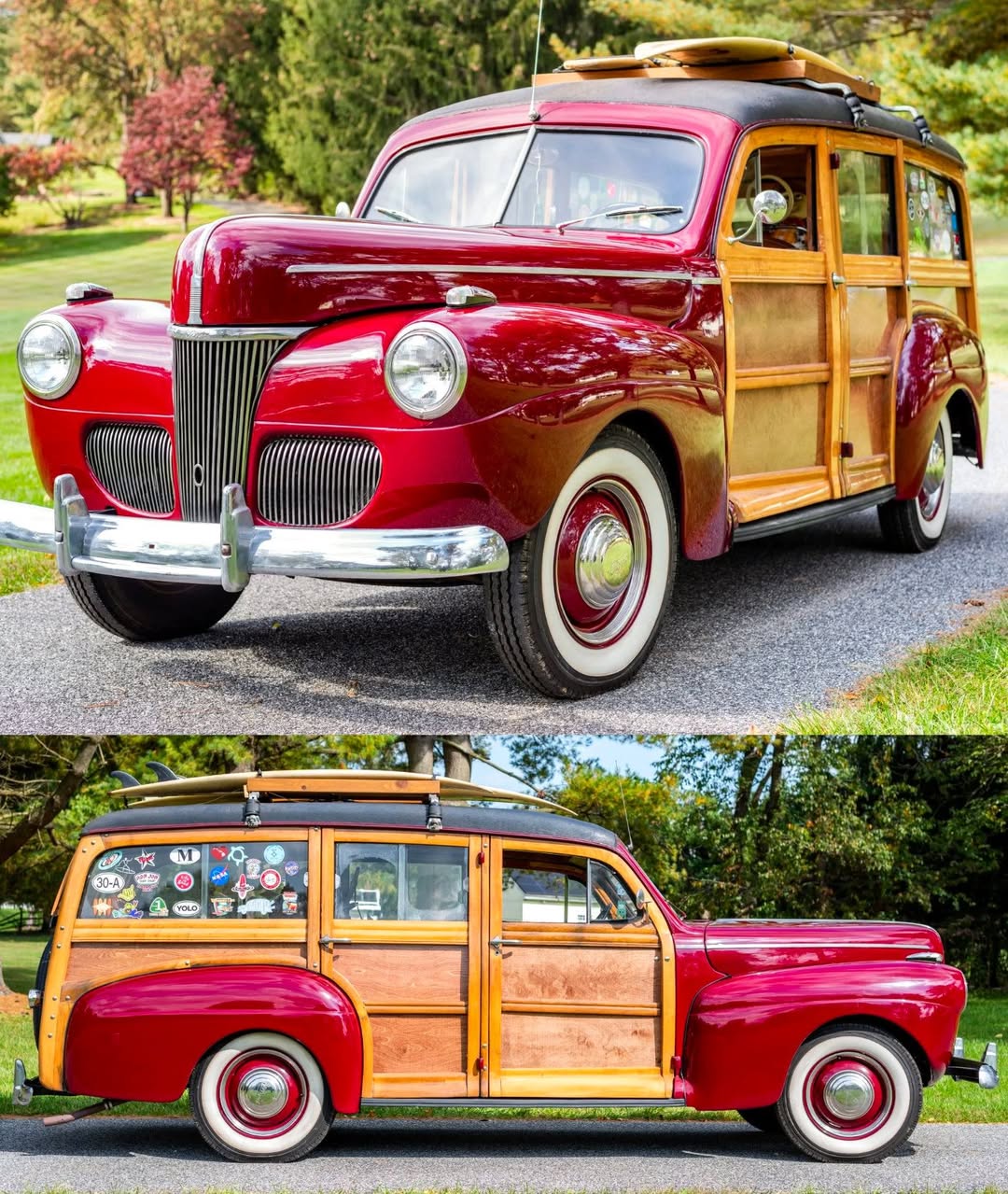
Source